



Transport Your Trailer Instead of Towing It
Trailer transport moves trailers between homes, dealerships, storage facilities, worksites, repair shops and other locations. It helps owners avoid long-distance towing, extra tire wear, fuel costs and the challenges of moving a large trailer without suitable equipment.
Professional trailer transportation services may involve towing the unit directly or loading it onto a flatbed, step-deck, or specialized carrier. The right option depends on the trailer’s size, weight, condition and whether it is road-ready.
Door-to-door trailer delivery brings the carrier as close as safely and legally possible to your selected addresses. Narrow roads, low branches, restricted entrances or limited turning space may require meeting the driver at a nearby open location.

How to Prepare for Trailer Transport?
Remove Personal Items
Remove personal belongings, tools and unsecured cargo unless the carrier approves them. Clean the trailer so you can inspect and photograph its condition clearly before pickup.
Check Trailer Condition
Inspect the tires, wheels, hitch, brakes, lights and safety chains. Report damaged axles, frame issues, flat tires or other problems that could affect trailer transport.
Secure Exterior Accessories
Close and lock doors, windows and storage compartments. Retract awnings, steps, stabilizers and other exterior parts that could move during trailer shipping.
Note the Coupler and Connections
Note the coupler size, brake type and wiring plug. Confirm the safety chains, breakaway cable and tongue jack work, and report a bent or seized coupler before pickup.
What Trailer Types Can Be Shipped?
Cargo Trailer Transport
Cargo trailers carry tools, supplies and business equipment. Loose contents should be removed or approved, while doors, ramps and interior equipment must be securely closed.
Utility Trailer Transport
Utility trailers often carry landscaping tools, motorcycles or small machinery. Accurate dimensions and condition details help the carrier evaluate the hitch, frame and transportation method.
Travel Trailer Transport
Travel trailers may include awnings, propane systems, appliances and exterior accessories. These parts should be closed, disconnected or secured before transport.
Specialized Trailer Transport
Specialized units include horse trailers, car haulers, concession trailers and mobile workshops. Their shapes, dimensions and equipment may require permits or additional route planning.
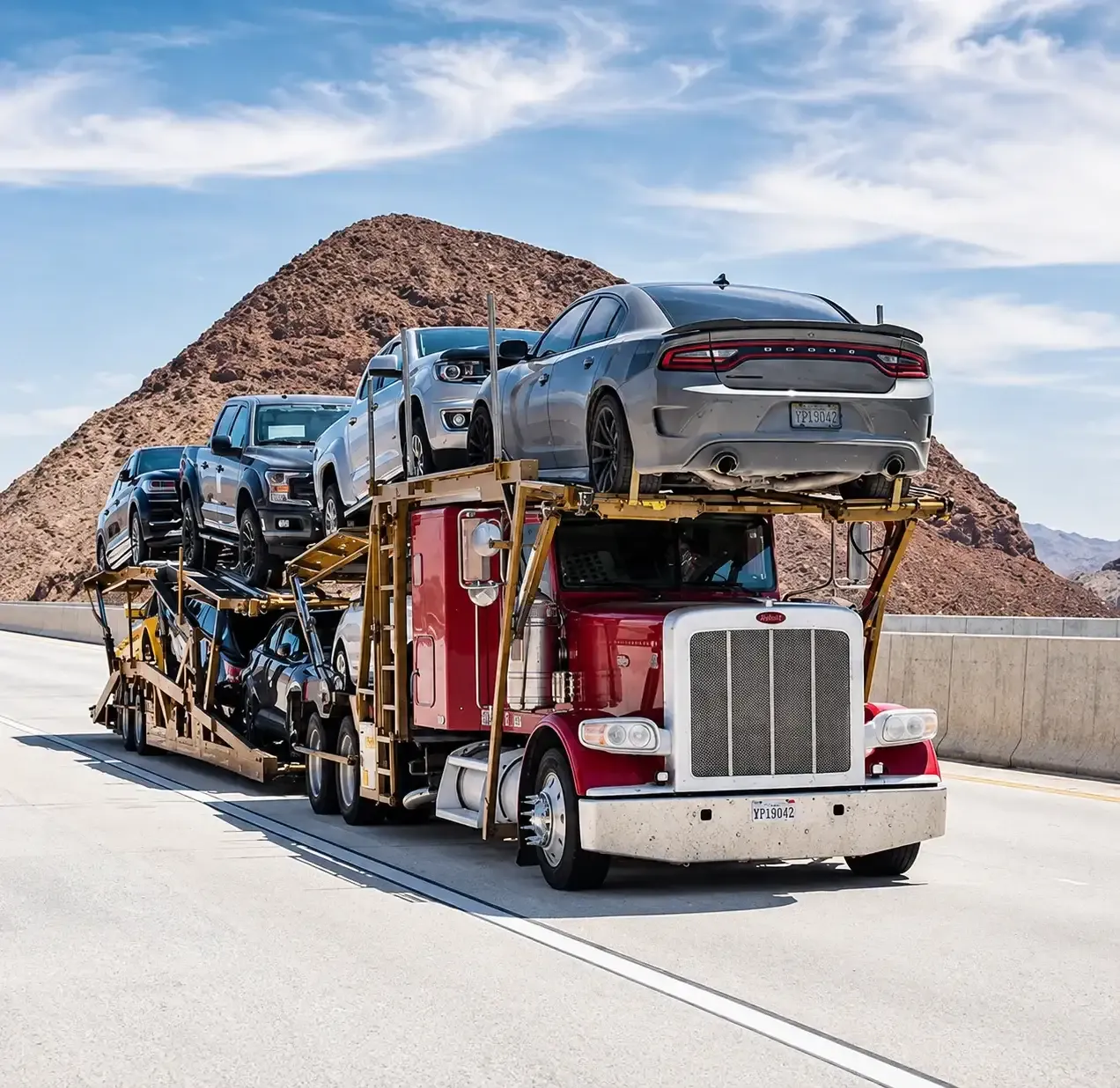
Which Type of Transport Is Most Suitable for Your Trailer?
The right service depends on the trailer’s size, weight, condition, route and whether it is safe to tow. Direct towing may work when the hitch, tires, brakes, lights, axles and frame are in good operating condition.
A flatbed, step-deck, or specialized carrier may be needed when the unit cannot be safely towed. This option may suit damaged trailers, oversized units or trailers without road-ready tires and towing equipment.
Trailer shipping cost depends on distance, dimensions, condition, service type and carrier availability. AMPM helps you compare suitable options and arrange trailer transport based on your route, timing and equipment needs.