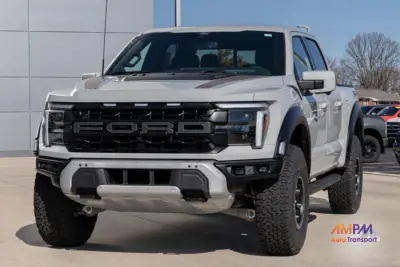
The 2026 Ford F-150 can be configured as almost anything from a straightforward work truck to a comfortable family pickup, long-distance tow vehicle, hybrid mobile power source, or high-performance off-road truck. That flexibility is one of its biggest strengths and also what makes choosing the right version more complicated. Buyers comparing a 2026 F150 have several engines to consider, including the F150 EcoBoost V6 options, the Ford F150 hybrid PowerBoost, a traditional V8, and high-output engines reserved for the Raptor.
Then there are eight core Ford F150 trim levels, three cab styles, multiple bed lengths, rear- or four-wheel drive, and towing packages that can substantially change capability. Ford currently lists the 2026 F-150 from $39,585, while exact pricing rises considerably with configuration and equipment. The right truck therefore depends less on finding the biggest specification and more on matching the engine, cab, bed, trim, and capability to the way the truck will actually be used.
2026 Ford F-150 Engine Options: Hybrid, EcoBoost and V8
The 2026 engine lineup covers a wide range of priorities. Ford lists a 2.7-liter EcoBoost V6 with 325 horsepower and 400 lb-ft of torque, a 3.5-liter EcoBoost V6 with 400 horsepower and 500 lb-ft, a 5.0-liter V8 with 400 horsepower and 410 lb-ft, and a 3.5-liter PowerBoost full-hybrid V6 rated at up to 430 horsepower and 578 lb-ft on Ford’s current general model page. Performance versions add a 450-hp high-output EcoBoost in the Raptor and a 720-hp supercharged V8 in the Raptor R. All of these engines serve different buyers. Someone commuting daily with occasional towing does not necessarily need the same powertrain as a buyer pulling a large trailer several times a month.
Ford F-150 Hybrid or PowerBoost
The F150 PowerBoost combines a 3.5-liter twin-turbo V6 with an electric motor rather than turning the F-150 into an electric pickup. That distinction matters. The F-150 hybrid still uses gasoline and does not need to be plugged in. The hybrid system is designed to combine strong low-end torque with improved fuel economy and useful onboard electrical power. Ford also offers up to 7.2 kW of Pro Power Onboard with the PowerBoost, allowing the truck to provide electricity for tools, equipment, camping gear, or other devices where a conventional outlet is unavailable. This can make the hybrid F150 especially appealing to contractors, campers, and owners who want one truck to handle commuting, towing, and work-site duties. It is not automatically the most efficient choice in every real-world situation, however. Towing a heavy trailer, carrying payload, larger tires, four-wheel drive, terrain, temperature, speed, and driving habits can all change actual MPG.
F-150 EcoBoost Options
The two mainstream F150 EcoBoost engines suit different priorities. The 2.7-liter EcoBoost produces 325 horsepower and 400 lb-ft of torque. For many owners, it offers enough performance for commuting, general work use, light-to-moderate towing, and everyday driving without stepping up to the larger engine. The 3.5-liter EcoBoost moves capability higher with 400 horsepower and 500 lb-ft of torque. It is also the engine associated with the F-150’s highest available conventional towing figure: Ford lists up to 13,500 pounds when the truck is properly configured. That makes the larger EcoBoost worth considering for buyers who tow frequently or simply want stronger torque delivery. The better choice is not automatically the 3.5-liter engine. If the truck spends most of its life commuting and carrying modest loads, paying for capability that rarely gets used may not make sense.
V8 and Performance-Focused Versions
The 5.0-liter V8 remains available for buyers who prefer traditional naturally aspirated V8 power. Ford rates it at 400 horsepower and 410 lb-ft of torque. Properly configured, the V8 can tow up to 12,800 pounds. At the performance end, the Raptor uses a 450-hp high-output 3.5-liter EcoBoost, while the Raptor R uses a 5.2-liter supercharged V8 producing 720 horsepower and 640 lb-ft of torque. These versions prioritize high-speed off-road performance rather than maximum towing or fuel economy.
2026 Ford F-150 Trim Levels
For shoppers trying to understand Ford F150 trim levels in order, Ford currently lists eight core 2026 trims: XL, STX, XLT, Lariat, Tremor, King Ranch, Platinum, and Raptor. The Raptor R is the more powerful Raptor configuration rather than a separate mainstream trim level. The more useful way to compare the lineup is by buyer type.
Work-Focused Trims
The XL is the straightforward work-oriented starting point. It offers the widest utility-focused configuration range, including Regular Cab, SuperCab, and SuperCrew options, depending on setup. For fleet use, construction, service businesses, or buyers who mainly need capability, it avoids paying for luxury features that may not matter on the job. The STX keeps much of that practical character while adding more visual style and equipment. Ford also offers a new STX Lobo package for 2026, pairing street-oriented styling and a lowered rear suspension with the available 5.0-liter V8.
Comfort and Family-Friendly Trims
The XLT is the middle ground for many buyers. It opens access to more engine and technology choices while remaining below the premium trims. Car and Driver also identifies the XLT as its preferred point in the lineup because it adds useful equipment without moving all the way into luxury-truck pricing. The Lariat moves further toward daily comfort. Ford offers it in SuperCrew form with a 5.5- or 6.5-foot bed and makes the 5.0-liter V8, 3.5-liter EcoBoost, and PowerBoost hybrid available. For families using the F-150 as both a truck and primary vehicle, these trims often provide the most useful balance between capability and cabin comfort.
Off-Road and Premium Trims
The Tremor is the off-road-focused choice without stepping into Raptor territory. Its equipment includes all-terrain tires, increased ride height, off-road suspension hardware, and an electronic locking rear axle. King Ranch and Platinum shift toward premium materials, technology, and comfort while retaining truck capability. King Ranch emphasizes a distinctive Western-inspired interior and genuine wood trim, while Platinum takes a more contemporary luxury approach. The Raptor and Raptor R sit at the performance end. They are designed around high-speed off-road capability, specialized suspension, larger tires, and substantially different priorities from a standard towing-focused F-150.
Cab, Bed and Configuration Choices
Engine and trim are only part of the decision. Ford offers three main F-150 cab options: Regular Cab, SuperCab, and SuperCrew. What shoppers sometimes call an F150 extended cab is Ford’s SuperCab configuration. The Regular Cab offers a choice of 6.5- or 8-foot beds. The Ford F-150 SuperCab comes with a 6.5-foot bed, while the SuperCrew offers 5.5- and 6.5-foot bed options. Raptor models use the SuperCrew cab with a 5.5-foot bed. Cab choice has a major effect on daily usability.
A Regular Cab maximizes simplicity and can work well as a dedicated work vehicle. SuperCab adds occasional rear seating without making the truck as large as some crew-cab configurations. SuperCrew provides much more usable rear-seat room and is usually the better choice when adults or children ride in the back frequently. F-150 bed sizes also affect parking, maneuverability, cargo capacity, wheelbase, and towing configuration. Buyers who regularly carry building materials may value the longer bed. Someone using the truck mainly for commuting, family trips, and recreational towing may prefer the shorter bed for easier daily driving.
Interior, Technology and Daily Use
A modern F-150 can function as much like a family vehicle or mobile office as a traditional pickup. Car and Driver notes that the SuperCrew provides generous second-row passenger space, while available features can turn the center area into a flat work surface when the shifter is folded down. Storage areas throughout the cabin also make the truck practical for tools, laptops, bags, and everyday items. The 2026 Ford F-150 interior also includes a standard 12-inch touchscreen with Ford’s SYNC 4 system.
Wireless Apple CarPlay and Android Auto are available across the lineup, while upgraded trims and option packages can add premium audio, navigation, 360-degree cameras, and more advanced driver-assistance technology. For towing, features such as Pro Trailer Backup Assist and Pro Trailer Hitch Assist can help with positioning and connecting a trailer. Ford also offers BlueCruise hands-free highway driving on selected configurations, although availability and subscription terms depend on trim and equipment. Lower trims remain more work-oriented. Higher Ford F150 trims add better seating materials, more cabin insulation, convenience features, premium audio, and technology that can make long-distance travel more comfortable.
F-150 MPG: What Buyers Should Compare
There is no single accurate F150 MPG number because the F-150 lineup contains very different engines and configurations. Car and Driver’s 2026 model guide, using EPA estimates, lists the 2.7-liter EcoBoost as high as approximately 19 mpg city and 25 mpg highway. The 3.5-liter EcoBoost can reach about 17 city and 25 highway, while the PowerBoost hybrid can reach approximately 22 city and 24 highway. The 5.0-liter V8 can be rated as high as about 16 city and 24 highway, depending on configuration.
Those figures should be treated as configuration-specific rather than promises. The Ford F150 hybrid MPG advantage can be most noticeable in driving that lets the hybrid system recover and reuse energy. Long periods of heavy towing or high-speed highway driving can narrow the difference. Likewise, a 2.7-liter F150 EcoBoost may look efficient on paper, but adding four-wheel drive, heavier tires, payload, or a trailer changes the real-world result. Performance versions are a different story. A current Ford inventory example for a 450-hp Raptor lists EPA-estimated fuel economy of 14 mpg city and 18 highway, while a Raptor R example with the supercharged V8 shows 10 city and 15 highway. For buyers comparing 2026 Ford F-150 MPG, the best approach is to look up the exact engine, drivetrain, cab, and configuration rather than comparing one generic F-150 number with another truck.
2026 Ford F-150 Towing and Payload
The 2026 Ford F-150 offers impressive towing power. Ford lists a maximum available towing capacity of 13,500 pounds and a maximum payload of 2,440 pounds. However, these figures do not apply to every truck. Ford lists different maximum towing capacities for each mainstream engine. The 2.7-liter EcoBoost can tow up to 8,400 pounds. The F-150 PowerBoost reaches 11,600 pounds, while the 5.0-liter V8 handles up to 12,800 pounds. The 3.5-liter EcoBoost leads the lineup with a maximum rating of 13,500 pounds. Your truck’s actual towing capacity depends on several factors. These include cab and bed styles, drivetrain, axle ratio, available options, and towing package. Passenger and cargo weight also affect the truck’s towing capability.
Payload deserves the same attention. People, tools, cargo, accessories, and trailer tongue weight all count against the truck’s payload capacity. Even if a truck can tow a trailer on paper, it must stay within its GVWR, axle ratings, and payload limits when fully loaded. Before towing, check the vehicle’s certification labels and Ford’s towing documentation for your exact VIN and configuration. Don’t rely solely on the model’s maximum towing capacity.
Ford Raptor Towing Capacity Searches
The Ford Raptor towing capacity differs from the maximum towing capacity of standard F-150 models. Ford’s 2026 towing information lists the high-output EcoBoost Raptor at up to approximately 8,200 pounds and the supercharged V8 Raptor R at about 8,700 pounds, depending on configuration. By comparison, a properly equipped F-150 with the 3.5-liter EcoBoost engine can tow up to 13,500 pounds. Ford designs the Raptor around specialized suspension, off-road tires, increased ground clearance, and high-speed terrain performance rather than maximum trailer weight.
Which 2026 Ford F-150 Is Right for You?
The best 2026 Ford F-150 depends on the work you expect it to do most often. For commuting, light hauling, and occasional towing, the 2.7-liter EcoBoost can offer a practical mix of performance and fuel economy. Buyers who tow heavier trailers more frequently may find the 3.5-liter EcoBoost more appropriate. The Ford F150 hybrid makes sense for drivers who want strong torque, improved everyday efficiency, and the added usefulness of Pro Power Onboard.
Contractors and campers may value its ability to provide up to 7.2 kW of onboard electrical power as much as its MPG advantage. The 5.0-liter V8 remains appealing to buyers who prefer naturally aspirated V8 power and strong towing capability. Trim choice should follow the same logic. XL and STX suit work-focused buyers. XLT provides a strong everyday balance. Lariat moves toward comfort and family use. Tremor is the more purpose-built off-road choice, while King Ranch and Platinum emphasize premium features. Raptor and Raptor R are specialized performance trucks. Then choose the cab and bed around real life. A SuperCrew makes sense if passengers regularly use the back seat. A longer bed may matter more for work. A shorter wheelbase may make parking and city use easier.
The 2026 F-150 lineup works because Ford does not force every buyer into the same version of a full-size pickup. There are efficient EcoBoost configurations, the versatile F150 PowerBoost hybrid, a traditional V8, premium trims, work-focused models, and specialized off-road trucks. Cab and bed choices can turn the same basic pickup into very different vehicles. The key is to avoid shopping by one headline specification. A 13,500-pound maximum tow rating does not apply to every F-150. Neither does one F150 MPG estimate. Engine, drivetrain, axle ratio, cab, bed, packages, tires, payload, and options can all change what the truck can actually do. Before buying, verify the specifications of the exact truck you are considering.