



What Makes Rv Shipping Different
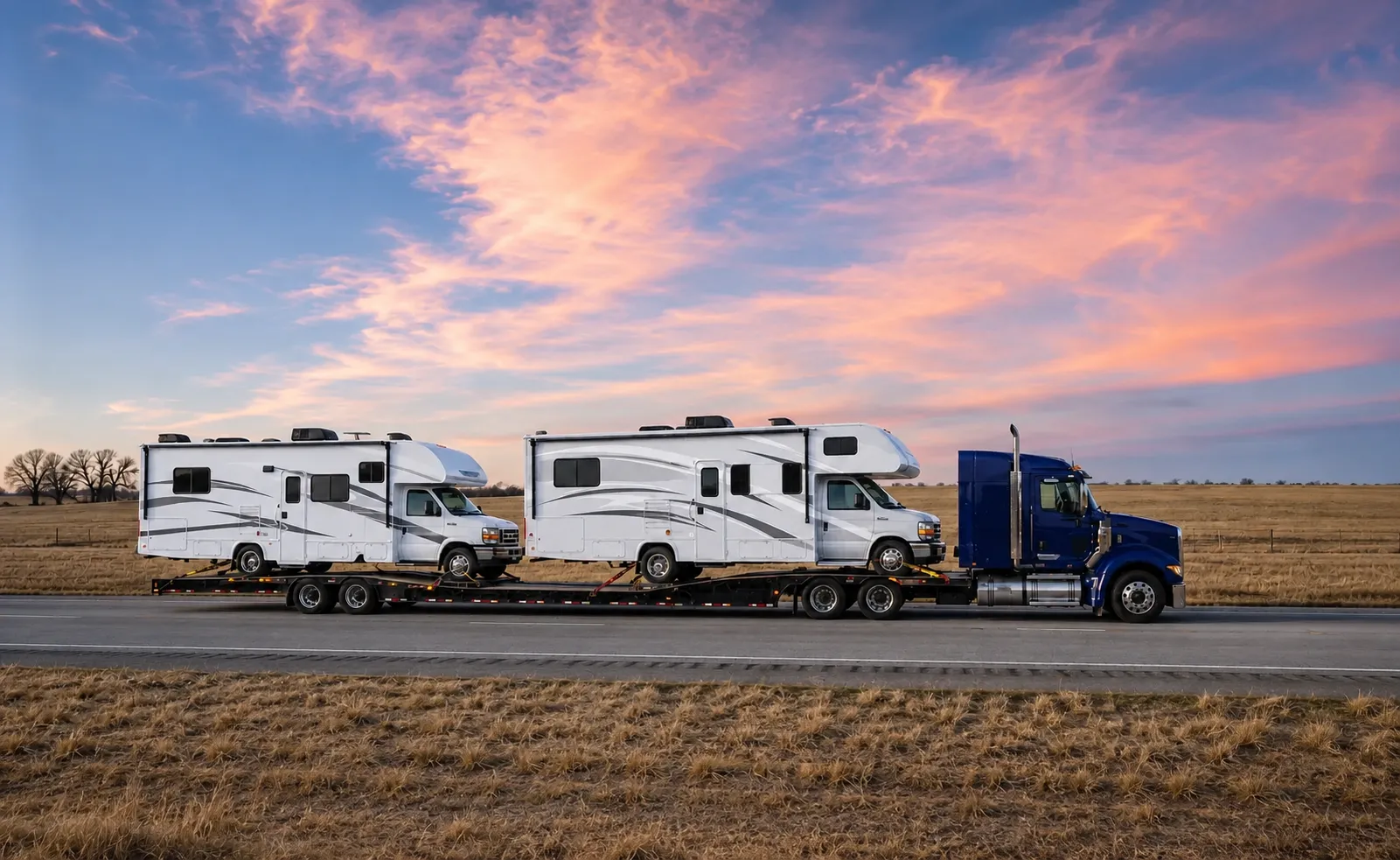
RV transport takes more planning than standard car shipping because recreational vehicles are longer, taller and heavier, and many carry living systems inside. Height is usually the deciding factor. A unit measured to its highest fixed point may not clear a standard trailer, so RV shipping often calls for a flatbed, step-deck or lower-deck equipment.
Every move is arranged around the RV’s length, height, weight, condition and whether it is road-ready. Motorized units and towable units call for different equipment, so the type matters as much as the size.
Door-to-door RV delivery brings the carrier as close to your locations as street access and local restrictions allow. Low branches, narrow roads and limited turning space often mean meeting the driver at a nearby open area. We confirm the meeting point with you in advance.
How to Prepare RV for Shipping
Remove Personal Items
Clear the counters, shelves and tables, and remove valuables. Latch every door, window and cabinet, taping shut anything that won't hold. Wash the exterior, then photograph the RV from several angles.
Drain the Water Tanks
Empty the fresh, gray and black water tanks when the carrier requests it. Full tanks add weight and can shift during the trip.
Check the RV's Condition
Check the tires on each axle, brakes and fluid levels. Check wheel bearings and suspension on towable units as this is where the load will be carried on the trip. Leaking or mechanical problems? If the RV doesn’t run, roll, steer or brake, let us know!
Secure Systems and Accessories
Shut down the appliances, and then disconnect the power and propane lines. Pull in the slide-outs and lock them, close the cargo doors and pop-outs and secure the awning. Check tow bar, hitch and safety chains on towable units.
Types of Recreational Vehicles
Class A motorhomes
Class A is the largest and most luxurious option, built on a bus-like chassis with full living quarters. They require careful handling due to their size and weight.
Travel trailers
Travel trailers don't have their own engine, so they get towed behind a vehicle. They're one of the most frequently shipped RV types because of their popularity among owners.
Class C motorhomes
Class C motorhomes offer a smaller footprint with a distinctive cab-over sleeping area. They're easier to transport than Class A units but still need experienced drivers.
Fifth wheels
Fifth wheels attach to a hitch in a truck bed and offer more stability than standard travel trailers, making them a common choice for long-distance shipping.
Which Transport Option is Right for You?
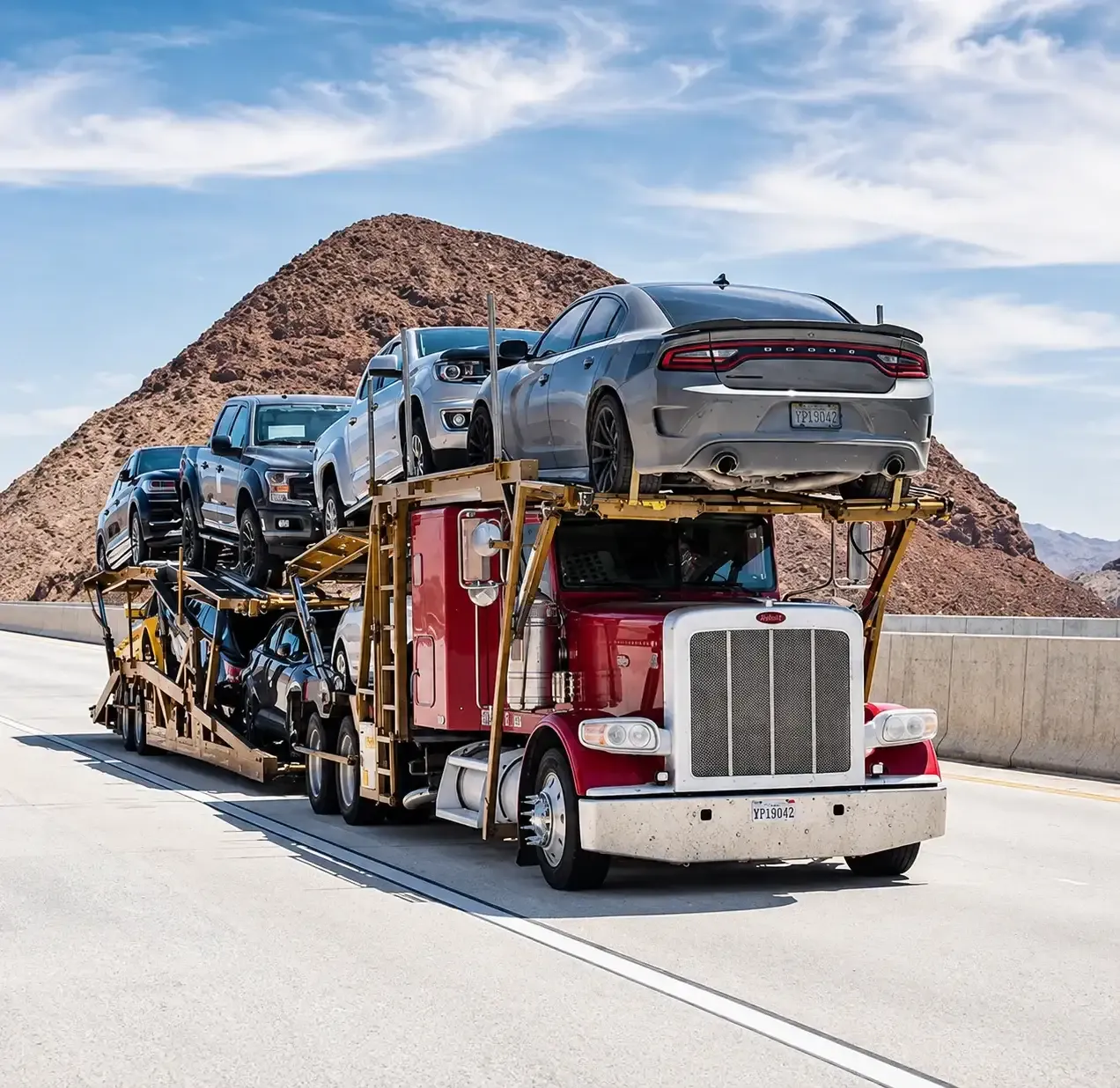
The best RV transport option depends on the type, size, condition, and destination of your vehicle. Tow-away service is generally suitable for travel trailers, fifth wheels, and other towable RVs. Drive-away service may be appropriate for operational motorhomes, while specialized trailer transport is often better for non-running, oversized, or high-value RVs.
Before recommending a service, AMPM Auto Transport considers your RV’s dimensions, weight, roadworthiness, route, and delivery requirements. This helps determine the safest and most practical transport option for your vehicle and budget.