



What Makes Shipping a Truck Different?
Shipping a truck requires more planning than transporting a standard car because trucks are generally heavier, taller and wider. Their size and weight take up more carrier capacity, which can limit trailer availability and affect the cost of truck transport.
Truck shipping is planned according to the vehicle’s dimensions, weight, condition, ground clearance and attached equipment. Lift kits, oversized tires, roof racks and other modifications may prevent the truck from fitting on a standard car carrier, so truck transportation services may require a flatbed, step-deck, lowboy or another specialized trailer.
Owners and businesses use truck transportation when buying, selling, relocating or moving fleet vehicles. Shipping trucks helps avoid added mileage, fuel use and wear, while a truck delivery service arranges pickup and delivery as close as safely and legally possible to the selected locations.
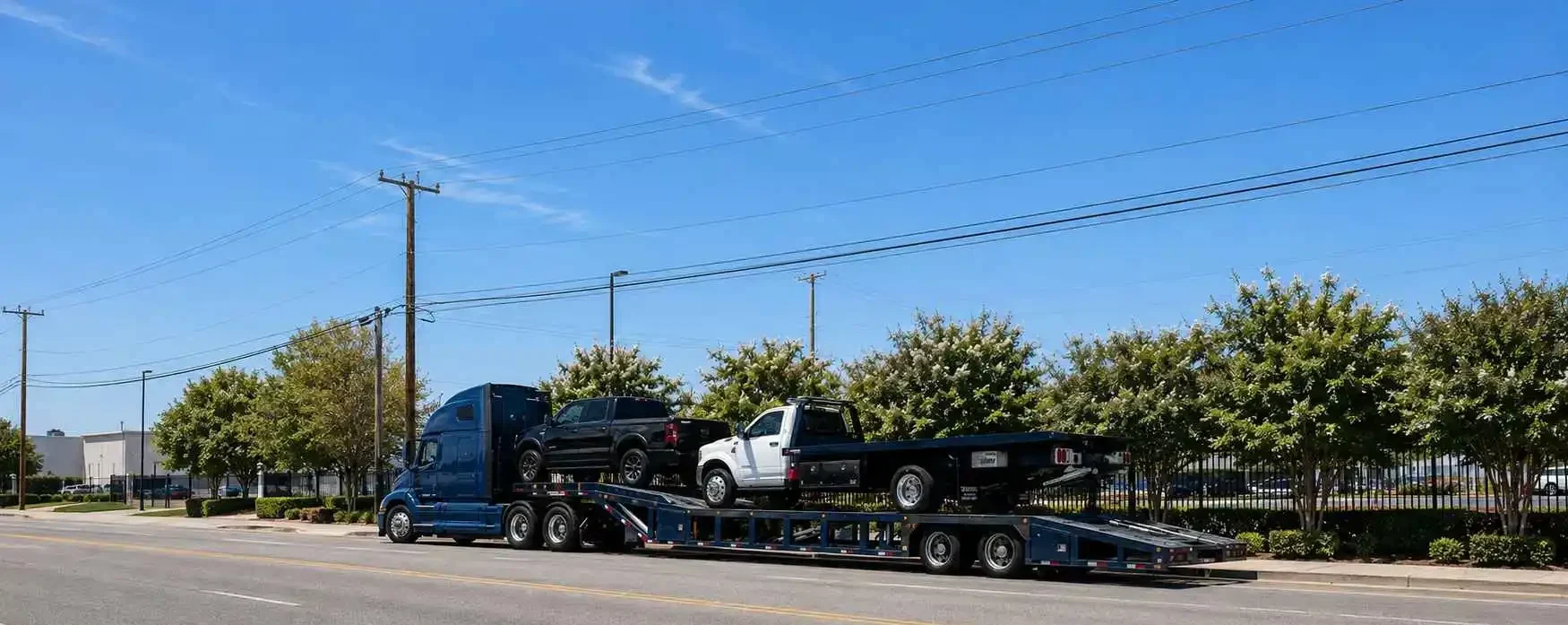
How Should You Prepare Your Truck for Transportation?
Remove Personal Items
Remove personal belongings, cargo, tools and loose equipment from the cab, bed and storage compartments. Clean the exterior to inspect and photograph the truck’s current condition clearly.
Check Truck Condition
Check the tires, battery and fluid levels. Follow the carrier’s fuel instructions and report mechanical problems or leaks. Tell us if the truck cannot run, roll, steer or brake.
Secure Truck Equipment
Close toolboxes and lock liftgates, booms, mirrors, and other attachments. Lower or eliminate antennas and other parts that add to the truck’s height.
Prepare the Keys
Keep one set of keys for the driver. At delivery, inspect the truck with the driver.
Most Common Types of Trucks
Pickup Trucks
Standard, heavy-duty, and lifted pickups can be shipped. Their length, height, weight, tire size and modifications help determine trailer space, loading clearance and the most suitable equipment for transport planning.
Box and Utility Trucks
Box trucks, bucket trucks and utility trucks may have tall bodies, roof equipment, booms or tool compartments. Provide complete dimensions, weight and equipment positions before the carrier arrives for pickup.
Dump and Service Trucks
Dump trucks, garbage trucks, sweepers and food trucks have different bodies, machinery and weight distribution. Report their moving parts, attachments and dimensions before scheduling a truck transport service.
Semi-Trucks
Day cabs, sleeper cabs and other tractors often require flatbed, step-deck, or lowboy equipment. Accurate size, weight, ground clearance and operating condition help plan semi-truck shipping and safe loading.
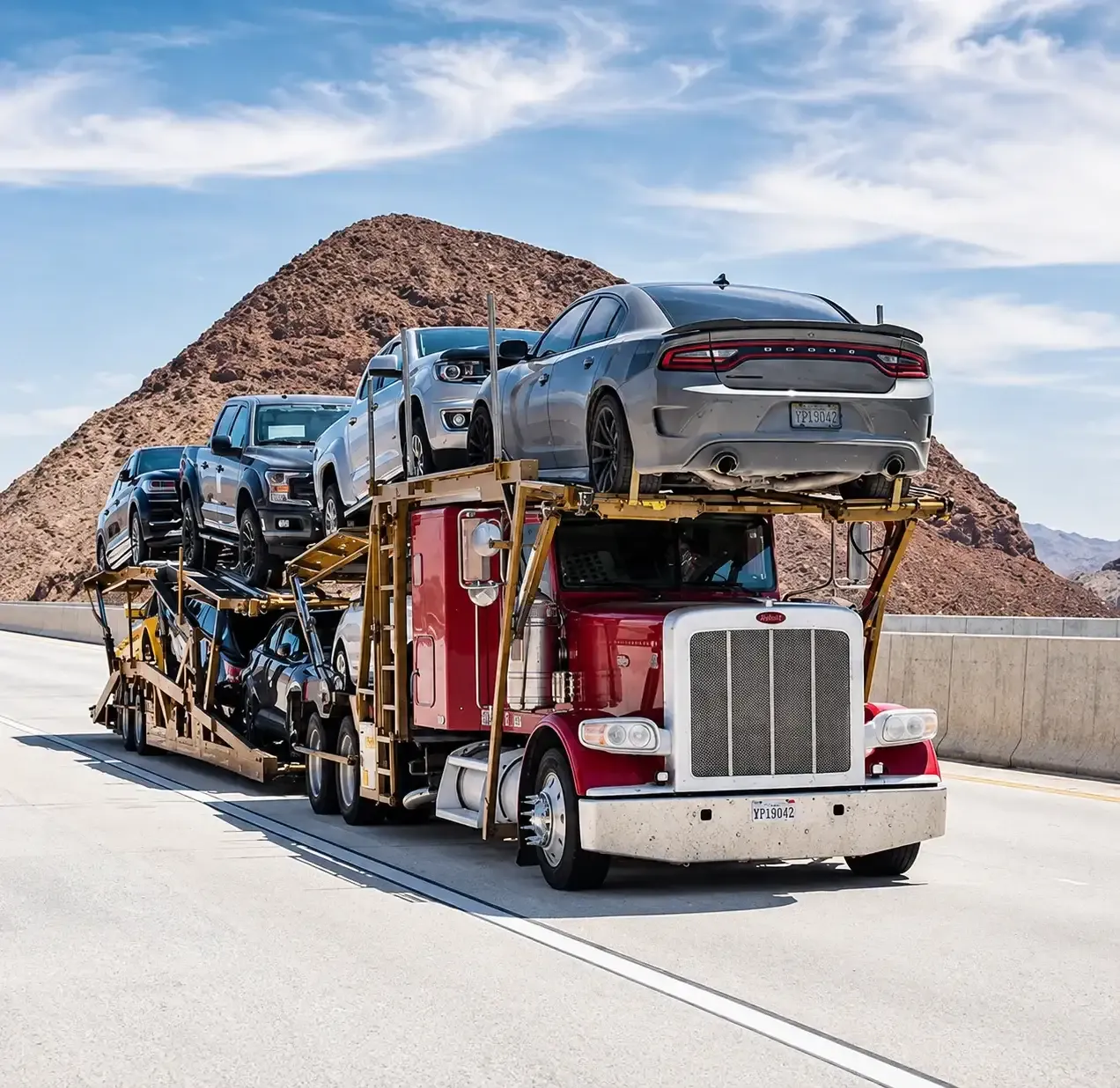
Which Transport Option Fits Your Truck?
The right truck shipping service depends on the truck’s type, dimensions, weight, condition, ground clearance and attached equipment. Pickup trucks and smaller work trucks may fit an open flatbed or vehicle carrier. The truck remains exposed to weather and normal road conditions during transportation.
Taller or heavier trucks may require step-deck or lowboy equipment. These trailers have lower deck areas that can help accommodate truck height and loading requirements. Semi-truck transport, dump-truck shipping and other large moves may require specialized loading equipment. Oversized trucks can also need route planning and permits. Non-running trucks may need a carrier with a winch.