



Ship Your Bus Instead of Driving It
Driving a bus to its destination adds mileage, fuel costs and hours of wear. Bus shipping moves the vehicle on a carrier instead. Owners commonly ship a bus when relocating, buying at auction, selling to an out-of-state buyer or moving a unit into storage.
Fleet operators use bus delivery for a different reason. Transporting new buses from a manufacturer to a dealer or operator often means several units traveling the same route. Those shipments are planned together so each unit keeps to the same schedule.
Every move is arranged around the bus’s length, height, weight, condition and access at both locations. We confirm the pickup and delivery points with you before scheduling the carrier.
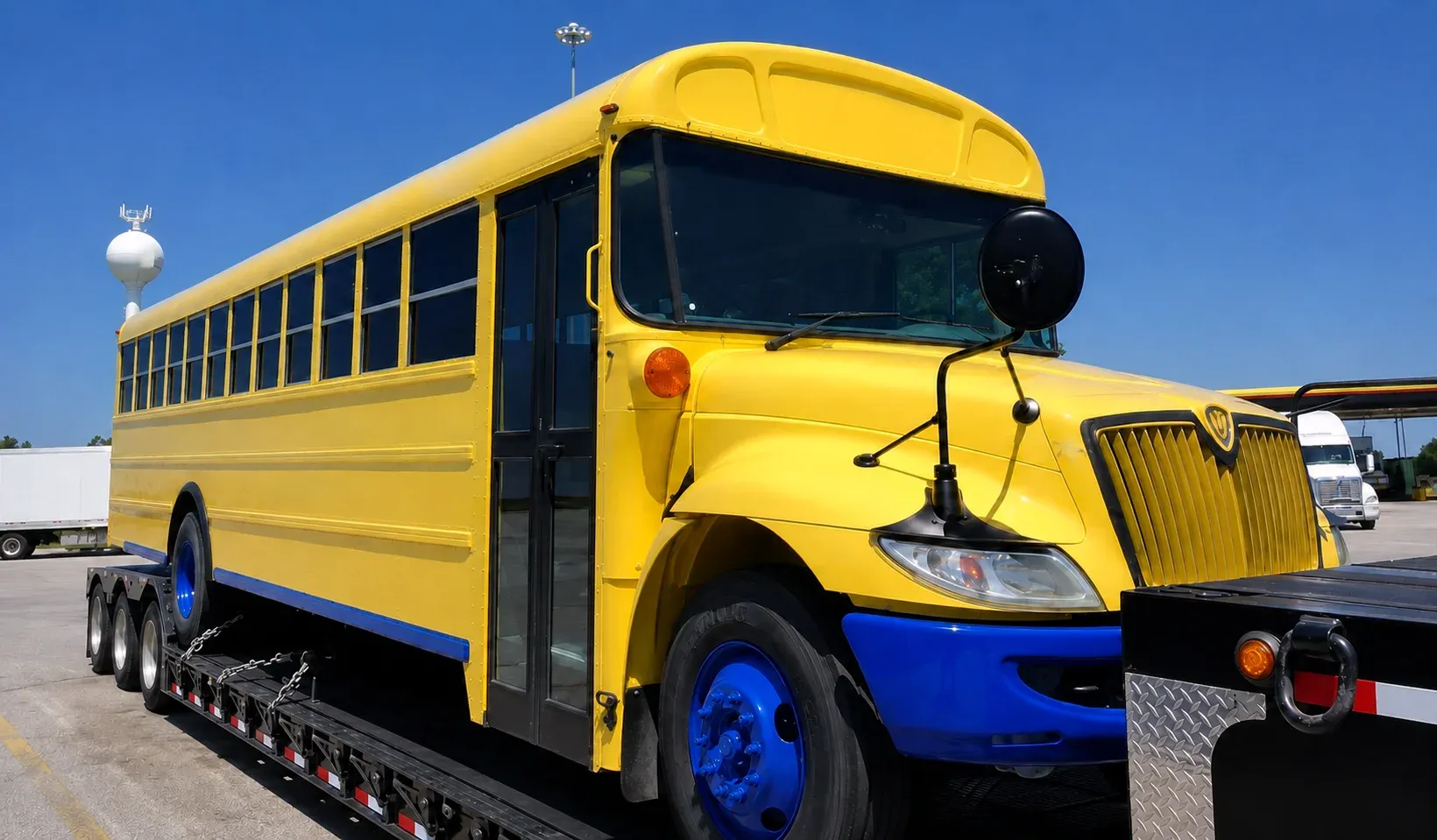
How To Prepare Your Bus for Transportation
Remove Personal Items
Clear personal belongings, valuables and loose cargo from the seats, overhead racks and storage bays. Wash the exterior so the current condition is easy to see. Photograph the bus from several angles and keep the photos for your records.
Check the Bus's Condition
Check the tires, battery, brakes and fluid levels. Follow the carrier's fuel instructions. Report leaks, starting problems or other mechanical concerns. Let us know if the bus does not run, roll, steer or brake.
Secure Interior and Exterior Equipment
Close and latch the windows, doors, hatches and cargo bays. Secure luggage racks, seats and anything else that could shift. Lower or remove antennas, mirrors and other parts that add height.
Prepare the Keys
Keep one set of keys for the driver and explain any special starting or handling steps. At delivery, inspect the bus with the driver and note the condition on the inspection report.
Buses We Ship
School Buses
School buses are long and carry specific safety equipment. Their length affects trailer selection and route clearance. Districts and dealers often move several units at once, which calls for coordinated scheduling.
Shuttle Buses
Shuttle buses are shorter and lighter than full-size models. They still need attention to tie-down points and weight distribution. Measure the height and any rear-lift equipment before pickup.
Transit Buses
City and commuter buses move between agencies, depots and maintenance facilities. Their weight and mechanical systems call for drivers experienced with commercial-scale vehicles. Report the axle weights and whether the bus runs under its own power.
Motorcoaches and Charter Buses
Motorcoaches have luggage bays, interior finishes and passenger amenities. Their height and value affect securement and loading choices. Covered equipment may not be available at this size, so protection usually comes from the loading method rather than an enclosed trailer.
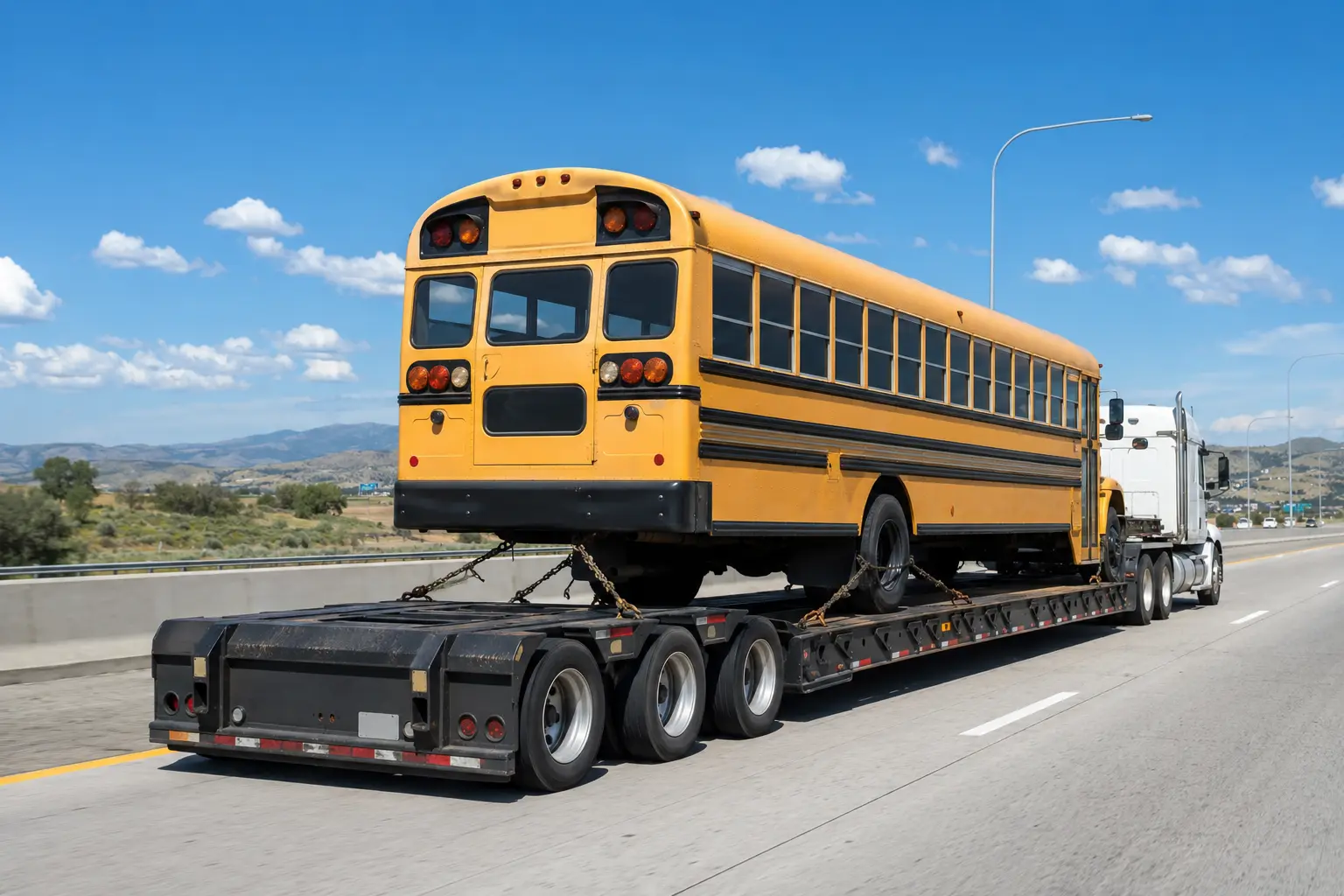
Which Transport Service Fits Your Bus?
Shorter buses and shuttles may fit a flatbed or step-deck trailer. The vehicle stays exposed to weather and normal road conditions during the trip.Taller and heavier buses may need lowboy or other specialized equipment. Lower deck heights help with overall clearance. Oversized loads can also require permits, planned routes and escort vehicles.
Non-running buses need a carrier with a winch or similar loading equipment. Report that condition early, since it affects both the equipment and which carriers can take the job. Bus shipping rates depend on distance, dimensions, weight, condition, equipment and carrier availability. Share accurate measurements and photos, and AMPM will review the details and look for a carrier whose equipment and route access match the shipment.