
Some luxury SUVs seem designed mainly to impress from the curb. They look sharp, carry an expensive badge, and fill the cabin with screens. Then real life shows up. There are groceries to load, passengers to pick up, narrow parking spaces to enter, and long commutes that make comfort matter more than dramatic styling.
The 2026 Acura RDX takes a more grounded approach. It is upscale without feeling delicate, sporty without becoming exhausting, and roomy without growing into a three-row family hauler. This is not an entirely new Acura design for 2026. The current RDX carries over without major changes, following a light exterior update for the previous model year. That may disappoint drivers looking for the newest cabin technology or a redesigned powertrain. For everyone else, the familiar formula still makes sense. The RDX offers standard all-wheel drive, a strong turbocharged engine, useful cargo space, and a starting price below many European luxury competitors. The result is an Acura SUV that feels less like a special-occasion purchase and more like something you can comfortably use every day.
What Makes the 2026 Acura RDX Different?
The RDX sits in the middle of Acura’s SUV lineup. It is larger than the subcompact ADX but smaller than the three-row MDX. That position gives it a useful balance. It has enough passenger and cargo room for a small family, yet it does not feel oversized when navigating a crowded parking garage or narrow residential street. Every 2026 RDX comes with seating for five and Super Handling All-Wheel Drive, commonly called SH-AWD. Many competitors reserve all-wheel drive for an added-cost option, but Acura includes it across the RDX lineup.
There are five available equipment levels:
- RDX
- Technology
- A-Spec
- Advance
- A-Spec Advance
The base model starts at $45,100 before additional options and fees. The Technology package starts at $47,700, while the top A-Spec Advance package begins at $54,850. Final pricing can change with premium paint, accessories, destination charges, and dealer-installed equipment. Even the standard RDX includes a panoramic moonroof, LED lighting, a 10.2-inch center display, wireless Apple CarPlay, wireless Android Auto, and the AcuraWatch driver-assistance suite. Higher packages add features such as upgraded leather, premium audio, wireless phone charging, adaptive dampers, ventilated seats, and sportier exterior details.
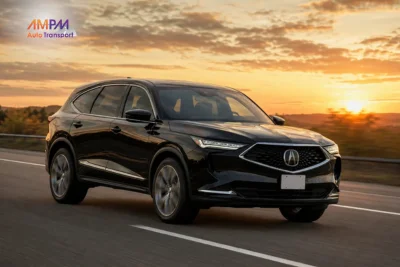
The A-Spec packages receive much of the attention because of their larger wheels, dark exterior trim, sport-inspired cabin, and more aggressive appearance. Still, the Technology or Advance package may make more sense for drivers who care more about comfort than visual upgrades. Edmunds identifies the Technology package as a strong middle choice because it adds leather seating, upgraded audio, wireless charging, and parking sensors without reaching the price of the highest packages. The styling follows the same practical pattern. The wide grille, slim headlights, sculpted sides, and available 20-inch wheels give the RDX a sporty look. It stands out, but it does not sacrifice everyday usability just to appear more dramatic. For someone moving from a lower Acura car into an SUV, the RDX may feel like a natural step. It provides more space and a higher seating position while keeping the driver-focused character associated with the brand.
Turbocharged Performance Without the Usual Drama
Every 2026 Acura RDX uses the same powertrain. A turbocharged 2.0-liter four-cylinder engine produces 272 horsepower and 280 pound-feet of torque. The engine works with a 10-speed automatic transmission and standard SH-AWD. There is no underpowered base engine followed by a long list of expensive performance upgrades. Buyers choose the package based mainly on equipment and appearance rather than engine output. The RDX feels responsive in normal traffic. It has enough low-speed power for merging, passing, and pulling away from a stop without requiring the driver to push the engine hard. Car and Driver recorded a 6.2-second run from zero to 60 mph in an A-Spec model. That does not make the RDX the quickest luxury crossover in its class, but it is fast enough to feel lively during everyday driving.
Handling is one of the model’s stronger qualities. The SH-AWD system can direct power between the front and rear wheels and from one side of the rear axle to the other. That helps the vehicle turn more confidently and improves traction when road conditions change. Four driving modes are available: Comfort, Normal, Snow, and Sport. The modes adjust steering, throttle response, transmission behavior, and other vehicle settings. Advance and A-Spec Advance models also include adaptive dampers, allowing the suspension to respond differently depending on the chosen mode.
The RDX is not perfect on rough pavement. Models with 20-inch wheels may transmit more sharp impacts into the cabin than versions with 19-inch wheels. The transmission can also hesitate before downshifting, especially when the driver requests quick acceleration. Fuel economy is another compromise. The standard RDX is rated at 21 mpg in the city, 27 mpg on the highway, and 23 mpg combined. Those numbers are reasonable for a 272-horsepower all-wheel-drive SUV, but several competitors offer more efficient hybrid or mild-hybrid powertrains.
Anyone specifically searching for an Acura hybrid SUV should know that the 2026 RDX is not a hybrid. Every current model uses the turbocharged gasoline engine. Acura has previewed a next-generation hybrid SUV that is expected to influence the future RDX, but that powertrain is not part of the 2026 lineup. Buyers who need a hybrid now will have to consider another model or brand. Towing capacity is limited to 1,500 pounds. That may be enough for a light utility trailer, small personal watercraft, or other modest load, but the RDX is not intended to replace a larger SUV or pickup truck.
Inside the RDX: Comfort, Space, and Technology
Luxury is not always about the softest leather or the largest display. In an everyday SUV, it is often about whether passengers have enough room, controls are easy to reach, and cargo can be loaded without rearranging the entire vehicle. The RDX handles most of those jobs well, though one part of its technology takes some getting used to.
Room for Five Without Feeling Oversized
The 2026 RDX has a passenger volume of 104 cubic feet. Front passengers receive 42 inches of legroom, while rear passengers have 38 inches. Those dimensions give adults usable space in both rows. The back seat is not simply an occasional area for children or short trips. The RDX measures 187.4 inches long, 74.8 inches wide, and 65.7 inches tall. It is large enough to feel substantial on the highway but still manageable in city traffic and standard parking spaces. There are 29.5 cubic feet of cargo space behind the rear seats and 58.9 cubic feet with the second row folded. Acura also includes rear underfloor storage, giving drivers a separate place for small bags, emergency supplies, charging cables, or items they prefer to keep out of sight.
The rear seats use a 60/40 split. One side can be folded for longer cargo while leaving space for a rear passenger. That flexibility is useful for airport luggage, sports equipment, furniture boxes, pet supplies, or the large grocery run that did not look quite so large inside the store.
A Cabin That Feels Premium but Usable
The interior does not try to copy the highly digital cabins found in some newer luxury SUVs. Instead, the RDX combines physical buttons, a traditional instrument layout, a wide center console, and a dashboard screen positioned near the driver’s line of sight. A panoramic moonroof is standard on every package. Available upgrades include Milano leather, Ultrasuede trim, open-pore wood, brushed aluminum accents, ventilated front seats, and customizable ambient lighting. The overall design feels sporty rather than lounge-like. The center console rises between the front seats, and the dashboard angles slightly toward the driver. Drivers who prefer a soft, minimalist interior may find some competitors more relaxing. Those who like a cockpit-style layout may feel at home quickly. The flat-bottom steering wheel, metal trim, strong seat bolstering, and available red or Orchid upholstery give the A-Spec models more personality. The regular RDX and Technology packages are more restrained.
The Touchpad Requires an Adjustment Period
The main infotainment display measures 10.2 inches and includes wireless Apple CarPlay and Android Auto on every package. The display itself is clear and positioned high on the dashboard. The unusual part is how it is controlled.
Instead of touching the screen, the driver uses a touchpad on the center console. Each area of the pad corresponds with a position on the display. Acura calls this an absolute-positioning system. Some drivers become comfortable with it. Others may continue to prefer a touchscreen or physical dial. Both Car and Driver and Edmunds identify the interface as one of the RDX’s weaker features. It is not unusable, but it does add a learning curve to basic tasks. This is something worth testing during a drive rather than dismissing or accepting based only on a review.
Spend a few minutes switching audio sources, using the map, opening vehicle settings, and moving between smartphone apps. The available ELS Studio 3D audio system is much easier to appreciate. Depending on the package, the RDX includes nine, 12, or 16 speakers. The 16-speaker setup places four speakers in the headliner and is standard on A-Spec, Advance, and A-Spec Advance packages.
Driver Assistance Comes Standard
Every 2026 RDX includes AcuraWatch, the brand’s collection of driver-assistance features. The suite includes a collision mitigation braking system, road departure mitigation, adaptive cruise control with low-speed follow, and lane-keeping assistance. These features do not replace an attentive driver. They are designed to provide warnings or limited assistance when the system detects a possible collision, unintentional lane departure, or changing traffic speed. Package selection affects additional convenience features. Parking sensors, surround-view cameras, blind-spot information, and other equipment may be available or standard only on certain versions. Review the equipment list for the exact vehicle rather than assuming every RDX on a dealer lot has the same technology.
Is the 2026 Acura RDX Right for Everyday Life?
The 2026 RDX works best for drivers who want a compact luxury SUV with standard all-wheel drive, strong acceleration, a useful back seat, and enough cargo space for normal family life. It also suits someone who wants premium features without paying for a larger three-row vehicle. The RDX may not be the right fit for everyone. Drivers who regularly carry six or seven passengers will need something larger, such as the MDX. Those who mainly drive in dense city traffic may prefer the smaller ADX. Buyers focused on maximum fuel economy should also look elsewhere. The 2026 RDX does not offer a hybrid powertrain, and its 23-mpg combined rating falls behind several electrified competitors. It is also not the strongest option for towing. The 1,500-pound limit is enough for light recreational use, but drivers pulling a substantial camper, boat, or equipment trailer will need a more capable vehicle.
The infotainment touchpad could be another deciding factor. Some owners adapt to it quickly. Others may consider it an unnecessary complication in a vehicle used every day. Where the RDX makes its case is balance. It is quicker and more engaging than many practical crossovers but does not demand the compromises of a dedicated performance SUV. It has an upscale cabin, but owners do not have to treat it like a fragile showpiece. The cargo area can handle luggage and shopping bags. The rear seat can carry adults.
Standard all-wheel drive adds confidence in wet or snowy weather, and the exterior dimensions remain reasonable for normal parking. The 2026 RDX is not a dramatic reinvention. In fact, its familiar design may be the reason some shoppers pass over it for a newer competitor. But newer is not always the same as more useful. For drivers considering a new Acura and wanting one vehicle for commuting, family errands, weekend trips, and long highway drives, the RDX continues to cover a wide range of needs. It feels premium when that matters. More importantly, it still works when real life gets messy.