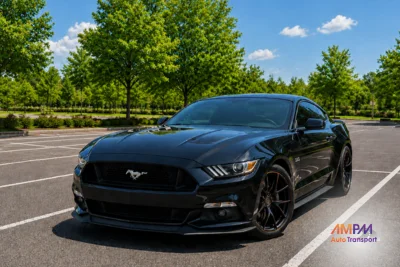
Mention the Ford Mustang, and most people immediately think of a V8.They picture the sound first. Then the long hood, rear-wheel drive, and the kind of acceleration that turns an ordinary entrance ramp into the best part of the commute. The 2026 Ford Mustang EcoBoost approaches the same formula from a different direction. Under the hood is a turbocharged four-cylinder engine, not the 5.0-liter V8 found in the Mustang GT. There is less noise, lower fuel consumption, and a more approachable starting price. That does not automatically make it the lesser Mustang.
The EcoBoost still sends 315 horsepower to the rear wheels. It has the low seating position, sharp body shape, digital cockpit, and everyday usability of the current Mustang. It can move quickly when the road opens up, yet it does not require the fuel budget or purchase price of the V8 models. There are limits. Ford does not offer the EcoBoost with a manual transmission, and the experience is not as dramatic as it is in a 2026 Mustang GT or Dark Horse. The convertible also becomes expensive once options are added, which makes its compromises harder to overlook. Still, the EcoBoost Mustang has a clear purpose. It gives drivers much of the style and speed they expect from a Mustang without insisting that every trip feel like a visit to the drag strip. Sometimes that is exactly the right amount of Mustang.
What Makes the 2026 Ford Mustang EcoBoost Different?
The EcoBoost is the entry point to the 2026 Mustang lineup, but “entry level” does not mean slow or stripped down. Its turbocharged 2.3-liter four-cylinder engine produces 315 horsepower and 350 pound-feet of torque. A 10-speed automatic transmission is standard, and it is the only transmission available with this engine. Like every traditional Mustang, the EcoBoost uses rear-wheel drive. Ford lists the EcoBoost Fastback with a starting price of $33,490, while the EcoBoost Premium Fastback starts at $36,345. Those figures exclude destination charges, taxes, registration, and optional equipment. That puts a noticeable gap between the four-cylinder model and the V8 lineup. The Mustang GT 2026 starts at $47,795, while the GT Premium begins at $52,075. The regular 2026 Ford Mustang Dark Horse starts at $64,080.The difference is large enough to change the entire buying decision.
Someone choosing the EcoBoost may have room in the budget for insurance, upgraded wheels, a better audio system, road trips, or simply lower monthly payments. A buyer stretching toward a GT may end up with more engine than they regularly use and less flexibility everywhere else. The EcoBoost also offers better fuel economy. The EPA estimate reaches as high as 22 mpg in the city and 33 mpg on the highway. Car and Driver recorded 32 mpg during its 75-mph highway test, while the V8-powered GT carries considerably lower estimates.
That matters because most Mustangs spend far more time in traffic than on a racetrack. A driver may enjoy a quick back-road run on Saturday, but the car still has to handle Monday morning. It needs to sit in traffic, fit into a parking space, carry groceries, and cover long highway distances without stopping at every other gas station. The four-cylinder engine makes those ordinary miles easier to justify.
The 2026 model also gets a few visual updates across the lineup. New paint choices include Adriatic Blue Metallic, Avalanche Gray, and Orange Fury Metallic Tri-coat. Additional seat belt colors are available on select models, while appearance packages offer different wheels, trim, stripes, and exterior details. Ford also offers an RTR package for the EcoBoost fastback. It adds more aggressive styling and anti-lag turbocharger technology intended to keep the turbo ready to respond. It is available only on the fastback, not the convertible. None of this turns the EcoBoost into a Dark Horse. That is not the point. It remains the lighter, quieter, and more affordable side of the Mustang family. For drivers who want the shape and character of the car without building their entire ownership experience around a V8, that distinction can be useful.
Is a Four-Cylinder Mustang Actually Fast?
The short answer is yes. Car and Driver recorded a zero-to-60-mph time of 4.5 seconds from an EcoBoost coupe. That puts the car within reach of many more expensive performance models and only a little behind some V8 Mustangs in everyday acceleration. Numbers do not tell the entire story, though. The EcoBoost engine delivers its torque low in the rev range. You do not need to wait for the engine to climb toward redline before the car begins moving with urgency. Press the accelerator while entering a highway or passing slower traffic, and the turbocharger gives the Mustang a strong midrange push. It does not sound like the V8. No exhaust option can completely imitate the deeper tone of a 5.0-liter engine, and drivers shopping mainly for sound may never be satisfied with an Eco Boost Mustang.
But performance is more than noise. The EcoBoost carries less weight over the front axle than the V8 models. That can make the nose feel more willing to change direction, particularly during ordinary road driving where the car is not being pushed to its limit. The standard Mustang also includes selectable drive modes, electronic stability control, a limited-slip rear axle, and Track Apps. An available active-valve performance exhaust can change the exhaust character, while an optional electronic drift brake adds another playful element for controlled environments. The transmission is where opinions may become more complicated. A 10-speed automatic can keep the engine close to the strongest part of its power range, but frequent gear changes may make it feel busy. Car and Driver describes the engine and transmission combination as solid-performing, though the automatic is the only choice for EcoBoost buyers.
Anyone who wants a manual Mustang must move up to a V8 model. That makes the EcoBoost less appealing to traditional enthusiasts who consider shifting gears part of the experience. A 2026 Mustang GT offers either the 10-speed automatic or a six-speed manual, while the Dark Horse can be equipped with a six-speed TREMEC manual. Still, many drivers will not miss the clutch pedal. The automatic is easier in traffic, quick when the driver asks for acceleration, and well suited to someone using the Mustang as an everyday car. It also lets the engine remain relatively relaxed during highway driving. The fastback is the version that makes the strongest performance case.
A 2026 Mustang convertible carries extra structural weight because removing the fixed roof requires additional reinforcement. Edmunds tested an EcoBoost Premium Convertible weighing 3,844 pounds and recorded a zero-to-60-mph time of 5.4 seconds. The tested car completed the quarter mile in 13.8 seconds at 99.1 mph. Those numbers are not slow. They are simply less impressive than the EcoBoost coupe’s results. Edmunds also criticized the tested convertible’s transmission behavior, steering, body movement, grip, and overall value. Its heavily optioned test car reached $51,905, placing it close to V8 Mustang territory.
That does not mean every Ford Mustang convertible will disappoint every driver. It does mean the reason for buying one should be clear. Choose the convertible because you want an open roof, summer evenings, coastal drives, and the experience of hearing the outside world as you travel. Do not choose it expecting the same sharpness or value as the EcoBoost fastback. The coupe is the better driver’s car. The convertible sells a different kind of fun.
Living With the EcoBoost Mustang Every Day
The current Mustang does not feel like an old muscle car inside. There are still a few familiar cues, including the long hood, low seating position, and a dashboard angled toward the driver. But large screens now handle most of the information and entertainment. That makes the car easier to use every day, though it also gives the cabin a very different character from older Mustangs.
A Digital Cockpit With Retro Options
Every 2026 EcoBoost Fastback includes a 12.4-inch digital instrument cluster and a 13.2-inch center display running Ford’s SYNC 4 system. The driver can adjust the cluster layout, colors, gauges, and the amount of information shown. The screens can look thoroughly modern or imitate older Mustang gauges. Car and Driver notes that the cluster can display a design inspired by the 1987 Mustang.
Ford has also released an over-the-air display inspired by the 1967 model for seventh-generation cars. It is a small feature, but it fits the Mustang well. The car does not need to pretend the past never happened. It can use modern technology while still acknowledging why the name matters. SYNC 4 supports connected apps and vehicle settings through the center display. The EcoBoost also comes with a six-speaker sound system, USB charging ports, SiriusXM with 360L, a 4G modem, and access to the Ford app. A 12-speaker Bang & Olufsen system is available.
The screen-heavy layout may not appeal to everyone. Drivers who prefer physical buttons may need time to learn where common settings are located. At least the displays are large, clear, and positioned where the driver can see them without looking far down the dashboard.
Front Seats Matter More Than the Back Ones
The Mustang technically has four seats. Realistically, it is best treated as a two-person car with emergency seating behind them. The rear bench can handle children, small adults on short trips, or bags that do not fit in the trunk. Taller passengers will quickly notice the limited legroom and sloping roof. That is not a flaw unique to the EcoBoost. It is part of living with a two-door performance coupe.
The front of the cabin is much easier to enjoy. The seats sit low and provide enough support for daily driving and quicker corners. The flat-bottom steering wheel leaves more space around the driver’s legs, while dual-zone automatic climate control is standard. Base models use cloth front bucket seats. Premium versions add more cabin trim, comfort features, and upgraded materials. The Premium may be the better choice for someone planning to keep the car for years or use it as a daily driver. The regular EcoBoost makes more sense when price and performance matter more than interior upgrades. Neither feels like a luxury coupe. There are harder plastics and practical materials around the cabin. Still, the driving position feels special enough to remind you that this is not an ordinary compact car.
The Fastback Is More Practical Than It Looks
A Mustang will never replace an SUV, but the fastback can handle more than its shape suggests. The rear seat uses a 50/50 split-folding design, allowing longer objects to extend from the trunk into the cabin. Car and Driver fit five carry-on suitcases in the trunk and 14 with the rear seats folded. That is enough room for a weekend trip, airport luggage, groceries, or the normal collection of items that ends up in a daily driver.
The coupe’s fixed roof also gives it a structural and practical advantage over a convertible Mustang. There is less body movement, less wind noise, and no folding roof mechanism taking up space. The 2026 Ford Mustang convertible still has a useful trunk for a drop-top, but the fastback is the easier choice for year-round ownership. Cold climates add another consideration. Rear-wheel drive can work in winter, but tires matter far more than horsepower. A good set of winter tires can make the Mustang more predictable in cold and snowy conditions. The standard all-season tires may be adequate in mild weather, while performance-oriented summer tires should not be used in freezing temperatures. A driver buying the car for all-season transportation should include tire costs in the budget rather than treating them as an afterthought.
Modern Safety Without Losing the Mustang Feel
The 2026 EcoBoost includes several driver-assistance features that earlier Mustangs never offered. Standard equipment includes automatic emergency braking, a lane-keeping system, rear parking sensors, a rearview camera, rain-sensing wipers, automatic high beams, blind-spot monitoring, and cross-traffic alert. These systems do not change the basic personality of the car. The Mustang remains low, rear-wheel drive, and focused on the person behind the wheel.
The safety technology simply makes it easier to live with in traffic, parking lots, and long highway trips. Rear parking sensors are especially helpful because the driver sits low and the rear bodywork can be difficult to judge from the seat. Blind-spot monitoring also earns its place. Thick rear pillars and the fastback roofline limit over-the-shoulder visibility, so an extra warning can be useful when changing lanes. Technology cannot replace checking mirrors or paying attention. It can reduce some of the strain that comes with using a sporty two-door car every day.
EcoBoost, GT, Convertible, or Dark Horse?
The Mustang lineup covers a wide range of drivers, even though every version shares the same basic shape. The EcoBoost is the most affordable and efficient. The GT adds the sound and power of a naturally aspirated V8. The Dark Horse sharpens the car for harder driving, while the new Dark Horse SC pushes the Mustang into a much more serious performance category. Choosing between them starts with an honest question: What part of the Mustang experience actually matters to you?
The 2026 Ford Mustang EcoBoost makes sense for drivers who want:
- Strong acceleration without V8 fuel use
- A lower purchase price
- An automatic transmission
- Classic Mustang styling
- A car that can handle commuting and road trips
- Rear-wheel-drive character without extreme power
The EcoBoost does not ask the owner to sacrifice everyday usability for performance. It is quick enough to feel special, efficient enough to travel, and affordable enough to leave room for the rest of life. The 2026 Mustang GT is the emotional choice. Its 5.0-liter V8 produces 480 horsepower and 415 pound-feet of torque in standard form. An available performance exhaust raises output to 486 horsepower and 418 pound-feet. Buyers can choose a 10-speed automatic or six-speed manual transmission. A GT with the automatic and performance exhaust reached 60 mph in 3.7 seconds in Car and Driver testing. A manual version completed the same run in 4.2 seconds. The numbers are part of the appeal, but the engine’s sound and response matter just as much. The V8 gives the Mustang a personality the four-cylinder cannot fully reproduce. It also costs more to buy, fuel, and often insure.
The 2026 Ford Mustang Dark Horse is aimed at drivers who plan to use more of the car’s performance. Its modified 5.0-liter V8 produces 500 horsepower and 418 pound-feet of torque. It also includes track-focused brakes, wheels, cooling, suspension tuning, and available handling equipment. Then there is the Dark Horse SC. New for 2026, it uses a supercharged 5.2-liter V8 producing 795 horsepower. Ford lists a starting price of $106,585, placing it in an entirely different financial and performance category from the regular EcoBoost. For most people, the choice will never reach that far. The more realistic comparison is between the EcoBoost fastback, EcoBoost Premium, and Mustang GT. The regular EcoBoost is the value option. The Premium adds comfort and visual upgrades. The GT makes sense when the V8 is the entire reason for buying the car. The Ford convertible models require a different calculation.
A convertible is rarely the most logical version of any performance car. It costs more, weighs more, and gives up some structural stiffness. What it provides is an experience the coupe cannot match. Lowering the roof changes an ordinary drive. You hear more of the road, feel the temperature change, and become more aware of where you are traveling. That may be worth the compromise. It may not. The Edmunds test shows how quickly a heavily optioned EcoBoost convertible can become difficult to justify. At more than $51,000 as tested, it entered the price range of a V8-powered GT while delivering slower acceleration and less composed handling. A simpler 2026 Ford Mustang convertible may make more sense for someone who values open-air driving above track performance. The key is to avoid adding options until the car costs as much as a stronger model.
The EcoBoost fastback remains the most balanced choice. It does not have the loudest engine or the highest horsepower number. It will not satisfy someone who has wanted a V8 Mustang since childhood. But it is quick. It looks right. It can return respectable highway fuel economy, carry weekend luggage, and make an ordinary commute more interesting. The Mustang has always been about accessible performance. In that sense, the EcoBoost may be closer to the original idea than its engine size suggests. It gives more drivers a way into a rear-wheel-drive sports coupe without demanding the price or running costs of the most powerful version. You do not need a V8 to have fun. You only need to be honest about which kind of fun you are looking for.