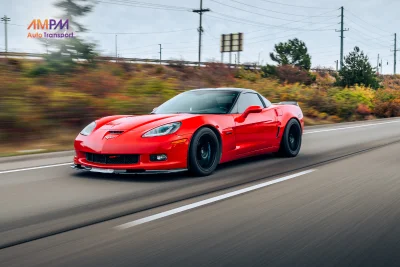
Fast cars are easy to describe with numbers. Horsepower. Acceleration. Top speed. Lap times. The 2026 Corvette Z06 has plenty of impressive numbers, but they do not fully explain why the car feels so special. Its real appeal starts when the naturally aspirated V8 climbs toward its 8,600-rpm redline and the exhaust note changes from a deep growl into something much sharper. It sounds more like an exotic European engine than the V8 most people expect from an American sports car. Then there is the way the Z06 turns. The engine sits behind the driver, the tires are unusually wide, and the chassis responds with the kind of precision once associated mainly with cars carrying Italian or German badges.
This is no longer a traditional front-engine Corvette with more power added to it. The current Chevrolet Corvette Z06 was designed as a mid-engine supercar from the beginning. The price reflects that change, the 2026 model starts at $120,300 before options and additional fees. A well-equipped version can move far beyond that figure once higher trim levels, carbon-fiber wheels, upgraded brakes, premium materials, and track-focused equipment are added. That is a serious amount of money for a Chevrolet.
It is also far below the price of several European cars offering similar performance. Car and Driver gave the 2026 Z06 a 10-out-of-10 rating and described it as a relative value compared with the exotic vehicles it can challenge. The Z06 is not practical in the way a family SUV is practical. It seats two, drinks fuel quickly, attracts attention everywhere, and provides no manual transmission. Yet it can still carry weekend bags.
The coupe has a removable roof. The ride is more comfortable than the appearance suggests, and the cabin no longer feels like a place built only for track days. The Corvette Z06 is extreme, but it is not impossible to live with. Most importantly, it is fun before the driver reaches an illegal speed. The engine noise, low seating position, immediate steering, and view through the windshield can make an ordinary road feel more interesting. That may be the Z06’s greatest achievement. It performs like a serious supercar without forgetting that driving is supposed to make you smile.
What Makes the 2026 Corvette Z06 So Different?
The regular Corvette Stingray is already quick. Its mid-engine layout, 6.2-liter V8, dual-clutch transmission, and wide stance provide enough performance for most drivers. The Z06 takes that foundation and rebuilds it around a different engine, wider body, stronger brakes, larger tires, revised suspension, and more aggressive aerodynamics. The biggest difference sits directly behind the passenger compartment. The Z06 uses a naturally aspirated 5.5-liter LT6 V8 producing 670 horsepower and 460 pound-feet of torque. It has a flat-plane crankshaft and an 8,600-rpm redline, making it unlike the lower-revving cross-plane V8 engines traditionally associated with American performance cars. A flat-plane crankshaft helps the engine rev quickly and contributes to its distinctive sound. Instead of relying on turbochargers or a supercharger, the LT6 builds power through engine speed.
That changes how the car feels. A turbocharged engine may deliver a heavy rush of torque at low rpm. The Z06 encourages the driver to let the engine climb higher. The power continues building, the sound becomes more urgent, and each gear feels like it lasts just long enough to enjoy the moment. The engine is paired with an eight-speed dual-clutch automatic transmission. There is no manual option.
That absence may disappoint longtime Corvette owners who prefer a clutch pedal and traditional shifter. Chevrolet chose the dual-clutch transmission because it changes gears quickly and helps the car deliver consistent acceleration. Paddle shifters still allow the driver to select gears manually, but the experience is different from operating a physical clutch. Power goes only to the rear wheels. The Z06 does not use the electric front axle found in the all-wheel-drive E-Ray, and it does not have the turbocharged power of the ZR1.
That gives each performance Corvette a distinct character. The E-Ray focuses on all-weather traction and immediate hybrid-assisted acceleration. The ZR1 delivers far more power through turbocharging. The Z06 sits between them as the high-revving, naturally aspirated choice. It may not be the most powerful 2026 Corvette, but it could be the most emotionally engaging. Chevrolet offers the Z06 as both a coupe and a hardtop convertible. The coupe includes a removable roof panel that can be stored in the rear cargo area. The convertible uses a power-retractable roof that can be raised or lowered at speeds of up to 30 mph.
The coupe has a dry weight of approximately 3,500 pounds, while the convertible is slightly heavier at 3,599 pounds. Unlike some convertibles, the open-roof Z06 does not lose a dramatic amount of performance. Car and Driver recorded a 2.6-second zero-to-60-mph time from the coupe. The convertible needed only one-tenth of a second more. The 2026 lineup includes three main equipment levels:
- 1LZ
- 2LZ
- 3LZ
The 1LZ starts at $120,300. It includes a 10-speaker Bose audio system, power-adjustable leather seats, a head-up display, a wireless phone charger, and the removable roof panel on the coupe. The 2LZ starts at $129,200 and adds heated and ventilated seats, a 14-speaker Bose system, a Performance Data Recorder, a heated steering wheel, blind-zone monitoring, rear cross-traffic alert, memory settings, and a curb-view camera. The 3LZ starts at $133,850. It adds upgraded leather, additional suede-like trim, carbon-fiber details, and GT2 seats with Napa leather.
Those prices are only the beginning. Carbon-fiber wheels, visible carbon trim, premium paint, upgraded seats, front-axle lift, and the Z07 Performance Package can raise the final cost considerably. The Z06 shown on Chevrolet’s website carries a price above $166,000.Buyers searching for “ZO6 Corvette” or “Corvette ZO6” should note that the official model name uses a zero followed by the number six: Z06.It is a small difference, but an important one when comparing listings, specifications, and prices.
What 670 Horsepower Feels Like From the Driver’s Seat
The 2026 Chevrolet Corvette Z06 is fast enough that its full ability cannot be explored responsibly on a public road. Chevrolet lists an available zero-to-60-mph time of 2.6 seconds and a quarter-mile time of 10.6 seconds at 131 mph. Car and Driver recorded the same zero-to-60 result and completed the quarter mile in 10.5 seconds. Those figures place the Z06 firmly in modern supercar territory. Acceleration is only one part of the experience, though. Plenty of electric vehicles can launch quickly in a straight line. What makes the Z06 different is how the engine, transmission, steering, brakes, and chassis work together. The engine does not deliver all its character in the first few seconds.
At lower speeds, the car can feel surprisingly controlled. The dual-clutch transmission shifts smoothly in its calmer settings, and the engine does not need to operate near redline during ordinary traffic. Press the accelerator more firmly, and the personality changes. The LT6 responds quickly, the exhaust becomes louder, and the transmission begins holding gears longer. The engine’s ability to keep pulling near the top of the rev range gives the driver a reason to use more of each gear. The experience feels mechanical even though the transmission is automated. The Z06 also receives a wider body than the standard Stingray. It uses 20-inch front wheels and 21-inch rear wheels, with broad tires developed to handle the car’s power and cornering forces. Larger brakes and revised suspension tuning help it slow and turn with much greater authority than the regular Corvette.
Car and Driver measured 1.16 g of grip from a Z06 equipped with the Z07 package and recorded a 70-to-zero-mph braking distance of 139 feet. Those numbers reveal how serious the car is, but they also point to an important warning. The Z06 provides high limits. Reaching those limits requires space, training, suitable tires, and the controlled conditions of a track. A driver can get into trouble quickly by treating public roads like a test course. The car includes several drive modes and electronic systems designed to manage its performance. A newer PTM Pro setting can switch off stability and traction control while retaining anti-lock braking for experienced drivers operating in an appropriate environment. For most road driving, leaving the safety systems active is the sensible choice.
The standard Z06 is already more capable than most owners will ever need. The optional Z07 Performance Package takes it further with additional aerodynamic equipment, carbon-ceramic brakes, track-focused Michelin tires, and chassis changes intended for harder circuit use. The package can help the Z06 produce quicker lap times, but it is not automatically the best setup for every buyer. Track-focused tires may wear faster, produce more road noise, and perform poorly in cold or wet conditions. Larger aerodynamic pieces can make the vehicle more difficult to use around steep entrances, speed bumps, and parking areas. Carbon-ceramic brakes are powerful and resist heat during repeated hard stops. They can also be expensive to replace.
A buyer who spends most of the time on public roads may be happier with the standard Z06 and its more road-friendly setup. The car will still be extremely fast. Fuel economy is another reality. The Z06 carries EPA estimates of 12 mpg in the city, 21 mpg on the highway, and 15 mpg combined. Car and Driver achieved an unexpected 26 mpg during its 75-mph highway test, but normal results will depend heavily on driving style.
A calm highway trip and a day of high-rpm driving will produce very different fuel bills. The Z06 also requires more attention than an ordinary sports coupe. Its body sits low, the tires are wide, and visibility around the car can take time to learn. Careless parking may lead to wheel damage, while steep driveways can threaten the front splitter. An available front-axle lift system can raise the nose when approaching difficult surfaces. For drivers using the car regularly, this may be a more practical option than an expensive visual upgrade.
The system does not turn the Z06 into a normal-height vehicle. It simply reduces some of the anxiety around familiar trouble spots. That balance matters. The Corvette Z06 is most enjoyable when the owner does not feel afraid to drive it. Choosing equipment that fits real use may provide more value than building the most aggressive configuration possible.
Inside the Z06: A Supercar You Can Actually Use
The Z06 looks dramatic from the outside, but the cabin is where the 2026 model received some of its most noticeable changes. Chevrolet redesigned the dashboard around a new three-screen arrangement. The previous wall of climate-control buttons between the driver and passenger has been removed, creating a cleaner and more open layout. It still feels like a cockpit. The driver sits low, the center display angles inward, and the wide console separates the two seats. The difference is that the controls now look more organized and less crowded.
Three Screens Replace the Old Button Wall
The 2026 Z06 uses a 14-inch digital instrument display directly in front of the driver. To the right sits a 12.7-inch infotainment touchscreen. A separate 6.6-inch display appears to the left of the instrument panel, creating a three-screen layout that places vehicle information across the dashboard. The smaller screen can show performance-related information and other vehicle data without filling the main instrument panel. Climate controls have moved below the central screen, while the redesigned drive-mode selector now sits closer to the transmission controls.
The change removes one of the most controversial features of the earlier C8 interior. The previous row of buttons created a physical barrier between the seats and made some controls difficult for the passenger to reach. The new design looks cleaner, though it also depends more heavily on screens. Wireless Apple CarPlay and Android Auto are included, along with Bluetooth streaming, a wireless phone charger, and an available 4G LTE connection. Car and Driver found the updated infotainment system responsive and easy to use. An optional carbon-fiber display surround adds a more track-focused look, but the basic layout remains the same across the range.
The Trim Level Changes the Character
The basic 1LZ already includes leather upholstery, power-adjustable GT1 seats, a head-up display, and a Bose sound system. Moving to the 2LZ makes the car easier to live with. Heated and ventilated seats, blind-zone monitoring, a curb-view camera, memory settings, and the Performance Data Recorder add comfort and useful technology. The 3LZ focuses more heavily on materials. It includes GT2 seats with Napa leather, a leather-wrapped instrument panel, additional suede-like trim, and carbon-fiber details. Chevrolet also introduced several interior color combinations for 2026, including Santorini Blue, Very Dark Atmosphere, Ultimate Suede, and a gray interior with bright Habanero accents. Some combinations are bold. That suits the car.
A Z06 does not need to hide behind a conservative black cabin unless the owner prefers it. Bright stitching, contrasting seat belts, and unusual colors can make the interior feel as memorable as the exterior. Seat choice deserves careful thought. Standard GT1 seats may provide the easiest entry and the most relaxed fit. GT2 seats add stronger support and richer materials. Competition Sport seats hold the body more firmly during track driving but may feel restrictive during long trips. The most aggressive seat is not always the best seat. Buyers should spend time sitting in each style rather than choosing from photographs. Body shape, driving position, and intended use can change which one feels right.
Two Trunks Make Weekend Trips Possible
The Z06 does not have rear seats, but it offers more storage than its shape suggests.
There is a front trunk ahead of the passenger compartment and a second cargo area behind the engine. Together, they provide approximately 13 cubic feet of storage. Car and Driver fit one carry-on suitcase in the front compartment and two in the rear. The rear area can also hold two sets of golf clubs when they are arranged carefully. That is not family-car space, but it is enough for two people taking a weekend trip. The coupe’s removable roof panel can be stored in the rear cargo area. Doing so uses much of the available space, so drivers planning to travel with the roof removed may need to pack lightly.
The convertible avoids that issue because its power roof folds into a dedicated area. It also allows the roof to be operated at low speeds. The convertible may be the easier open-air option. The coupe is lighter and usually costs less. Neither version is suited to large shopping trips, bulky luggage, or passengers beyond the driver and one companion. Those are reasonable compromises for a mid-engine two-seat car.
Daily Driving Is Easier Than Expected
The Z06’s performance does not disappear during a commute, but the car can calm down. Its adaptive suspension adjusts to different road conditions and driving modes. In a softer setting, the ride remains firm but not punishing. Car and Driver found the interior comfortable enough for ordinary use despite the car’s track capability. The cabin includes useful storage for small items, though space around the seats remains limited. A rearview camera improves visibility behind the car. Higher trims add blind-zone monitoring and rear cross-traffic alert, while a curb-view camera can help protect the front splitter and wheels.
Standard driver-assistance equipment includes automatic emergency braking, pedestrian and cyclist detection, lane-departure warning, and lane-keeping assistance. Blind-spot monitoring is available rather than standard on every trim. These features do not make the car effortless. The Z06 is wide, low, and attention-grabbing. Parking requires care, driveway angles matter, and large rear tires are not inexpensive. The engine also sits directly behind the seats. Drivers will hear more mechanical sound than they would in a luxury grand tourer. For many owners, that is part of the appeal. The Z06 does not isolate its occupants from the car. It keeps them involved.
Is the Corvette Z06 Still the Performance Sweet Spot?
The modern Corvette lineup has grown far beyond a single sports car. The Stingray remains the most accessible version. The E-Ray adds an electric front motor and all-wheel drive. The ZR1 uses turbocharging to produce much more power, while the ZR1X combines that engine with electrified all-wheel drive. With those models available, the Z06 is no longer the fastest Corvette. That does not make it less important. The Z06 Corvette may offer the strongest balance between performance, sound, price, and involvement. Its 670 horsepower is already more than enough for public roads, yet the naturally aspirated engine provides an experience that cannot be judged only by output. Turbocharged engines can produce more power. Electric motors can accelerate more quickly. Neither automatically delivers the same rising sound and response of the LT6 approaching redline.
That is what gives the Z06 its identity. The starting price of $120,300 is high compared with a regular Corvette. It looks different when placed beside European cars with similar acceleration and track ability. A Porsche 911 GT3 starts much higher, while other mid-engine exotics can cost several times as much. The value comparison needs some caution. A base Z06 and a heavily equipped European competitor may not include the same features, materials, dealer experience, or brand reputation.
Adding the Z07 package, carbon-fiber wheels, premium interior, and visual options can push the Chevrolet toward a very different price. The Z06 remains a relative bargain, not an inexpensive car. Ownership costs may also be significant. Fuel, insurance, high-performance tires, brakes, maintenance, and possible track use should be considered alongside the purchase price. Wide performance tires can wear quickly, especially when the car is driven hard. Carbon-ceramic brake components are costly. Low bodywork is vulnerable around curbs and steep entrances.
Someone stretching their entire budget just to buy the vehicle may not enjoy owning it. The ideal Z06 buyer understands what the car is and how they intend to use it. A driver interested mainly in appearance and normal road performance may be completely satisfied with the Stingray. It is easier to afford, provides more than enough acceleration, and retains the same basic mid-engine shape. Someone who needs all-wheel drive or regularly drives in changing weather may prefer the E-Ray. Drivers chasing the highest horsepower figure will naturally look toward the ZR1 or ZR1X. The 2026 Corvette Z06 is for someone who cares about how an engine builds power, how a car responds in a corner, and how the sound changes as the tachometer moves toward the redline.
It is also for someone willing to accept an automatic transmission. The lack of a manual remains one of the strongest arguments against it for traditional enthusiasts. Paddle shifters are quick, but they cannot reproduce the physical involvement of selecting a gear with a clutch and lever. Still, the dual-clutch transmission fits the rest of the car. It delivers rapid shifts, keeps both hands near the steering wheel, and helps the Z06 reach acceleration figures that would be difficult to repeat with a manual.
The choice comes down to what creates enjoyment. For some drivers, it is the challenge of operating a manual transmission. For others, it is the sound of the engine, the precision of the steering, or the sensation of the car changing direction without hesitation. The Z06 delivers plenty of those moments. It also offers something that many modern performance cars have begun to lose: an engine that becomes more interesting as it works harder.
There is no electric motor filling the low end. There are no turbochargers forcing additional air into the engine. The driver presses the accelerator, the revs rise, and the V8 becomes louder and more urgent. That simplicity is part of the magic. The Corvette Z06 may not have the highest number in Chevrolet’s current performance lineup. It does not need it. The car is already fast enough to challenge its driver, capable enough to embarrass far more expensive machines, and usable enough to leave the garage for reasons other than a track day. Most of all, it still feels alive. That is why the Z06 continues to deliver one of the biggest smiles in the American performance-car world.