
Buying a compact SUV can become complicated very quickly. One model has the better engine. Another includes more technology. A third offers the right amount of cargo space but costs more once the useful options are added. The 2026 Kia Sportage tries to make that decision a little easier. It is roomy, comfortable, and packed with features that people actually use. The cabin has enough space for adults in both rows, the cargo area can handle an ordinary family week, and buyers can choose between gasoline, hybrid, and plug-in hybrid powertrains. The Sportage is not trying to become the fastest or most adventurous SUV in its class. Even the rugged-looking X-Pro is better suited to wet roads, snow, gravel, and light trails than serious off-roading. What this Kia SUV does well is cover the basics without feeling basic.
For 2026, Kia gave the Sportage a cleaner front end, redesigned parts of the cabin, and made its large digital displays standard. The hybrid lineup also gained additional trims, giving buyers more ways to choose efficient performance without moving immediately to the most expensive version. The gasoline engine remains one of the vehicle’s weaker points. It provides adequate power for everyday driving, but passing and highway merging may require more patience than they do in the hybrid. That makes the Sportage lineup interesting. The cheapest model may not be the version that offers the strongest value over several years. The right choice depends on how much you drive, whether you need all-wheel drive, and which features make daily life noticeably easier.
What Changed for the 2026 Kia Sportage?
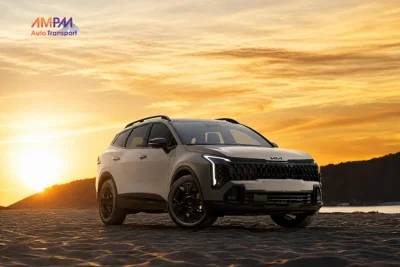
The previous Sportage was difficult to miss. Its boomerang-shaped daytime running lights and low-mounted headlights gave it one of the more unusual faces in the compact-SUV market. Some buyers liked the futuristic design. Others thought it looked unnecessarily complicated. The Kia Sportage 2026 refresh moves in a more conventional direction. A rectangular grille now fills the center of the front end. Vertical lighting elements and inverted L-shaped amber daytime running lights bring the Sportage closer to newer Kia models such as the Carnival and K4.
Changes at the rear are lighter, with updated taillight graphics and a cleaner bumper design.
The result still looks modern, but it is less likely to divide opinion. That may sound like a small issue. Styling matters in a segment where many vehicles offer similar dimensions, fuel economy, and equipment. Buyers often need one clear reason to notice a particular SUV. The outgoing Sportage relied heavily on appearance. The new version lets its interior space, technology, and powertrain choices do more of the work. Inside, Kia replaced the older round steering wheel with a squared two-spoke design. The dashboard is simpler, and some of the glossy black trim has been replaced with textured material that is less likely to show fingerprints.
The biggest update is the display arrangement. A 12.3-inch infotainment touchscreen is now standard and sits beside a 12.3-inch digital instrument display. Wireless Apple CarPlay and Android Auto are included, and the system can receive certain software updates over the air. This is the kind of change drivers notice every day. A larger screen is easier to read when using navigation. Wireless smartphone integration reduces the need to connect a cable for every short trip. Digital gauges can place speed, fuel information, driver-assistance alerts, and other details directly in front of the driver.
Not every control has become easier. The Sportage continues to use a touch-sensitive panel that switches between climate and audio functions. The same knobs may control cabin temperature in one mode and volume or tuning in another. It keeps the dashboard clean, but it can also create an extra step when the control is showing the wrong function. Car and Driver continues to identify this layout as less intuitive than separate physical controls.
The 2026 update also brings available technology such as a head-up display, remote parking assistance, and an upgraded Highway Driving Assist system. Availability depends on the selected trim and packages. These additions move the Sportage closer to the more expensive end of the compact-SUV market without forcing every customer into the top trim. The regular gasoline lineup starts at roughly $30,000 and reaches a little over $41,000 before optional equipment and other charges. Front-wheel drive is standard on several lower versions, while all-wheel drive is available on most trims and included on certain X-Line and X-Pro models.
The gas-powered trim structure includes familiar names such as:
- LX
- EX
- X-Line
- SX
- SX Prestige
- X-Pro Prestige
The LX focuses on price and essential equipment. The EX adds comfort and convenience features. X-Line versions use darker trim and more rugged-looking exterior details, while SX and SX Prestige models add more technology and premium equipment. The X-Pro Prestige sits at the top of the nonhybrid range. It comes with all-wheel drive, BFGoodrich Trail-Terrain tires, a heated windshield, and styling intended to suggest greater off-pavement ability. However, it has the same 8.3 inches of ground clearance and the same basic all-wheel-drive hardware available elsewhere in the lineup. For 2026, Snow, Mud, and Sand terrain modes are no longer exclusive to the X-Pro; they are available across all-wheel-drive Sportage trims. That makes the X-Pro a specialized choice rather than the automatic “best” Sportage.
It may suit a driver who wants trail-style tires, additional towing capacity, and cold-weather features. Someone mainly interested in the rugged appearance may find better value in an X-Line or hybrid X-Line. The Sportage still occupies a useful place among Kia SUV models. It is larger and roomier than the Seltos and Niro but smaller than the three-row Sorento and Telluride. It gives small families more usable space without requiring them to drive a much larger vehicle. Among the current Kia SUVs, it may be the easiest model to recommend to someone who does not need a third row.
Gas, Hybrid, or Plug-In Hybrid?
The 2026 Sportage is really three related vehicles. They share a body, interior, and basic purpose, but the gasoline, hybrid, and plug-in hybrid powertrains create noticeably different driving and ownership experiences. The standard gasoline model uses a 2.5-liter four-cylinder engine producing 187 horsepower and 178 pound-feet of torque. It works with an eight-speed automatic transmission. Front-wheel drive is standard on lower trims, while all-wheel drive is available or included depending on the configuration. The engine does the job. It starts smoothly, handles city traffic, and can maintain highway speed without difficulty. It simply does not feel eager. Car and Driver describes the gas engine as one of the Sportage’s major weaknesses. In testing of earlier versions with the same basic powertrain, acceleration to 60 mph took more than eight seconds, and passing required more planning than it did in the electrified models.
That may not bother someone who drives calmly and cares mainly about price, space, and comfort. The gasoline Sportage can also make sense for a driver who covers relatively few miles each year. Paying more for a hybrid may take longer to recover through fuel savings when most trips are short and infrequent. The standard engine has another advantage in the X-Pro: towing. When properly equipped with a trailer-brake controller, the gasoline Sportage can tow up to 2,500 pounds. The hybrid models are limited to 2,000 pounds. That difference may matter for a small camper, utility trailer, or recreational equipment. For many buyers, however, the Kia Sportage Hybrid is the more convincing choice. It combines a turbocharged 1.6-liter four-cylinder engine with electric assistance and a six-speed automatic transmission. The 2026 version produces approximately 232 horsepower, giving it substantially more power than the regular gasoline model.
The electric motor helps most at lower speeds. When the driver pulls away from a stop, the Sportage Hybrid responds more quickly than the gas model. The gasoline engine joins smoothly, and the six-speed automatic gives the powertrain a more familiar feel than the continuously variable transmissions used in some competing hybrids. It is not a sports SUV. Car and Driver found the hybrid comfortable and quiet but not especially enthusiastic through corners. The steering is accurate, and the suspension absorbs rough surfaces well, though the vehicle’s main priority remains relaxed daily driving. That personality fits the Sportage.
Most compact-SUV buyers are not searching for the quickest path through a winding road. They want a vehicle that feels calm in traffic, comfortable on the highway, and easy to use with passengers inside. The hybrid adds enough power to make those ordinary situations less frustrating. Fuel economy depends heavily on the drivetrain.
The front-wheel-drive 2026 Kia Sportage Hybrid is rated at up to 41 mpg in the city, 44 mpg on the highway, and 42 mpg combined. All-wheel-drive versions fall to approximately 35 mpg combined. That is a large difference. Someone who does not need all-wheel drive may gain significant efficiency by choosing the front-wheel-drive hybrid. A driver facing regular snow, unpaved roads, steep driveways, or poor-weather travel may still prefer the additional traction of AWD. Real-world mileage may not always match the EPA estimate. Car and Driver previously recorded 31 mpg from an all-wheel-drive Sportage Hybrid during its 75-mph highway test, below the vehicle’s official highway rating at the time. High speeds, temperature, wind, tires, elevation, passenger weight, and driving style can all affect the result.
The hybrid lineup became broader for 2026.A new S trim sits above the LX and adds features such as heated front seats, black exterior details, 18-inch wheels, blind-spot collision warning, and rear cross-traffic collision avoidance. The X-Line Hybrid adds a darker, more rugged appearance, 19-inch wheels, a panoramic sunroof, and a power liftgate. These additions make the hybrid available in more than basic or premium forms. A buyer can choose an affordable version, a style-focused X-Line, or a higher SX Prestige without leaving the hybrid powertrain behind. The Kia hybrid starts only modestly above the comparable gasoline model.
Car and Driver concluded that the hybrid’s additional power and fuel-economy advantage justify the price difference for many buyers. Then there is the plug-in hybrid. The Sportage PHEV combines a turbocharged gasoline engine, a larger battery, electric motors, a six-speed automatic transmission, and standard all-wheel drive. It produces 268 horsepower and offers an EPA-estimated electric driving range of approximately 34 miles. That range can cover many daily commutes without using much gasoline when the battery is charged regularly. Once the electric range is depleted, the vehicle continues operating as a hybrid.
There is no need to stop driving and wait for a charger. The PHEV makes the most sense for someone who can plug in at home or work. Without regular charging, the owner carries the extra weight and cost of the larger battery without receiving the full benefit. A regular hybrid may be simpler and less expensive for drivers who do not have reliable access to an outlet or charging station. Price is the other issue. The plug-in hybrid begins around $42,000 and reaches close to $49,000 in its higher trim. At that point, the Sportage is no longer a low-cost compact SUV. It is competing with larger vehicles, premium-brand crossovers, and fully electric models.
The right powertrain comes down to use:
- Choose the gasoline model when purchase price and towing capacity matter most.
- Choose the regular hybrid for stronger acceleration and lower fuel use without charging.
- Choose the plug-in hybrid when most daily driving fits within its electric range and dependable charging is available.
For the broadest range of drivers, the regular hybrid may be the sweet spot. It keeps the Sportage simple while correcting the standard model’s greatest weakness.
Inside the Sportage: Space Where It Actually Matters
The Sportage does not offer a third row. That may seem like a disadvantage beside compact SUVs that try to squeeze in two extra seats. In practice, removing the third row allows Kia to give more room to the passengers and cargo the vehicle will carry most often. The back seat is genuinely usable for adults. The cargo area is large and easy to load. Small storage spaces are placed throughout the cabin. That makes the Sportage feel designed around a normal week rather than an occasional seven-passenger trip.
A Back Seat Adults Can Use
Rear passenger space is one of the Sportage’s strongest qualities. The long wheelbase provides generous legroom, while the relatively tall roof avoids the cramped feeling found in crossovers with heavily sloped rooflines. Car and Driver highlights the roomy interior as one of the Sportage’s main competitive advantages. Adults can sit in the second row without forcing the front passengers to move their seats forward. That is useful for families with teenagers, coworkers sharing a drive, grandparents joining a trip, or anyone regularly carrying more than one adult passenger. The rear seatbacks can recline, allowing passengers to choose a more relaxed position on longer drives. Depending on trim, rear occupants may also receive USB-C charging ports, heated seats, climate vents, and a center armrest with cupholders.
Not every version includes every comfort feature. That is where trim selection becomes important. A feature such as heated rear seats may provide more daily value in a cold climate than larger wheels or exterior appearance packages. The seating position also makes it easier to install child seats. Wide-opening rear doors and generous space between the rows reduce the amount of bending and twisting required when securing a child. Parents can often keep a rear-facing seat installed without making the front passenger uncomfortably close to the dashboard. The Sportage remains a five-passenger vehicle. Placing three adults across the rear bench may feel tight, as it does in most compact SUVs. Two adults or children will have far more room to spread out.
Cargo Space Competes With Larger SUVs
Behind the second row, the Sportage provides approximately 40 cubic feet of cargo room. Folding the rear seats opens a much larger area for furniture boxes, sports equipment, luggage, or home-improvement supplies. That capacity is one reason the vehicle can work for a small family without moving up to a three-row SUV.A normal grocery trip barely challenges the space. Strollers, suitcases, pet supplies, and school equipment can fit without stacking everything to the roof. The rear seatbacks fold when longer cargo is needed. They do not create the same completely flat floor found in every larger utility vehicle, but the opening is broad and practical. The lack of a third-row mechanism also leaves fewer components beneath the cargo floor.
A dual-level cargo floor allows the owner to prioritize a flatter loading area or additional vertical space, depending on the configuration. Small underfloor compartments can hold emergency supplies, reusable bags, charging cables, or items that should remain out of sight. The hybrid retains strong cargo capacity despite carrying a battery pack. That is not true of every electrified SUV, where the battery can raise the cargo floor or reduce storage. The plug-in hybrid may give up some flexibility because of its larger battery and related components, but it remains practical enough for everyday family use. Towing should not be confused with cargo capacity. The Sportage can carry luggage inside comfortably, but it is not a heavy-duty tow vehicle. Even the 2,500-pound maximum on properly equipped gasoline models is intended for relatively light trailers.
Technology Looks More Expensive Than the Vehicle
The dual 12.3-inch displays give the dashboard a wide, clean appearance. On higher trims, both screens appear to sit behind a continuous curved panel. The digital gauge cluster can show driver information, navigation prompts, and assistance-system status, while the center screen handles media, smartphone integration, vehicle settings, and available connected features. Wireless Apple CarPlay and Android Auto reduce cable clutter.
Physical USB-C ports still matter for charging, particularly when several passengers are using phones during a long trip. Available wireless charging provides another option for compatible devices. The interface is generally responsive, and over-the-air updates allow certain software improvements to be installed without a dealership visit. The shared climate and audio panel remains the unusual part. A row of touch controls changes purpose depending on which mode is selected. The two outer knobs may adjust temperature in one mode and audio settings in another. Owners may become comfortable with it after a few weeks.
During the first few drives, it is easy to reach for the volume and change the cabin temperature instead. The 2026 model also offers technology that was once associated mainly with higher-priced vehicles. Depending on trim, the Sportage can include a surround-view camera, blind-spot camera displays, a head-up display, a digital key, upgraded driver assistance, parking sensors, and remote parking capability. Remote parking can move the vehicle forward or backward while the driver stands outside. It may help in a narrow garage or parking space where opening the door would be difficult. These features can make the Sportage feel more expensive than it is. They can also raise the price quickly. A buyer should separate equipment that improves everyday use from technology that sounds impressive during a demonstration but may rarely be used afterward.
Comfort Comes Before Sportiness
The Sportage name suggests energy. The driving experience is calmer. The suspension is tuned to absorb rough pavement, and the cabin remains relatively quiet during normal travel. Car and Driver found both the gas and hybrid versions comfortable, with the hybrid delivering smooth transitions between electric and gasoline power. The steering is accurate enough to place the vehicle easily in a lane or parking space. It does not provide the engagement of a Mazda CX-50 or the quick reactions of a sport-oriented crossover.
That is unlikely to matter during a school run or long highway trip. What passengers will notice is that bumps do not constantly disturb the cabin. The seats provide a relaxed position, and the vehicle does not make the driver work hard to keep it moving smoothly. Wheel choice can affect comfort. Larger wheels often look better but leave less tire sidewall to absorb broken pavement. Smaller wheels may provide a softer ride and cost less when replacement tires are needed.
The X-Pro’s all-terrain-style tires add visual toughness and may help on loose surfaces, but they do not transform the vehicle into a serious trail machine. They may also introduce additional tire cost and road noise compared with conventional all-season tires. The Sportage is at its best when it is treated as a comfortable road vehicle with some bad-weather ability. It does not need to pretend to be something more extreme.
Is the 2026 Kia Sportage the Right Everyday SUV?
The Sportage works because it does not rely on one dramatic feature. It is not the quickest compact SUV, is not the most luxurious, the most efficient in every configuration, or the strongest off-road. It combines useful space, a comfortable ride, modern technology, several powertrain choices, and an approachable starting price. That combination fits real life. A family can load groceries and a stroller without rearranging the cargo area. Adults can sit in the back without complaining immediately. The large screens make navigation easy to follow, and the available hybrid reduces fuel use without requiring a charging routine. The gasoline model remains the most affordable way into the lineup.
It makes sense for someone who drives fewer miles, prefers a lower purchase price, or needs the X-Pro’s 2,500-pound towing capacity. The tradeoff is slower acceleration and fuel economy that is not especially impressive for the amount of power provided. The regular Kia Sportage Hybrid is the more balanced choice for many drivers. It is quicker, more efficient, and available in several trim levels. The price difference from the gasoline model is small enough that buyers who drive regularly may find the added performance worthwhile even before calculating fuel savings.
Front-wheel drive offers the strongest efficiency. All-wheel drive brings additional traction and terrain settings but reduces the official fuel-economy figures. The plug-in hybrid fits a more specific routine. It can complete many commutes using electricity, but only when the owner charges it. Its higher price is harder to justify when it will be driven mainly as a regular gasoline hybrid. Trim choice requires the same honesty.
The base LX gives buyers the space and core technology without pushing the price too high. The EX adds useful comfort. The X-Line provides a more rugged appearance, while the SX Prestige focuses on technology and convenience.
The X-Pro Prestige looks ready for a trail, but much of its advantage comes from tires, towing capacity, and cold-weather equipment. Every all-wheel-drive Sportage now receives the same 8.3-inch ground clearance and terrain modes. That makes the X-Pro worthwhile for a narrow group of buyers rather than the obvious top model. The smartest Sportage may sit somewhere in the middle of the range. A hybrid S, EX, or X-Line can provide the stronger powertrain and important comfort features without reaching the price of the most heavily equipped versions. The right answer depends on whether the buyer values a panoramic roof, upgraded cameras, heated seats, premium audio, or appearance details. There are more entertaining compact SUVs. A Mazda CX-50 feels sharper on a winding road.
A Honda CR-V offers a polished overall package. Other hybrids may produce better real-world fuel economy under certain conditions. The Sportage’s advantage is how little it asks the owner to give up. It has a spacious cabin without becoming difficult to park. It offers advanced technology without requiring a luxury-brand budget. The hybrid is efficient without feeling painfully slow, and the plug-in version allows short electric trips without the commitment of a fully electric car.
Most people do not need an SUV to make every drive exciting. They need it to start in the morning, carry the people and objects that belong in it, handle bad weather, and remain comfortable when traffic refuses to move. The 2026 Kia Sportage understands that job. Its new design is less dramatic, but the vehicle itself is easier to recommend. It gives buyers choices without forcing them into the highest trim and provides enough space without moving into the three-row category. The Sportage keeps things simple not because it offers fewer options, but because the useful parts are easy to find.