
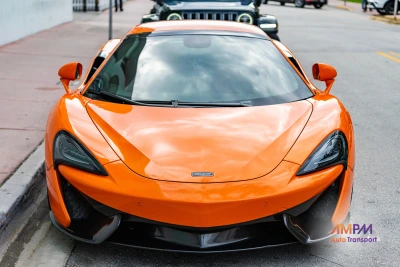
A carbon-fiber supercar with a twin-turbo V8, 562 horsepower, dihedral doors, and a 200-mph-plus top speed does not sound like something that belongs in a conversation about affordability. And yet, that is exactly where the McLaren 570S has ended up. For buyers searching for the cheapest McLaren, a used 570S has become one of the most interesting ways into the brand. Early examples that originally cost close to $190,000 can now appear at prices much closer to high-end Porsche 911s and other premium sports cars. That does not make a McLaren inexpensive. Insurance, maintenance, repairs, tires, and specialist servicing can still carry supercar-level costs. But the gap between the original McLaren price and today’s used market has created something unusual: genuinely exotic performance at a purchase price far below what the car cost when new. So, why have used McLarens become more accessible, and does that make the 570S a smart buy? The answer has a lot to do with depreciation, ownership costs, and how buyers view older exotic cars. The 570S may be cheaper to buy today, but the purchase price is only one part of the ownership equation. Understanding why prices have fallen and what it actually costs to live with one is essential before deciding whether this used McLaren is truly a bargain.
How Much Did the McLaren 570S Cost New?
The 570S was never designed as a budget sports car. It was McLaren’s more accessible Sports Series model, but “accessible” was relative to other McLarens. Car and Driver lists the 2016 McLaren 570S with an original MSRP of about $187,300, while a 2017 model carried a base price around $191,100. By 2019, the coupe’s MSRP had reached approximately $195,000. O’Gara Coach also lists the later 570S with pricing beginning at $191,100, reinforcing just how firmly this car started life in exotic-car territory. And those figures were only the beginning. McLaren buyers could add carbon-fiber exterior parts, upgraded audio, special paint, wheels, interior packages, nose-lift systems, and other expensive options. A heavily optioned 570S could therefore cost substantially more than its base MSRP. That context matters when looking at today’s McLaren 570S price. You are not looking at a car that was inexpensive when new. You are looking at a very expensive car that has depreciated.
How Cheap Is a Used McLaren 570S Today?
“Cheap” needs quotation marks here. A used McLaren is still a six-figure purchase in many cases. But compared with its original price, depreciation has made the 570S significantly more approachable. Kelley Blue Book currently puts the fair purchase price of a typical-condition 2016 McLaren 570S Coupe at around $111,000, compared with an original MSRP listed at $190,580. Actual prices vary substantially with mileage, condition, history, location, and specification. The wider market can vary even more.
Recent U.S. 570S listings and completed transactions span a broad range, with mileage and specification playing a major role. Current market data shows many typical examples clustered well below their original $190,000-plus price points, while low-mileage or unusual cars can command considerably more. That makes the 570S one of the more attainable modern routes into McLaren ownership. It does not, however, make it the cheapest McLaren in every individual listing. Older MP4-12C models can sometimes sell for less, and unusually high-mileage or problematic cars may appear below normal market values. When people search for the cheapest McLaren model, the more useful question is often: Which relatively affordable used McLaren offers the best combination of performance, age, usability, and purchase price? That is where the 570S becomes particularly interesting.
Why Are McLarens So Cheap on the Used Market?
First, they are not actually cheap. They are cheap relative to what they cost new. That distinction explains much of the confusion behind searches like “why are McLarens so cheap?”
Depreciation Has Done a Lot of the Work
A new exotic car can lose a substantial amount of value once it enters the used market. The 570S began around the $190,000 mark before options. Today, some older examples trade for dramatically less. That McLaren depreciation creates an attractive headline for buyers because the mechanical specification has not depreciated with the price. The engine does not suddenly make 300 horsepower because the car is eight years old. You still get a carbon-fiber structure, twin-turbo V8, exotic styling, and serious performance.
Buyers Price In Ownership Risk
The other side of the bargain is ownership cost. Carwow notes that McLaren has had a mixed reputation for reliability and specifically points to reported software and infotainment problems as considerations for 570S buyers. Specialist used-car buying guides also identify issues worth checking, including battery condition, coolant leaks, dampers, suspension springs, paint bubbling, glass damage, and electronics. These reports do not mean every 570S is unreliable, but they help explain why buyers may place a larger risk discount on a used McLaren than on some competing sports cars. That affects used McLaren prices. People do not evaluate only the purchase price. They also consider what could happen after the car is in their garage.
The 570S Is No Longer a Current Model
The 570S belongs to McLaren’s previous Sports Series generation. Newer models such as the Artura have moved McLaren’s entry-level offering toward hybrid technology and a newer platform. That naturally makes older 570S examples less desirable to buyers who want the latest model, warranty coverage, interior technology, or powertrain. For a used buyer, though, being yesterday’s McLaren can be exactly what makes the car interesting.
What Do You Get for the Money?
This is the part that makes the 570S difficult to ignore. McLaren’s official specifications give the 570S a 3.8-liter twin-turbo V8 producing 562 bhp and 443 lb-ft of torque. Power goes through a seven-speed Seamless Shift Gearbox to the rear wheels.
McLaren lists:
- 0–62 mph: 3.2 seconds
- Top speed: 204 mph
- Dry weight: as low as 2,895 pounds
- Structure: Carbon Fibre MonoCell II
Car and Driver recorded an even quicker 2.9-second 0–60 mph time in its test of the 2016 coupe. That is serious supercar performance. The carbon-fiber monocoque is particularly important. Carbon construction at this level is one of the things that separates the 570S from many conventional performance cars. It also has the details buyers expect from an exotic: a mid-mounted engine, dramatic proportions, dihedral doors, carbon-ceramic brakes, adaptive dampers, and hydraulic steering. In other words, depreciation has lowered the price. It has not turned the 570S into an ordinary sports car.
Coupe or Spider: Which Used McLaren 570S Makes More Sense?
The coupe is the simpler route into the 570S. But the Spider is appealing if open-top driving is part of the reason you want an exotic car in the first place. McLaren’s carbon-fiber chassis allowed the Spider to retain substantial structural rigidity without requiring the kind of heavy reinforcement often associated with converting a coupe into a convertible. Carwow notes that the 570S Spider retains the dramatic performance of the coupe, including a claimed 3.2-second 0–62 mph time and 204-mph top speed. The trade-off is usually price. Spiders often command more than comparable coupes, particularly when mileage, specification, and condition are similar. If the goal is simply finding an affordable McLaren, the coupe will usually deserve the first look. If the goal is enjoying the V8 with the roof down, the Spider makes a much stronger emotional argument. And emotional arguments have a suspicious amount of influence when buying a McLaren.
Is the McLaren 570S Reliable?
This question deserves more nuance than either “yes” or “absolutely not.” The 570S has known problem areas, and buyers should not approach one like a used Toyota. At the same time, specialist assessments do not universally describe it as a disaster. PistonHeads, for example, considers the 570S more dependable than some earlier McLarens while still highlighting several items buyers should investigate carefully. For a used example, condition and maintenance history can matter enormously. A pre-purchase inspection by a technician familiar with McLaren vehicles is a sensible part of the buying process.
Pay particular attention to the following:
- Complete service records
- Warning lights or electrical problems
- Battery condition
- Suspension and damper condition
- Fluid leaks
- Carbon-ceramic brake condition
- Tires
- Glass and bodywork
- Paint bubbling or corrosion-related cosmetic issues
- Operation of the front lift, if fitted
The exact McLaren maintenance cost will vary too much by vehicle and repair to reduce to one reliable annual figure. The more useful rule is simple: Do not spend your entire budget buying the car. Leave room to own it.
Is the 570S Really an Affordable Supercar?
Among true affordable supercars, the McLaren 570S makes a compelling argument because relatively few cars combine its current used price with a carbon-fiber chassis and this level of performance. But “affordable” depends on which number you are looking at. The purchase price may have moved closer to high-end sports-car territory. The running costs have not magically become those of a normal used car. Premium tires still fit a McLaren. Carbon-ceramic brakes are still carbon-ceramic brakes. Specialized repairs are still specialized repairs. That means a $110,000 McLaren should not be treated financially like an ordinary $110,000 luxury vehicle. The attraction is that a buyer may now be able to get roughly $190,000 worth of original exotic-car engineering for substantially less money. That is different from saying ownership itself is inexpensive.
Should You Buy a Used McLaren 570S?
The 570S makes the most sense for someone who wants the full supercar experience without paying the price of a new McLaren. It gives you the looks. The doors. The carbon structure. The mid-engine layout. And, most importantly, performance that still feels properly exotic even years after the car was introduced. What it asks in return is a more careful buying process. Do not shop entirely by price. A suspiciously inexpensive used McLaren 570S can become a very expensive McLaren if deferred maintenance or hidden damage is the reason it is inexpensive. Service history, mileage, specification, inspection results, accident history, and overall condition should carry more weight than finding the absolute lowest asking price. The most affordable McLaren to buy is not necessarily the most affordable one to own.
The McLaren 570S has reached an interesting point in its life. It started as a roughly $190,000 supercar and delivered the performance to match: 562 horsepower, a carbon-fiber monocoque, a mid-mounted twin-turbo V8, and a manufacturer-claimed 204-mph top speed. Depreciation has now brought many examples much closer to the price of conventional high-end sports cars. That makes the 570S one of the strongest answers for anyone searching for the cheapest McLaren that still feels unmistakably like a modern McLaren. Just remember the distinction that matters most: A depreciated supercar is still a supercar. Buy the right example, inspect it carefully, and budget for ownership rather than purchase price alone. And if you find the right 570S several states away, transporting it instead of immediately putting hundreds or thousands of miles on a newly purchased exotic can be worth considering. AMPM Auto Transport can help owners arrange vehicle shipping for high-value and specialty cars when the purchase and the garage are a long way apart.