
Yes, you can buy a vehicle in another U.S. state. But buying a car out of state involves more than finding a listing, making a payment, and bringing the vehicle home. Before buying, check the tax, title, registration, insurance, inspection, and emissions requirements that apply where you plan to register the vehicle. Those rules can differ by state, and the seller may handle some parts of the transaction while leaving others to you. The process becomes much easier if you answer three questions early: Is the out-of-state deal actually worth it? How will you verify and complete the purchase? And once the vehicle is yours, will you drive it home or arrange transport? Buying a car in another state can give you access to more competitive prices, a wider selection of vehicles, and specific models or trim levels that may not be available locally. However, a lower advertised price doesn’t always guarantee a better deal. Additional expenses, such as pre-purchase inspections, temporary permits, travel, and car shipping costs, can affect your overall savings. Comparing the total cost rather than just the purchase price will help you determine whether buying out of state is financially worthwhile.
Can You Buy a Car in Another State?
Yes. Buying a vehicle in a different state is common when shoppers want a specific trim, color, rare model, better-equipped used car, or a wider selection than they can find locally. Regional pricing can also create opportunities. Car and Driver notes that differences in supply and demand can make the same model more or less expensive depending on the market. But purchasing the vehicle and legally driving or registering it are separate steps.
An online listing, signed purchase agreement, or completed payment does not automatically give you everything needed to drive the car across state lines. You may still need insurance, temporary registration or a permit, title paperwork, and destination-state inspections before permanent registration. That is why anyone asking, “Can I buy a car in another state?” should really ask a second question: Can I register this specific car where I live? Check that before money changes hands.
Pros and Cons of Buying a Car Out of State
The main advantage of an out-of-state car purchase is access. You can search a much larger market instead of limiting yourself to dealerships and private sellers within driving distance. Edmunds identifies wider selection, access to special models, and possible savings as some of the main benefits. The tradeoff is extra coordination.
| Benefits | Tradeoffs |
| Wider vehicle selection | Harder to inspect the car personally |
| Access to rare trims or configurations | More title and registration coordination |
| Potentially better pricing | Travel or shipping costs |
| Ability to shop nationally online | Different tax, inspection, and emissions rules |
The right question is not simply “Should I buy a car out of state?” It is whether the specific vehicle offers enough value to justify the additional work.
Is It Cheaper to Buy a Car Out of State?
Sometimes. Not automatically. A car advertised for $2,000 less in another state may stop looking like a bargain after dealer fees, inspection costs, travel, transportation, registration charges, and applicable taxes are included. Edmunds recommends comparing regional prices while also accounting for dealer fees, which can vary considerably from one state to another.
Compare equivalent vehicles by:
- Model year
- Trim
- Mileage
- Condition
- Equipment
- Warranty coverage
- Accident and title history
Then add the transaction costs. A useful comparison is: Vehicle price + dealer charges + inspection + applicable tax + registration + travel or shippingThat gives you a much better answer to “Is it cheaper to buy a car out of state?” than the advertised price alone. Also, do not assume that buying in a state with little or no sales tax eliminates your tax responsibility. Tax treatment depends on the states involved and how the transaction is structured.
How to Buy a Car Out of State, Step by Step
Whether you are learning how to buy a car long distance from a dealer or trying to purchase from a private seller several states away, slow the transaction down before sending money.
Step 1: Verify the Seller and the Vehicle
Start with the seller. Confirm the dealership’s identity or, in a private sale, confirm that the person selling the car has the right to transfer it. Then verify the vehicle itself. Match the VIN across the listing, title or ownership documents, and the vehicle. Obtain a vehicle history report and review information such as title brands, reported accidents, odometer history, and liens. A history report is useful, but it is not proof that a used car has no mechanical or structural problems.
For how to buy a used car out of state, an independent pre-purchase inspection is one of the most valuable steps. Consumer Reports specifically recommends hiring a professional mechanic near the seller when you cannot inspect a used vehicle yourself. Ask the seller for current photos and, when useful, a live or recorded video walkthrough. But use those as supplements to an inspection not substitutes.
Step 2: Confirm the Full Purchase Terms
Before paying a deposit or signing remotely, ask for the complete deal in writing.
The written purchase agreement should show:
- Agreed vehicle price
- Dealer or documentation charges
- Deposit amount and refund terms
- Included accessories or equipment
- Known defects
- Warranty terms, if any
- Return or cancellation policy, if one exists
If you are buying a new car out of state, confirm that the vehicle can legally be registered in your home state before purchasing. If you are buying used, pay close attention to branded titles, rebuilt vehicles, modified vehicles, and emissions eligibility. The farther away the vehicle is, the more important written documentation becomes.
Step 3: Arrange Payment, Financing, and Insurance
Confirm how the seller accepts payment before sending funds. If financing the vehicle, ask your lender whether an interstate transaction creates any additional title or documentation requirements. Consumer Reports notes that some dealerships may limit out-of-state transactions or require buyers to use certain financing arrangements, so confirm those terms early rather than discovering them after negotiating the vehicle price. Insurance also needs to be addressed before pickup. Do not assume your existing policy automatically provides the coverage you need for a newly purchased vehicle. Ask your insurer when coverage begins and what documentation is required. This is especially important if you plan to drive the car home immediately.
Step 4: Complete the Paperwork and Confirm Release
Depending on the transaction, paperwork may include:
- Assigned certificate of title
- Manufacturer’s Certificate of Origin for certain new vehicles
- Bill of sale
- Odometer disclosure
- Lien release
- Temporary registration or permit documents
- Dealer purchase agreement
Car and Driver recommends confirming your destination state’s registration, inspection, and emissions requirements before the vehicle is brought home.If you are buying a car with an out-of-state title, confirm that the title has been properly assigned and that any existing lien has been resolved. If driving home, verify temporary registration and insurance before leaving. If shipping, confirm that the seller has everything needed to release the vehicle to the carrier.
Buying From an Out-of-State Dealer vs. a Private Seller
The vehicle may be identical, but the transaction can look very different depending on who sells it.
| Issue | Dealer | Private Seller |
| Paperwork | May assist with title and registration documents | Buyer usually handles more of the process |
| Temporary registration | Dealer may issue or arrange it where permitted | Buyer may need to obtain it |
| Tax handling | Dealer may collect applicable taxes | Often handled when registering, depending on state |
| Lien handling | Dealer may collect applicable taxes | Buyer must carefully verify ownership and payoff |
| Carrier pickup | Often familiar with transport pickups | Must coordinate seller availability and authorization |
When buying a car out of state from a dealer, ask whether the dealership regularly sells to buyers in your state.
Specifically ask whether it:
- Handles destination-state paperwork
- Collects applicable taxes
- Provides temporary registration
- Coordinates vehicle release to a transport carrier
Edmunds notes that dealers often have staff or third-party services that assist with interstate DMV paperwork, but buyers should still confirm exactly what the dealership will and will not handle. With a private seller, verify ownership, signatures, lien status, and temporary registration requirements yourself. Do not assume you can simply attach the seller’s plates and drive home. Plate rules vary by state.
How to Get Your Car Home: Drive It or Ship It?
Once the purchase is complete, you have another decision: how to bring a car from another state.
| Factor | Drive It Home | Ship It Home |
| Time | Requires your travel time | No long-distance drive required |
| Expenses | Flight, fuel, meals, lodging may apply | Transport quote |
| Mileage | Adds miles immediately | Avoids long-distance driving mileage |
| Vehicle condition | Must be roadworthy | Can suit vehicles you do not want to drive long-distance |
| Coordination | Temporary registration and insurance | Seller and carrier must coordinate pickup |
Driving the Car Home
Buying a car out of state and driving it home can make sense when the seller is relatively close and the vehicle is roadworthy. Calculate the entire trip cost, including:
- Travel to the seller
- Fuel
- Hotels if needed
- Meals
- Tolls
- Time away from work
You must also confirm insurance and any required temporary permit or registration before putting the vehicle on the road.
Shipping the Car Home
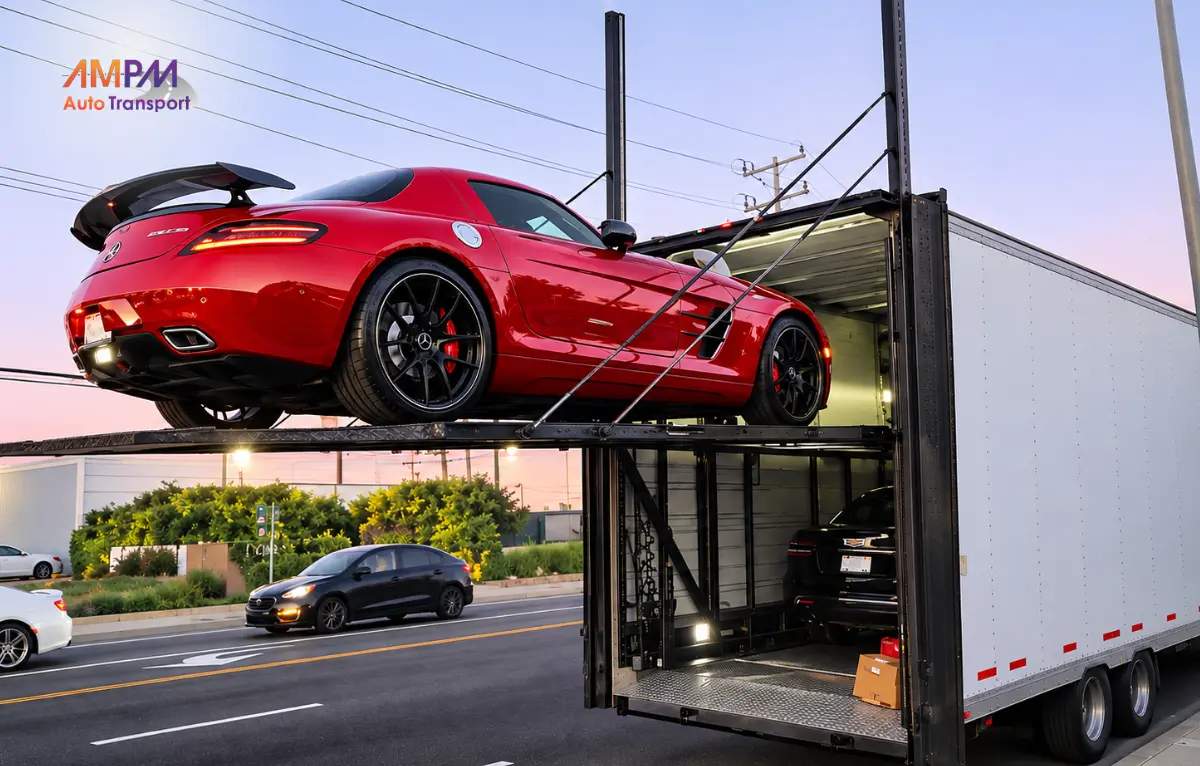
Out-of-state car shipping can make more sense when the purchase is several states away, you cannot travel, or you do not want to add immediate long-distance mileage. Consumer Reports recommends carefully selecting a transport provider and arranging a professional inspection of the vehicle when purchasing remotely.
Before pickup, confirm:
- Release authorization. Make sure the seller or dealership knows who is collecting the vehicle and has approved its release.
- Pickup contact. Provide the carrier with the correct contact person, address, business hours, and keys. Auction purchases may require additional gate-release information.
- Vehicle condition. Tell the transport company whether the vehicle runs, steers, brakes, and has any loading limitations.
- Trailer type. Open transport is commonly used for standard vehicles. Enclosed transport reduces direct exposure to weather and road debris and may be preferred for luxury, exotic, classic, or collector vehicles.
- Quote factors. Distance, route, vehicle size, running condition, trailer type, season, pickup timing, and carrier availability can all affect the quote.
- Cargo coverage. Ask about the carrier’s cargo coverage, limits, exclusions, deductible terms where applicable, and claims process. Transport coverage and your personal auto insurance are separate issues.
Finally, document the car at pickup and delivery. Photograph the vehicle, review the bill of lading, and report any discrepancy promptly. Avoid assuming that any legitimate carrier can guarantee an exact delivery date. Road, weather, traffic, mechanical, and scheduling conditions can affect transit.
Registering Your Car in Your Home State
After purchase, you still need to complete the destination state’s title and registration requirements. Depending on the state and vehicle, that may involve:
- Assigned ownership documents
- Bill of sale
- Proof of insurance
- VIN inspection or verification
- Safety inspection
- Emissions testing
- Tax documentation
- Registration fees
Check your DMV’s actual deadline instead of relying on a general “30-day rule.” Requirements vary.
What About Sales Tax?
Sales and use tax can be one of the most confusing parts of buying a car out of state. What you owe depends on the states involved, whether the seller is a dealer or private party, what tax the seller collected, and where you register and use the vehicle. California provides a useful example. CDTFA says vehicles purchased for use in California may be subject to California use tax when California sales tax was not paid.
It also says a buyer may be eligible for a credit for qualifying tax previously paid to another state. So keep receipts showing any sales or use tax paid during the purchase. Before buying, ask: What tax will the seller collect? What will my home state charge when I register it? Does my home state allow credit for tax already paid elsewhere? Those questions are safer than assuming tax is always paid exclusively in either the purchase state or home state.
Check Emissions Eligibility Before You Buy
California also demonstrates why registration eligibility matters before completing an interstate purchase. California law generally does not allow a California resident to import and register a vehicle considered “new” for emissions purposes if it was manufactured only to federal rather than California emissions standards, unless an exemption applies. California uses an odometer threshold of fewer than 7,500 miles when defining certain non-California-certified vehicles as new for this purpose. That means simply passing a later smog inspection does not necessarily solve every registration-eligibility issue. If you live in California or any state with special emissions requirements check eligibility before paying for an out-of-state vehicle.
Buying a car out of state can be worth the extra work when it gives you access to the right model, condition, equipment, or overall deal. Before committing, make four checks: Verify the seller and vehicle. Compare the complete purchase cost rather than the advertised price. Make sure the vehicle can be titled and registered where you live. Decide how you will bring it home before finalizing the transaction. If the vehicle is far away, include transportation in your budget from the beginning rather than treating it as an afterthought.