
An enclosed trailer may sound simple enough. Four walls, a roof, and a vehicle traveling inside instead of sitting out in the open. Look a little closer, though, and the differences begin to matter. Some trailers use solid aluminum walls. Others use heavy fabric panels stretched over a frame. One may carry a single collector car, while another can transport several vehicles on two levels. Loading may involve a conventional ramp, a hydraulic liftgate, or equipment designed specifically for a low-clearance car. All of these setups may be described as enclosed car shipping, but they do not provide exactly the same experience.
The best choice depends on the vehicle. A restored classic with narrow tires may have different loading needs than a modern supercar with only a few inches of ground clearance. A dealership moving several luxury cars will probably look for a different trailer than an owner transporting one irreplaceable race car. Budget, route, availability, vehicle dimensions, and preferred protection also influence the decision. Before choosing an enclosed car carrier, it helps to understand what the common trailer names actually mean and which details matter more than the label.
Why the Enclosed Trailer Type Matters
The basic difference in open vs. enclosed car shipping is easy to see. An open carrier transports vehicles on an exposed trailer. It is widely used for everyday sedans, SUVs, pickup trucks, and other standard vehicles. An enclosed trailer surrounds the vehicles during the trip, reducing direct exposure to rain, snow, dust, road grime, and debris thrown from the roadway. That added coverage is one of the main benefits of enclosed car transport. It is why owners often consider enclosed shipping for classic, exotic, luxury, custom, auction, and low-clearance vehicles.
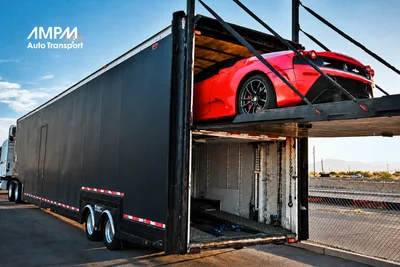
Enclosed transportation generally costs more than open shipping. Fewer enclosed carriers operate on many routes, and the trailer may carry fewer vehicles. Specialized loading equipment and additional handling requirements can also affect availability and price. The word “enclosed” does not answer every question, however. A trailer with flexible side panels is different from one with rigid walls. A single-car setup may offer a more direct trip than a large multi-car carrier, but it may also cost more because one shipment uses most or all of the available trailer. Loading is another major difference. A standard road car may load safely over a gradual ramp. A lowered sports car, classic race car, or vehicle with a long front splitter may need an enclosed trailer with a liftgate. The platform lifts the vehicle while it remains relatively level, reducing the steep approach angle that can cause the nose or underbody to scrape.
Many enclosed carriers use hydraulic liftgates for low-clearance vehicles, but the equipment should never be assumed. Ask how the assigned trailer loads and unloads before pickup.
The trailer’s interior measurements matter too. A vehicle can be too wide, tall, long, or heavy for a particular enclosed setup even when it looks like an ordinary passenger vehicle. Oversized tires, a roof rack, a rear wing, a lift kit, a low body kit, or nonstandard mirrors can change how much space it needs. The vehicle’s value alone should not determine the trailer. The correct enclosed auto transport trailer should fit the car physically, provide suitable loading equipment, and allow the driver to secure it without placing pressure on delicate bodywork or suspension components. That is why accurate details are so important. The year, make, and model are a starting point. Modifications, ground clearance, operating condition, width, height, and special handling needs complete the picture.
The Main Enclosed Trailer Types Used for Car Shipping
Enclosed trailers can be grouped in more than one way. They may be classified by the material surrounding the vehicle, such as hard-side or soft-side. They can also be described by capacity, such as single-car or multi-car. “Hot-shot” usually refers to a smaller trailer pulled by a heavy-duty pickup rather than a large tractor-trailer. These categories overlap. A single-car enclosed trailer can be hard-sided or soft-sided. A multi-car unit may also use either design. A liftgate is loading equipment, not a separate wall or capacity type. Understanding those distinctions makes it easier to compare actual trailers instead of relying on broad service names.
Soft-Side Enclosed Trailers
A soft-side trailer uses heavy vinyl, canvas-style curtains, or another flexible material over a metal frame. The covering shields the vehicle from direct exposure to weather, road dirt, and much of the debris encountered in transit. It offers more coverage than an open carrier while generally using a lighter and simpler enclosure than a rigid-wall trailer. The sides can often be opened or moved aside, giving the driver access to different areas of the trailer. That may make it easier to inspect wheel straps and reach vehicles loaded in close quarters.
Soft-side equipment can be suitable for:
- Luxury daily drivers
- Performance cars
- Restored vehicles
- Dealer inventory
- Multiple higher-value vehicles
- Cars needing more coverage than open transport
The flexible panels do not provide the same rigid barrier, privacy, or structural enclosure as solid walls. They can still be a practical middle ground when the customer wants covered transportation without selecting the most specialized hard-side setup. Do not judge the trailer only by its exterior material. Ask about its loading angle, tie-down method, interior dimensions, vehicle capacity, and whether the car will be moved during other pickups and deliveries. Those details may affect the shipment more than the side covering itself.
Hard-Side Enclosed Trailers
Hard-side trailers use rigid walls, commonly made from materials such as aluminum or fiberglass. They provide a fully solid enclosure around the cargo area. The vehicle remains out of direct view while the trailer is closed, which adds privacy as well as protection from external weather and road conditions. A hard-side enclosed car carrier is often considered for:
- Rare collector vehicles
- Exotic and luxury cars
- High-value auction purchases
- Show cars
- Restored classics
- Vehicles with sensitive exterior finishes
Hard-side equipment is commonly associated with enclosed luxury car transport and enclosed classic car transport, but not every solid-wall trailer has the same features. Some use rear ramps. Others have hydraulic liftgates. Certain trailers include two levels and can carry several vehicles, while smaller units may transport only one. Solid walls do not eliminate the need for a careful inspection. The driver should still document the car’s condition before loading. The vehicle also needs enough clearance around its body, roof, wheels, mirrors, and aerodynamic parts. A hard-side trailer may provide greater enclosure, but it cannot compensate for a vehicle that does not fit or a loading method that is wrong for its ground clearance.
Single-Car Enclosed Trailers
A single-car trailer is designed to transport one vehicle at a time. It may be pulled by a heavy-duty pickup or another suitable towing vehicle. Because the shipment does not share the trailer with several other cars, there may be fewer loading and unloading stops along the route. That can make this setup attractive for a rare, highly valuable, custom, or time-sensitive vehicle. A single-car configuration is also easier to match closely to one car’s size and loading needs.
The trailer may use:
- A rear loading ramp
- Extended low-angle ramps
- A hydraulic liftgate
- Floor-mounted track systems
- Wheel straps or other vehicle-specific securement
A single-car enclosed trailer is not automatically the best option for every valuable automobile. It may cost more because the customer uses the entire trailer for one vehicle. Availability can also remain limited, particularly on less-traveled routes. The quality of the setup depends on the actual equipment and operator. A single-car trailer with a steep ramp may not suit a lowered exotic car, while a larger multi-car carrier with a liftgate may handle it more appropriately. Ask for the details rather than choosing based only on capacity.
Multi-Car Enclosed Trailers
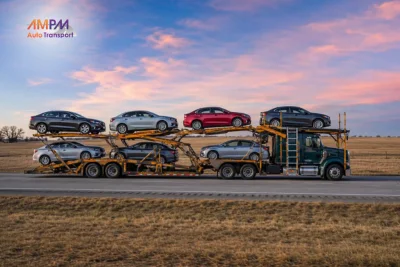
Multi-car enclosed trailers carry several vehicles inside the same unit. Depending on the design and vehicle sizes, an enclosed carrier may transport roughly two to six cars. Dealerships, collector groups, auction companies, event organizers, and individual customers often use these trailers to transport multiple vehicles along similar routes. Some units use multiple levels to increase capacity. Hydraulic equipment can raise a platform or deck, allowing the driver to load another vehicle underneath. A multi-car trailer can provide the advantages of enclosed vehicle shipping while spreading operating costs across several shipments. That may make it more available or more economical than reserving an entire single-car unit.
The route may include additional stops. Drivers position each car according to its dimensions, weight, pickup order, and delivery order. A vehicle loaded early may remain inside the trailer while drivers add or remove other vehicles at later locations. Professional drivers plan the arrangement carefully to minimize unnecessary handling, but customers should still ask how many vehicles the trailer carries and whether the driver may need to move their car during the trip.
Multi-car transport can benefit more than dealerships. It can work well for enclosed classic car transport when several collectors move their vehicles toward the same event or region. It can also suit owners who need to ship multiple cars from a private collection.
Hot-Shot Enclosed Trailers
An enclosed hot-shot setup generally uses a heavy-duty pickup and a smaller enclosed trailer rather than a full-size tractor-trailer. AMPM’s existing enclosed transport information describes hot-shot equipment as a simpler enclosed box trailer that may carry approximately two or three vehicles, although actual capacity varies by trailer and vehicle size.
Hot-shot transportation can be useful when:
- The route is difficult for a large tractor-trailer
- Fewer vehicles are being moved
- A smaller carrier is better suited to the pickup area
- The shipment needs a more direct trailer configuration
- The vehicle fits the available loading system
Smaller does not always mean faster, cheaper, or better. The trailer still needs enough payload capacity, internal space, suitable ramps or lift equipment, and an appropriate securement system. The pickup truck must also have the proper rating for the loaded trailer. Some people use “hot-shot” and “single-car enclosed” as if they mean the same thing, but the terms do not always describe the same setup. A hot-shot trailer may carry one, two, or several cars. A single-car carrier may use a pickup-based setup, but manufacturers can also build it on another commercial platform. Focus on the actual trailer rather than the nickname.
Matching the Trailer to Your Vehicle and Loading Needs
There is no single best trailer for every shipment. The right choice depends on the vehicle you need to transport and the requirements for pickup and delivery. A standard luxury sedan may fit safely inside a soft-side multi-car carrier. A very low exotic car may require a hard-side trailer with a hydraulic liftgate. A rare prototype may suit a single-car unit better because privacy and minimal handling can matter more than price. Start by asking whether the vehicle fits the trailer. Provide accurate dimensions if the car has modifications or an unusual design. Include the overall length, width, height, ground clearance, tire width, and any equipment extending beyond the normal body.
Pay particular attention to:
- Front splitters
- Rear diffusers
- Side skirts
- Extended spoilers or wings
- Oversized wheels and tires
- Roof-mounted equipment
- Wide-body conversions
- Lowered suspension
- Non-running condition
A factory specification may not reflect a modified vehicle. Loading angle comes next. A conventional ramp creates an incline between the road and trailer floor. The vehicle’s front overhang, wheelbase, and ground clearance determine whether it can cross that angle without scraping. Long race cars and exotics can have adequate clearance under the center of the body but still strike the ramp with the front splitter. That is where an enclosed trailer with a liftgate becomes valuable. The driver can position the vehicle on a flat platform and lift it toward the trailer floor. Some liftgates also make loading easier when a car does not run, although the driver may still need a winch or additional equipment. An enclosed race car trailer may need more than a liftgate.
Track cars can have extremely low suspension, wide tires, removable aerodynamic equipment, racing tow hooks, limited steering movement, or no conventional parking brake. The driver may need extra room for spare wheels, but vehicle transport agreements often restrict personal property and loose equipment. Discuss every nonstandard detail before scheduling. Securement method is equally important. The carrier may use wheel straps, tire nets, soft ties, or approved attachment locations. The goal is to keep the vehicle stable without placing avoidable pressure on body panels or delicate components.
Owners sometimes request a specific method based on past experience. The carrier still needs to use equipment and procedures appropriate for that trailer and vehicle. Access at both ends of the trip should also be considered. Large multi-car enclosed car transport trailers need room to turn and operate. Low branches, narrow roads, weight restrictions, steep driveways, gated communities, parked cars, and tight loading areas may prevent the driver from reaching a requested address. A smaller hot-shot unit may access some locations more easily, but it still needs a legal and level place to load.
Door-to-door service generally means the carrier gets as close to the addresses as safely and legally possible. The driver may use a nearby parking lot or wide street when the property cannot accommodate the trailer. Consider the price only after you identify the essential requirements. Paying less for the wrong trailer is not a bargain. Paying for a single-car hard-side carrier may also be unnecessary when a suitable soft-side multi-car unit provides the coverage and loading setup the vehicle needs.
Ask practical questions:
- Is the trailer hard-side or soft-side?
- How many vehicles can it carry?
- Will my car be moved during other stops?
- Does it use ramps or a hydraulic liftgate?
- What is the loading angle?
- How will the vehicle be secured?
- Are the interior dimensions suitable?
- Can the trailer reach the requested locations?
- Is special equipment available for an inoperable car?
Clear answers make it easier to compare the advantages of enclosed trailers without relying on general terms such as premium, white-glove, or specialized. The best equipment is the equipment that fits the car and the route.