
A normal used car usually loses value as the miles add up. A movie car can do the opposite. A scratch may become part of its history, while an unusual dashboard, oversized wing, camera mount, or modified interior can help prove that the vehicle appeared on screen. For collectors searching for movie cars for sale, the appeal goes far beyond transportation. They are buying a physical piece of movie history.
That connection can create extraordinary prices. A Porsche 917K associated with Steve McQueen’s Le Mans sold for $14.08 million, while a James Bond Aston Martin DB5 reached $6.385 million. The original Batmobile sold for $4.62 million, and the surviving hero Mustang from Bullitt reached $3.74 million.
However, not every car listed as a movie vehicle carries the same history. Search for cars from movies for sale, and you may find genuine screen-used cars, stunt vehicles, promotional cars, licensed replicas, privately built recreations, and ordinary vehicles styled after famous film cars. Those categories can have dramatically different values. The difference between “used in the movie” and “inspired by the movie” can be worth millions.
Why Movie Cars Become So Valuable
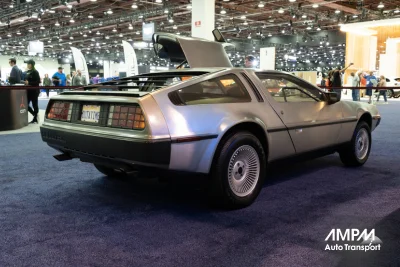
A movie can transform an ordinary vehicle into an instantly recognizable cultural object. The DeLorean DMC-12 became inseparable from Back to the Future. The dark green Mustang from Bullitt became part of cinema history. The Aston Martin DB5 became closely associated with James Bond. As a result, collectors may pay for several layers of value at the same time:
- The original make and model
- Historical importance
- Connection to a successful movie
- Association with a famous actor or character
- Rarity
- Original movie modifications
- Documented studio ownership
- Surviving production records
- Recognition among fans and collectors
The strongest examples often combine several of these factors.
The Movie Must Have Lasting Cultural Appeal
A car does not become valuable simply because a camera captured it in the background. Instead, collectors usually care about the importance of the film, the character, the scene, and the vehicle’s role in the production. A hero car driven by the main character can have a very different market position from an ordinary background vehicle. Franchises such as James Bond, Batman, Back to the Future, Bullitt, and Fast & Furious demonstrate how strongly audiences can connect cars with movie characters. That recognition also creates multiple potential buyers. A famous movie car can appeal to:
- Film memorabilia collectors
- Classic-car collectors
- Automotive enthusiasts
- Museums
- Franchise fans
- Investors
- Fans of a particular actor
Therefore, a successful movie can expand the potential audience far beyond traditional car collectors.
Provenance Can Matter More Than Condition
Traditional collector-car buyers often prioritize originality, condition, matching numbers, low mileage, and high-quality restoration. Movie cars create a different situation. A worn seat, patched body panel, unusual switch, production marking, or camera bracket may help demonstrate the vehicle’s history. Restoring every imperfection could actually remove details that connect the car to its time on set. However, damage does not automatically increase value. Rust, poor repairs, missing components, and undocumented modifications can still hurt a vehicle’s desirability. The key is to preserve the features that establish the car’s production history.
What Counts as Movie-Car Provenance?
Strong documentation may include:
- Studio records
- Production photographs
- Vehicle identification numbers
- Previous titles and registrations
- Build sheets
- Auction-house research
- Rental or purchase records
- Letters from production crew members
- Photographs showing the car during filming
- Matching damage or modifications visible on screen
Ultimately, a compelling story needs evidence. A seller can claim that a vehicle appeared in a famous film, but buyers should look for documentation that connects the specific vehicle to the production.
Why Rarity Can Be Complicated
Film productions rarely rely on just one vehicle. A production may use a primary hero car for close-ups and actor-driven scenes. Meanwhile, stunt cars can handle jumps, crashes, slides, and other demanding sequences. Production teams may also keep replacement vehicles or shells available. As a result, a movie may have several cars that look almost identical. That creates an important question for anyone researching famous movie cars for sale: Which specific car is being offered?
Before buying, determine:
- Was the car actually used on screen?
- Which scenes show it?
- Did an actor drive it?
- Did a stunt driver use it?
- Was it a hero car or stunt car?
- Was it used for promotional purposes?
- How many similar cars did the production build?
- How much of the original vehicle survives?
A stunt car from a famous chase may have considerable historical interest. Likewise, a promotional vehicle may have exceptional franchise provenance. Neither should automatically be treated as equivalent to a hero car.
Famous Movie Cars That Sold for Millions
Auction results demonstrate how strongly film history can influence collector-car prices. However, the most expensive examples often have another important layer of value. The Porsche 917K from Le Mans, for example, had major racing history before and beyond its connection with the film. Gooding & Company documented its ownership history, racing significance, connection with Jo Siffert, and extensive use during production of Steve McQueen’s Le Mans. Here are several notable examples.
Porsche 917K From Le Mans – $14.08 Million
The 1970 Porsche 917K chassis 917-024 sold for $14,080,000 at Gooding & Company’s 2017 Pebble Beach auction. Gooding documented the car’s extensive use during the production of Steve McQueen’s Le Mans, along with its important racing history and previous ownership by Porsche legend Jo Siffert.
That distinction matters. The Porsche did not become a $14 million car simply because it appeared in a movie. It was already a highly significant competition car. The film connection added another powerful layer of cultural and historical value. Therefore, when someone asks, “What is the most expensive movie car?”, this Porsche is one of the strongest examples to discuss.
James Bond Aston Martin DB5 – $6.385 Million
The Aston Martin DB5 remains one of the world’s most recognizable movie cars. RM Sotheby’s sold a 1965 Aston Martin DB5 associated with James Bond for $6,385,000 in 2019. The car was one of the examples commissioned by Eon Productions and equipped with Bond-style modifications. RM Sotheby’s documented its connection to Goldfinger and Thunderball promotional activities, along with its restoration and special equipment.
The example illustrates why buyers must examine descriptions carefully. Not every Bond DB5 was used in exactly the same way. Some vehicles served as screen cars, while others supported promotional activities. Even so, a documented production connection and genuine Bond equipment can create extraordinary collector demand.
The Original Batmobile – $4.62 Million
The original 1966 television Batmobile began life as the Lincoln Futura concept car before customizer George Barris transformed it into the instantly recognizable Batmobile. Its exaggerated fins, bubble canopy, red detailing, and unusual bodywork made it one of the most recognizable television vehicles ever created. The original car eventually sold for $4.62 million. That result also highlights an important distinction in the world of movie car for sale listings. Many Batmobile replicas exist. Some are highly detailed and beautifully constructed. However, a replica does not carry the same production history as the original George Barris vehicle. A replica can still be valuable. It simply needs to be described accurately.
The Bullitt Mustang – $3.74 Million
The dark Highland Green 1968 Ford Mustang driven by Steve McQueen in Bullitt became one of the most famous chase cars in movie history. The surviving hero car sold for $3.74 million in 2020. Its appeal came from more than the Mustang name. The vehicle retained the worn appearance associated with its history, while its ownership story added another layer of provenance. Thousands of Mustangs survive from the same era. Only a tiny number can claim a documented connection to one of cinema’s most famous car chases. That difference demonstrates why provenance can matter more than condition alone.
Fast & Furious Movie Cars and Auction Prices
The Fast & Furious franchise created a different kind of movie-car market. Instead of focusing primarily on classic luxury vehicles, the series helped turn Japanese performance cars, American muscle cars, custom builds, and heavily modified imports into pop-culture icons. As a result, searches for fast and furious movie cars for sale can produce everything from genuine production vehicles to replicas and privately built tribute cars.
Toyota Supra From The Fast and the Furious – $550,000
One notable example is the orange 1994 Toyota Supra associated with Paul Walker’s Brian O’Conner character. The car sold for $550,000 at Barrett-Jackson’s 2021 Las Vegas auction. Its appeal came from the combination of the Supra’s growing collector status and its documented connection with the franchise. That combination illustrates why a fast and furious car auction can attract buyers from two different communities: movie memorabilia collectors and performance-car enthusiasts. The result also explains why buyers should carefully investigate listings. A replica may reproduce the orange paint, graphics, wheels, wing, and interior from the film. It can look remarkably convincing. However, appearance alone does not establish that the vehicle appeared in the production.
How to Evaluate Movie Cars for Sale
Buying a movie car requires a different approach from buying an ordinary used vehicle. Mechanical condition still matters. However, provenance can matter just as much or even more. Start by asking one basic question: What exactly is being offered?
A listing may describe a vehicle as:
- Screen-used
- Stunt-used
- Actor-driven
- A hero car
- A promotional car
- Studio-authorized
- A licensed replica
- A privately built recreation
- A tribute car
- The same make and model seen in the movie
These descriptions are not interchangeable. For example, “screen accurate” usually describes appearance. It does not necessarily mean the car appeared in filming. Likewise, “from the movie” requires more investigation. A vehicle might have appeared briefly in the background, while another served as the principal hero car.
Verify the Vehicle’s Identity
The VIN or chassis number provides an important starting point when available. Compare it against:
- Auction records
- Production documents
- Historical registrations
- Studio records
- Previous sales
- Period photographs
- Known production modifications
Photographs can provide particularly useful evidence. A stunt vehicle might show reinforced suspension, a roll cage, unusual brake equipment, camera mounts, or other modifications. A hero car may contain switches, props, or trim that appeared in close-up shots. Those details should match the production history. Meanwhile, posters, signed photographs, certificates, and other memorabilia may add display value, but they do not automatically prove that the vehicle itself appeared on screen.
Determine How Much of the Original Car Remains
Movie vehicles often undergo significant changes. A production team may replace an engine, repair body damage, change the paint, install stunt equipment, or remove filming hardware after production. Therefore, buyers should ask which parts remain from the filming period. There is a significant difference between:
- An original screen-used body with later mechanical components
- A genuine production chassis with replacement bodywork
- A spare production shell completed after filming
- A modern car converted into a movie replica
All four can be interesting collector vehicles. However, their histories are different, so their prices should reflect the evidence.
Does a Movie Car Need to Be Drivable?
Not necessarily. Some famous production vehicles were never designed for comfortable everyday driving. A stunt car might have a stripped interior, reinforced chassis, limited cooling, heavy steering, or poor visibility. A promotional vehicle may look complete but have limited mechanical development. Consequently, buyers should decide how they plan to use the car. A museum may prioritize originality. A collector may want to display it at events. A rental company may need reliability and insurance approval. Those goals can conflict. For example, modifying an original production vehicle to make it easier to drive could improve usability while reducing historical originality.
Consider Costs Beyond the Auction Price
The winning bid represents only part of the total cost. Buyers may also face:
- Buyer’s premiums
- Sales tax
- Registration costs
- Import duties
- Transportation
- Storage
- Insurance
- Maintenance
- Restoration
- Specialist inspections
Legal documentation can also vary. For example, Gooding & Company’s listing for the $14.08 million Porsche 917K stated that the vehicle sold on a bill of sale. That detail matters because a historically important production vehicle may not function like a normal road-registered car. Transportation requires similar care. A low, wide, unusually shaped, or non-running movie vehicle may need enclosed transport and specialized loading equipment. Therefore, buyers should plan transportation before the auction rather than after winning the car.
Cars From Movies for Sale: Replica or Original?
One of the biggest challenges in this market involves replicas. A high-quality replica can offer the visual experience of a famous movie car without the price of an original production vehicle. For many buyers, that makes sense. However, the listing should clearly identify the vehicle as a replica or recreation.
Original Movie Car
An original production car may have:
- Documented screen time
- Production records
- Original chassis or VIN
- Period photographs
- Authentic filming modifications
- Studio or crew documentation
These factors can significantly affect value.
Movie Replica
A replica may have:
- Matching paint
- Similar wheels
- Recreated bodywork
- Replica interior
- Reproduction props
- Modern mechanical components
A replica can still be an impressive collector vehicle. However, it should not inherit the provenance of the original. This distinction becomes especially important when searching for famous movie cars for sale online.
What Is the Most Expensive Movie Car?
The answer depends on how “movie car” is defined. A strong documented example is the 1970 Porsche 917K chassis 917-024, which sold for $14.08 million. Gooding & Company specifically documented its extensive use during the production of Steve McQueen’s Le Mans. However, the Porsche also had major racing significance. Therefore, its $14.08 million result does not represent a pure “movie memorabilia” price. That distinction matters when comparing movie cars with ordinary collector cars.
Who Owns the $70 Million Car?
The frequently cited $70 million car is a 1963 Ferrari 250 GTO that reportedly changed hands in a private sale in 2018. Reports identified David MacNeil, founder of WeatherTech, as the buyer. Forbes later reported that MacNeil bought the car for an estimated $75 million. This Ferrari is not a movie car. Its value comes from rarity, racing history, provenance, and the extraordinary collector market for Ferrari 250 GTOs. That distinction is useful because online articles sometimes mix the world’s most expensive cars with the world’s most expensive movie cars.
What Car Sold for 142 Million Dollars?
The figure refers to the 1955 Mercedes-Benz 300 SLR Uhlenhaut Coupé. In 2022, RM Sotheby’s sold the car for €135 million at an invitation-only auction. Depending on the exchange rate used, that figure is often reported in U.S. dollars at roughly $142 million. Sotheby’s described it as the world’s most expensive automobile at the time. Again, this was not a movie car. The Mercedes set the record because of its extraordinary rarity, engineering significance, racing heritage, and historical importance.
Is There Any Car Worth $1 Billion?
There is no publicly documented car sale at the $1 billion level. Some extremely rare cars have received speculative valuations or hypothetical estimates far above their last known transaction prices. However, an estimated value is not the same thing as a completed sale. For comparison, the 1955 Mercedes-Benz 300 SLR Uhlenhaut Coupé achieved €135 million, while a Ferrari 250 GTO reached a reported $70 million-plus in a private transaction. Therefore, claims that a particular car is already worth $1 billion should be treated carefully unless the seller, transaction, and valuation methodology are clearly documented.
What Makes a Movie Car Valuable?
Ultimately, several factors work together.
1. Authenticity
The strongest evidence connects the actual vehicle to the production.
2. Screen Time
A recognizable hero car generally has a more compelling story than an unidentified background vehicle.
3. Cultural Importance
A car associated with a major franchise, iconic character, or famous scene can reach a much larger audience.
4. Provenance
Production records, photographs, VINs, and ownership history help turn a story into documented history.
5. Originality
Original components and authentic filming modifications can strengthen the connection to the production.
6. Rarity
A unique survivor can attract collectors who want an example that cannot easily be replicated.
7. Condition
Condition still matters, but collectors may value historical originality over cosmetic perfection.
Final Thoughts on Movie Cars for Sale
The market for movie cars for sale sits at the intersection of automobiles, entertainment, history, and memorabilia. A famous movie car can be worth far more than an equivalent vehicle because collectors are buying the story attached to it. However, that story needs evidence. A genuine hero car, stunt vehicle, promotional car, and modern replica can all look similar while carrying very different histories.
Therefore, buyers should look beyond the paint, badges, and movie name. Check the VIN. Study production photographs. Review auction records. Ask which scenes feature the vehicle. Determine how much of the original car survives. Finally, calculate the costs of transportation, insurance, storage, restoration, and ownership before making a purchase.For anyone researching cars from movies for sale, the most important rule is simple: buy the documented history, not just the appearance. The most valuable movie cars prove that a vehicle can become more than a machine. When the right car becomes part of the right story, it can become a piece of cinematic history.