
Choosing how to ship a car sounds simple until you reach one question: Open or enclosed? One option places the vehicle on the kind of open carrier commonly seen on American highways. The other transports it inside a covered trailer, away from direct exposure to weather and ordinary road conditions. At first, open vs. enclosed car shipping may seem like a choice between basic and premium service. That description is convenient, but it misses the point.
Open transport is not automatically careless or unsafe. Enclosed transport is not automatically necessary just because a vehicle is expensive. The better option depends on the car, the route, the budget, and what the owner wants to protect against. A family sedan being moved during a relocation has different needs than a freshly restored classic. A luxury SUV used every day may travel perfectly well on an open carrier. A low-clearance exotic may need the loading equipment available through an enclosed car carrier. That is why the decision should begin with the vehicle rather than the trailer.
Understanding open vs. enclosed auto transport helps remove the pressure from the choice. Both methods are widely used. Both involve inspections, securement, scheduling, pickup coordination, and delivery paperwork. The difference is mainly the level of coverage, equipment, capacity, and cost involved.
What Is Open Transport and Why Is It So Common?
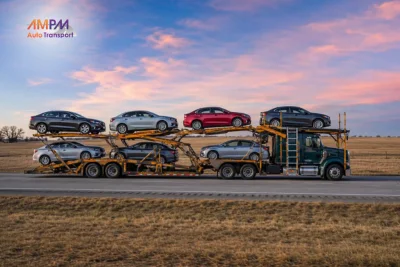
Open transport moves vehicles on a trailer without solid walls or a roof surrounding them. These are the multi-level carriers frequently seen transporting new cars to dealerships. Depending on the trailer design and the size of the vehicles, one carrier may move several cars during the same trip. Open trailers are used for sedans, SUVs, pickup trucks, vans, crossovers, and many other everyday vehicles. They can also transport higher-value cars when the owner is comfortable with direct exposure to normal weather and highway conditions.
The popularity of open shipping is not accidental. More open carriers operate across the country, particularly on common interstate routes. That wider availability may provide more scheduling options and make it easier to coordinate transportation between major cities and heavily traveled areas. Sharing trailer space also helps control the price. The carrier can divide operating expenses across several shipments instead of assigning most of the truck and trailer to one or two vehicles. For many customers, this makes open shipping the more practical option.
What Happens to the Car on an Open Carrier?
Before loading, the driver normally inspects the vehicle and records its visible condition on the Bill of Lading. The car is then driven or winched onto the trailer, positioned according to its size and delivery order, and secured using the carrier’s approved equipment. Depending on the trailer and vehicle, securement may involve wheel straps, tire nets, or other methods intended to keep the car stable. The vehicle remains exposed while in transit. Rain can reach it. Dust, insects, wind, and ordinary highway grime may collect on the body. Small debris can also be thrown from the roadway, much as it can when the vehicle is driven normally.
This does not mean an open carrier leaves the vehicle unprotected in every sense. The car is secured to commercial transportation equipment and is not adding driving mileage to the odometer. The owner is also avoiding the fatigue, fuel use, hotel stops, and mechanical wear associated with a long road trip. The main limitation is environmental exposure. A car may need a wash after delivery. That is expected with open transportation and should not automatically be treated as damage.
Which Vehicles Usually Use Open Transport?
Open shipping works well for most standard passenger vehicles. Common examples include:
- Daily drivers
- Family sedans
- Pickup trucks
- SUVs and crossovers
- College vehicles
- Dealer inventory
- Fleet vehicles
- Online car purchases
- Lease returns
- Relocation vehicles
A vehicle does not need to be old or inexpensive to travel on an open carrier. Many new and relatively costly vehicles move this way every day. Dealerships commonly receive inventory on open trailers because the method is widely available and practical for moving several units at once. The decision becomes more personal with a rare, restored, custom, or unusually low car. An owner may still choose open shipping, but they should first consider whether normal exposure, loading angles, and shared-trailer handling fit the vehicle.
What Are the Main Advantages of Open Shipping?
Availability is usually the first advantage. Because open carriers are more common, they may be easier to locate for a specific route. That does not guarantee an immediate pickup, but it generally gives a transport coordinator a larger carrier pool to work with.
Cost is the second advantage. Open transport usually costs less than enclosed shipping because more vehicles can share the available trailer space. The exact difference depends on mileage, route, season, vehicle size, operability, and current carrier demand. It is also straightforward. Most standard cars can load onto an open trailer without highly specialized equipment. Drivers are familiar with handling a wide range of vehicles, and many common routes are already supported by regular open-carrier traffic. For a normal car, this can be all that is needed.
What Are the Limitations of Open Transport?
The most obvious limitation is exposure. The vehicle is not separated from rain, sun, dust, snow, and normal roadway debris by solid walls. Owners who have invested heavily in paint correction, restoration, custom bodywork, or a highly sensitive finish may be uncomfortable with that. Privacy is limited as well. Anyone near the trailer can see what is being transported. That may not matter for an ordinary vehicle, but owners of rare prototypes, celebrity vehicles, auction purchases, or highly recognizable cars may prefer a more discreet setup. Loading clearance can also become an issue. Open trailers use ramps and multi-level decks. A vehicle with a low front splitter, long wheelbase, lowered suspension, or unusual bodywork may require a shallower loading angle than the assigned equipment can provide. This does not mean every low car requires covered car transport. It means the clearance should be discussed before scheduling.
What Enclosed Car Shipping Changes
Enclosed shipping places the vehicle inside a trailer with a roof and covered sides. The enclosure may use rigid panels or heavy flexible curtains, depending on the carrier. Both designs reduce direct exposure to weather, dust, and ordinary roadway debris. That added coverage is the main reason people compare enclosed vs. open car shipping.
An enclosed carrier may transport one vehicle, a few vehicles, or several cars in a larger multi-level trailer. Capacity depends on the equipment and the dimensions of the vehicles being moved. Because enclosed trailers carry fewer cars and are less common than open carriers, this service normally costs more. The higher rate does not come only from the walls. Specialized ramps, hydraulic liftgates, low-angle loading systems, additional interior space, soft securement equipment, and smaller shipment capacity may all contribute to the price.
Hard-Side and Soft-Side Enclosed Carriers
Hard-side trailers use solid walls, usually made from aluminum, fiberglass, or similar material. They provide a rigid barrier around the cargo area and keep the vehicle out of public view while the doors are closed. This setup is often chosen for rare collector cars, prototypes, exotic vehicles, and shipments where privacy matters. Soft-side trailers use heavy fabric or vinyl curtain panels stretched over a frame. The flexible covering still limits direct exposure to rain, sun, road dirt, and debris. The sides may also be moved aside, giving the driver better access to vehicles and securement points. Both are forms of covered car transport. Hard-side equipment generally provides more rigid enclosure and privacy. Soft-side equipment may offer broader availability or a lower enclosed-shipping price. The better choice depends on the car and the owner’s priorities.
Ramp Loading and Hydraulic Liftgates
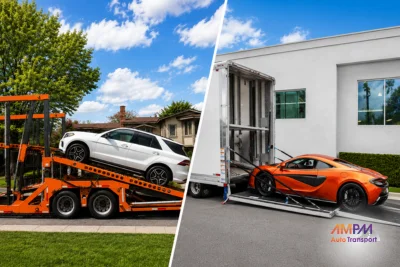
Not every enclosed trailer loads vehicles in the same way. Some use conventional rear ramps. Others have extended ramps that create a shallower angle. Specialized trailers may use a hydraulic liftgate that raises the vehicle while it remains relatively level.
A liftgate can be useful for:
- Low-clearance sports cars
- Exotic vehicles with long front splitters
- Restored classics
- Race cars
- Vehicles with delicate underbody components
- Non-running vehicles
- Cars unable to climb a ramp safely
The presence of an enclosed trailer does not guarantee liftgate loading. Customers should ask how the assigned carrier plans to load the vehicle. The trailer needs to fit the car’s ground clearance, wheelbase, width, height, and front and rear overhang. A normal-height luxury sedan may load safely on ramps. A lowered car may need more specialized equipment even when both vehicles are using an enclosed carrier.
Which Vehicles Often Use Enclosed Shipping?
Enclosed transport is commonly considered for vehicles where reducing direct exposure is a high priority.
Examples include:
- Classic and antique cars
- Exotic vehicles
- Luxury models
- Restored automobiles
- Custom builds
- Race cars
- Collector vehicles
- Rare auction purchases
- Prototype or promotional vehicles
- Cars with low ground clearance
- Vehicles with delicate or high-value finishes
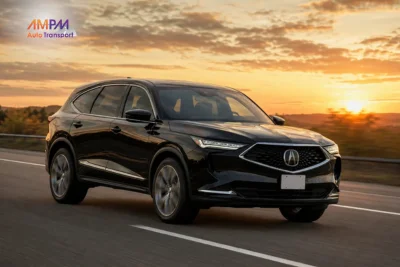
The service is not limited to million-dollar cars. An older vehicle may have strong personal value even when its market price is modest. A family restoration, inherited car, or carefully modified project may justify enclosed transportation because replacing or repairing certain details would be difficult. At the same time, a high purchase price does not automatically require enclosed shipping. A modern luxury SUV designed for everyday road use may be transported on an open carrier when the owner accepts normal exposure. The final choice belongs to the customer, provided the equipment can safely accommodate the vehicle.
What Are the Benefits of Covered Car Transport?
The clearest benefit is reduced exposure. The roof and sides separate the vehicle from direct rain, snow, sun, dust, and much of the debris encountered on the highway. Enclosed transport also provides more privacy.
The car is less visible during stops and while traveling through public areas. This can matter for rare cars, unreleased models, recognizable vehicles, and purchases the owner does not want displayed openly. Specialized loading is another possible advantage. Many enclosed carriers are built around low-clearance and high-value vehicles. Drivers may use hydraulic liftgates, extended ramps, additional interior lighting, and securement methods selected to reduce contact with wheels, suspension, or bodywork. The environment may also be easier to control during inspection and handling. A driver can work inside the enclosed trailer rather than around an exposed upper deck. These benefits make enclosed shipping valuable for certain vehicles. They do not make it necessary for every car.
Open vs. Enclosed Car Transport: The Differences That Matter
The easiest comparison is cost versus coverage. Open shipping generally costs less and offers broader carrier availability. Enclosed shipping costs more but reduces direct environmental exposure and may provide specialized loading. The real decision involves several smaller details.
Cost
Open transport is usually the more affordable option. Several vehicles share a larger trailer, and more carriers operate this type of equipment. The final rate still depends on the route, mileage, vehicle size, season, fuel costs, pickup access, and carrier availability. Enclosed transportation usually carries a premium. The trailer may hold fewer vehicles, use specialized equipment, and have less route availability. A single-car enclosed shipment can cost significantly more because one customer is using most or all of the available capacity.
The lowest quote should not decide the shipment by itself. A cheap open carrier is not the right choice when the car cannot clear its ramps. An expensive enclosed service may be unnecessary for an ordinary vehicle when the customer has no concern about weather or road exposure.
Carrier Availability
Open carriers are more common. That can provide more options when moving between major cities or along heavily traveled interstate routes. Rural areas and less popular lanes may still require additional scheduling time. Enclosed carriers operate in smaller numbers. Finding the right enclosed trailer can take longer, particularly when the vehicle needs a liftgate, single-car trailer, hard-side enclosure, or unusual interior dimensions. Owners with strict dates should begin planning early. Expedited coordination may be possible on some routes, but enclosed equipment cannot simply be created when none is available nearby.
Exposure and Protection
Open carriers leave the vehicle visible and exposed to ordinary outside conditions. Enclosed carriers reduce that exposure by placing the car inside a covered trailer. Neither method can guarantee that nothing unexpected will happen. Transportation involves loading, securement, highway travel, stops, weather, and delivery. The carrier’s equipment, driving, inspection process, and handling practices matter in both cases. Enclosed shipping adds a physical barrier around the vehicle. It does not remove the need for photos, a Bill of Lading, a delivery inspection, and accurate communication.
Loading Equipment
Most everyday vehicles can use standard open-carrier ramps. Cars with low clearance, oversized tires, body modifications, non-running condition, or unusual dimensions may need different equipment. Enclosed trailers are more likely to include hydraulic liftgates or shallow-angle loading systems, but customers should confirm rather than assume.
The best trailer is the one that can load and secure the vehicle without avoidable contact. This is one reason open vs. enclosed car transport should not be treated only as a price comparison. Sometimes the car itself makes the decision.
Number of Vehicles and Route Stops
An open carrier may transport several vehicles and complete multiple pickups and deliveries during one trip. A large enclosed carrier may do the same, though its total capacity is usually lower. Single-car enclosed transport may provide a more direct route with fewer loading stops. It can also cost considerably more. A shared trailer is not automatically a problem. Commercial carriers plan vehicle placement around dimensions, weight, pickup order, and delivery order. Ask whether the vehicle is likely to be moved during the trip when that matters to you.
Privacy
Open transport puts the vehicle in public view. Enclosed transportation keeps it less visible while the trailer is closed. Privacy may matter when moving:
- Rare cars
- Celebrity vehicles
- Film or promotional cars
- Prototypes
- High-profile auction purchases
- Unusual custom builds
- Vehicles being prepared for a private reveal
For a standard family vehicle, this may have little practical value.
Insurance and Inspections
Enclosed transport does not automatically mean unlimited insurance coverage.
Carrier coverage, policy limits, exclusions, deductibles, and claim procedures can vary. Customers should request the carrier’s insurance information and review the shipping agreement. The same applies to open transport. Before pickup, wash the car when practical and photograph it from several angles. Review the driver’s inspection and make sure existing marks appear on the Bill of Lading. At delivery, compare the vehicle with the pickup photos and paperwork before signing. The inspection process matters regardless of the trailer type.
Vehicle Condition After Delivery
A car arriving by open transport may be dusty or dirty. That is common after highway travel. The vehicle may need a basic wash before its finish can be inspected in detail. Enclosed vehicles usually arrive cleaner because the trailer reduces direct exposure. They can still collect some dust or marks from handling, especially when the trailer is opened several times during the route. Do not confuse cleanliness with mechanical condition or transport safety. A clean vehicle is not proof that a service was better. A dusty one is not proof that something went wrong.
Is Open or Enclosed Transport Better for Your Car?
There is no universal answer. The right method depends on what would bother you more: paying extra for protection you may not need or accepting exposure you may later regret. Start with the vehicle’s practical requirements. Can it safely load onto a standard trailer? Is it unusually low, wide, tall, or long? Does it run, steer, roll, and brake? Has it been modified from factory specifications?
Then consider its condition and use. A daily driver already experiences rain, dust, insects, sun, and ordinary roadway debris. Open shipping may be a natural fit. A show car with a newly finished paint job is a different situation. So is a rare classic with hard-to-replace trim or a race car with a low front splitter. Your comfort level matters too. Some owners will worry throughout the shipment if the vehicle is visible on an open carrier. Enclosed transport may be worth the additional price simply because it removes that concern. Other owners see little reason to pay more for a car that spends every week on public roads. Both views are reasonable.
What’s the Best Way to Ship a Car?
For most standard vehicles, open transport offers the strongest combination of availability, practicality, and price. For rare, restored, exotic, highly modified, or low-clearance vehicles, enclosed transport may be the better match. The best way to ship a car is the method that fits:
- The vehicle
- The loading requirements
- The route
- The schedule
- The budget
- The owner’s preferred level of coverage
Do not select a trailer based only on the car’s badge. A Porsche may travel on an open carrier. A modestly priced classic may need enclosed shipping because its parts and finish are difficult to replace.
Is Open or Enclosed Transport Better?
Open transport is better when affordability and carrier availability matter most. Enclosed transport is better when reducing direct exposure, improving privacy, or accessing specialized loading equipment matters more than the additional cost. Neither is automatically better in every situation. The question becomes easier when you replace “Which service is best?” with “Which service fits this particular vehicle?”
Is an Enclosed Trailer Better?
An enclosed trailer provides more coverage from outside conditions. That makes it better for certain cars, but not necessarily a better value for every shipment. A vehicle that can load safely onto an open carrier and is regularly driven in normal weather may not gain enough from an enclosure to justify the price. A low-clearance collector car may gain a great deal, especially when the enclosed trailer includes a liftgate and vehicle-specific securement equipment.
What Is the Safest Way to Transport a Car?
Both open and enclosed carriers are established transportation methods. Safety depends on more than whether the trailer has walls. Carrier experience, equipment condition, securement, route planning, inspection procedures, and communication all matter. Enclosed transport may reduce exposure to external conditions. It does not replace careful loading or professional handling. Customers should provide accurate vehicle information, review insurance documents, photograph the car, read the Bill of Lading, and inspect it again at delivery. Those steps support a safer and clearer shipment with either method.
Is Enclosed Shipping Worth It?
Enclosed shipping may be worth it when:
- The vehicle has low clearance
- The paint or finish requires additional care
- The car is rare or difficult to replace
- Privacy matters
- The owner wants less direct weather exposure
- A hydraulic liftgate is needed
- The vehicle has strong financial or personal value
It may not be worth the added expense when the vehicle is a standard daily driver and the owner is comfortable with normal road exposure. The decision is not only financial. Peace of mind has value, especially when the car cannot easily be repaired or replaced.
What Is the Best Enclosed Car Transport Company?
There is no single company that is automatically best for every route and vehicle. A strong enclosed transport option should be able to explain:
- Which trailer will be used
- Whether it is hard-side or soft-side
- How many vehicles it carries
- Whether it has a liftgate
- How the car will be secured
- Whether the vehicle dimensions fit
- What insurance documentation is available
- How pickup and delivery inspections work
- Whether the requested locations are accessible
Clear answers are more useful than broad claims about premium or white-glove service. The right company is the one that can coordinate suitable equipment for the actual vehicle and route.
Open or Enclosed Car Shipping for a Luxury Vehicle?
Luxury alone does not decide the method. A luxury sedan used every day may travel appropriately on an open carrier. An exotic car with a low front splitter may need enclosed liftgate transport even when its market value is similar. Consider the bodywork, clearance, paint condition, modifications, and how comfortable the owner is with exposure. Enclosed luxury transport is often selected because it combines coverage, privacy, and specialized equipment. It remains a choice rather than a requirement for every premium-brand vehicle.
Open or Enclosed Car Shipping for a Classic?
Enclosed transport is commonly preferred for classics because replacement parts, original trim, paintwork, and restoration details may be difficult to reproduce. Older cars can also have special loading needs. Weak brakes, manual steering, narrow tires, fluid leaks, long overhangs, and non-running condition should be disclosed before pickup. Some regularly driven classics may still use open transport. A fully restored show car may justify enclosed service even for a relatively short route.
Open vs. Closed Car Shipping: Is “Closed” the Same as Enclosed?
In most customer searches, open vs. closed car shipping means the same comparison as open versus enclosed transport. The standard industry term is “enclosed car shipping. ”“Closed transport” is understandable, but transport companies are more likely to describe trailers as hard-side enclosed, soft-side enclosed, single-car enclosed, or multi-car enclosed. Using the standard wording can make it easier to compare equipment and quotes. Open and enclosed shipping are not competing ideas where one must be right and the other wrong. They solve different problems. Open transport focuses on practical, widely available vehicle movement. Enclosed transport adds coverage, privacy, and access to equipment often used for low-clearance or higher-value cars. For most vehicles, open shipping makes sense. For certain cars, the enclosed trailer earns its higher price before the engine is even started. The best decision comes from understanding what the vehicle needs-not from choosing the option that sounds more impressive.