
The Tesla Semi truck is no longer just a concept Tesla keeps showing at events. The all-electric Class 8 truck has moved into production, with Tesla saying volume production began in 2026 after years of pilot-fleet testing and delays. On paper, the numbers are impressive: up to 500 miles of estimated range, megawatt-level charging, three electric motors, and a driver-centered cab unlike a traditional semi truck interior. But fleets have to look beyond headline specs. The real questions are whether the range works for daily routes, whether charging fits existing schedules, how payload is affected, what the truck costs, and whether service support can match the demands of commercial trucking. So, is Tesla making a Semi that is genuinely practical? Yes, but its strongest use cases may be more specific than simply replacing every diesel truck on the road. The excitement surrounding the Tesla Semi goes beyond its futuristic appearance and electric powertrain. For trucking companies dealing with fluctuating diesel prices, rising operating expenses, and pressure to reduce emissions, the possibility of running heavy-duty trucks on electricity is worth exploring. However, switching from diesel to electric involves more than purchasing a new vehicle. Fleets must consider charging infrastructure, route planning, vehicle availability, and long-term operating costs before making the investment. While early fleet operations have demonstrated the truck’s potential, broader adoption will depend on how reliably it performs under everyday commercial conditions. Understanding these advantages and limitations is essential for determining where the Tesla Semi fits into the future of American trucking.
Tesla Semi Specs: Range, Charging, and Power
Tesla currently offers two Semi configurations. The Standard Range version has an estimated range of approximately 325 miles, while the Long Range version offers approximately 500 miles. Tesla lists energy consumption at 1.7 kWh per mile for both versions under its specified test conditions. Both versions use three independent electric motors on the rear axles and offer up to 800 kW of drive power. Tesla lists an 82,000-pound gross combination weight rating, with a curb weight below 20,000 pounds for the Standard Range model and about 23,000 pounds for the Long Range version. An electric power take-off of up to 25 kW is also available.
Charging is one of the most important Tesla Semi specs for fleets. Tesla’s Megacharger can supply up to 1.2 MW and, according to the company, restore up to 60% of the truck’s range in approximately 30 minutes. The current production Semi uses the MCS 3.2 charging connection. Those numbers can work particularly well for regional freight, repeat routes, and trucks returning to a depot where charging can fit around loading, unloading, or driver breaks. For unpredictable long-haul operations, however, charging availability becomes a much larger part of dispatch planning. Tesla also lists standard active safety features that work with the truck’s motor, braking, traction, and stability controls. Its central seating position aims to improve visibility around the truck.
Tesla Semi Truck Interior: What Drivers Actually Get
The Tesla Semi truck interior looks very different from the dashboard of a conventional Class 8 tractor. The driver sits in the center of the cab rather than on the left. MotorTrend found that this position provides strong forward visibility. Supported by large mirrors and camera views displayed on screens beside the steering wheel. The production truck uses dual touchscreen displays for vehicle and trip information. Drivers can view camera feeds, navigation, tire-pressure information, climate controls, trailer functions, suspension settings, and other truck data from the screens. MotorTrend’s earlier hands-on review described roughly a 3-by-7-foot cabin area with a rubberized floor, substantial headroom, a rear jump seat, wireless phone chargers, cupholders, storage cubbies, and exterior storage lockers.
Not everything relies on touchscreens. Physical controls remain for important functions such as the parking brake, hazard lights, and trailer-brake air supply. One unusual detail is the side windows. MotorTrend reported that they do not roll down conventionally. Instead, small pop-out sections allow drivers to handle tolls or paperwork. Tesla has also left considerable space behind the driver’s position, but buyers should not assume Tesla offers a production sleeper configuration unless the company officially announces one. For regional drivers who repeatedly enter and exit distribution centers, the simple layout and visibility may be appealing. Long-haul drivers will have additional questions about storage, sleeping arrangements, and extended time in the cab.
Tesla Semi Truck Price, Availability, and Early Fleet Orders
The Tesla Semi truck price remains slightly unusual because Tesla’s current public U.S. Semi page does not display a conventional retail MSRP. Fleets instead need to contact Tesla with information about their operations and preferred configuration. Publicly reported California documentation has provided a clearer indication of pricing. The Los Angeles Times reported that state records placed the Semi at around $260,000 for the shorter-range model and $300,000 for the 500-mile Long Range version. Tesla itself has not published those figures as a standard retail price list on its current website. That is substantially higher than Tesla’s early 2017 price expectations, although the comparison should also consider incentives, electricity costs, maintenance, charging infrastructure, and utilization rather than purchase price alone.
As for Tesla Semi trucks available, the answer is increasingly yes, but fleet availability is still developing. Tesla delivered early pilot trucks beginning in 2022. The first truck from its new high-volume production line rolled out in April 2026, and Tesla subsequently reported that volume production had begun. WattEV provides one of the clearest examples of larger-scale fleet adoption. The company ordered 370 Tesla Semis, with its first 50 scheduled for delivery in 2026 and the complete fleet expected to become operational by the end of 2027. More than 300 are planned for a program connected with the Port of Oakland.
WattEV is pairing the trucks with megawatt-capable charging infrastructure in locations including Oakland and Fresno, with additional California sites planned. That highlights an important point: buying the truck and creating a workable charging network are often part of the same fleet decision. For fleets wondering how to buy a Tesla Semi, Tesla currently provides a direct fleet-contact form where companies can specify fleet size, operations, and whether they are interested in Standard or Long Range trucks.
Tesla Semi vs. Diesel Semi Truck: What Changes for Fleets?
The biggest difference is no surprise: electricity replaces diesel. That can mean fewer conventional powertrain components, no diesel aftertreatment system, and no traditional transmission. Tesla argues that these differences can lower energy and maintenance costs for suitable operations. Electric motors also deliver torque immediately, giving the Tesla truck strong acceleration without gear changes. But diesel still has practical strengths. A diesel semitruck can refuel quickly at a large nationwide network of truck stops. It can also handle changing routes without requiring dispatchers to check megawatt charging availability first.
Battery weight is another consideration. Tesla lists the 500-mile Semi at roughly 23,000 pounds curb weight. Fleets must evaluate tractor weight, trailer weight, freight, and applicable electric-truck weight allowances to determine how payload affects their particular operation. Electric trucks may therefore appeal particularly to fleets that run predictable regional routes, depot-based operations, drayage, and dedicated freight lanes. Diesel remains easier to deploy when trucks need maximum route flexibility, established service access, rapid refueling, or highly variable long-haul schedules. That is why the answer to “Are Tesla Semis good?” depends heavily on the route rather than the spec sheet alone.
What the Refreshed Tesla Truck Could Mean for the Trucking Industry
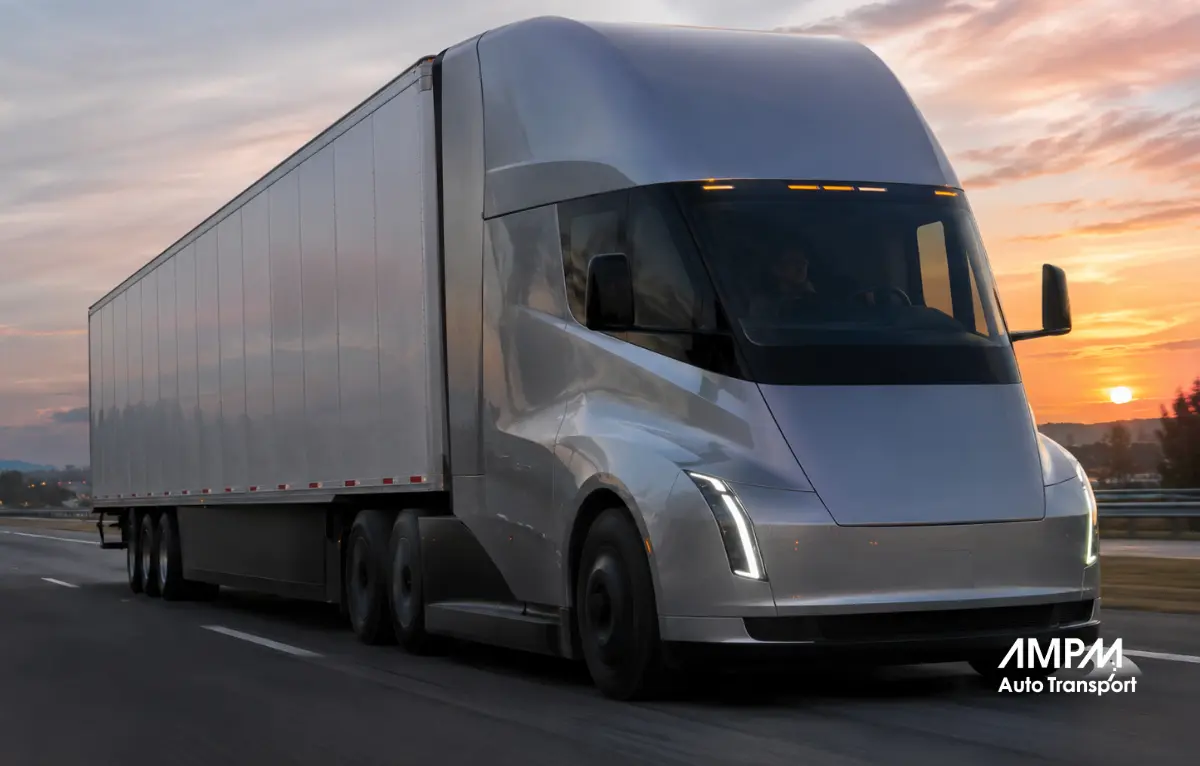
Tesla refreshed the Semi’s design before the wider production ramp. Car and Driver reported changes including a full-width front light bar, revised bumper, aerodynamic channels, and repositioned cameras. The publication also reported Tesla’s claims of improved efficiency and payload capability. Tesla now publishes up to 800 kW of drive power, equivalent to roughly 1,070 horsepower, along with its 1.7-kWh-per-mile efficiency figure and 1.2-MW charging capability. If Tesla can scale production, service, and charging infrastructure, the Semi could increase pressure on both traditional truck manufacturers and other electric Class 8 competitors. But the timeline itself is a reminder to remain cautious. Tesla first unveiled the Semi in 2017, while high-volume production did not arrive until 2026. The trucking industry will therefore judge the truck less by launch promises and more by fleet uptime, battery durability, charging access, payload performance, service support, and total cost per mile.
The Tesla Semi truck now has much more concrete specifications than it did during its long pre-production period. Its strongest features are easy to see: up to 500 miles of estimated range, rapid megawatt charging, strong electric power, fewer conventional drivetrain components, and a driver-focused cabin. For regional freight, dedicated routes, port operations, and fleets that can install or reliably access high-power charging, those advantages could make the truck practical. Long-haul operations remain more complicated. Charging location, tractor weight, payload needs, service access, purchase price, and route flexibility all need to work together.
There is also no single published answer yet to questions such as how long a Tesla Semi battery will last over the full commercial life of a truck. Real-world fleet data will become more valuable as production Semis accumulate years and millions of miles. For now, the most useful Tesla Semi review is not simply “electric versus diesel.” It is whether the truck’s range, charging schedule, payload, and economics fit the freight operation that will actually use it.