
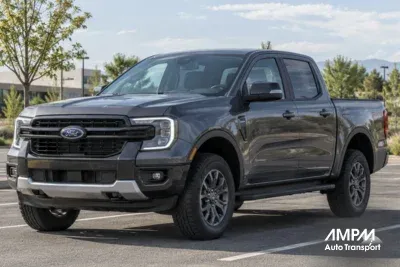
A pickup truck should be useful before it is impressive. It needs to carry tools without complaint, pull a trailer when asked, and survive the muddy equipment that somehow always ends up in the bed. Then Monday arrives, and the same truck has to fit in a parking garage, handle traffic, and carry passengers without bouncing them around. The 2026 Ford Ranger is built around that middle ground. It is larger and more capable than the compact Ford Maverick, but easier to manage than an F-150 or heavy-duty pickup.
The bed is useful without making the truck excessively long, and the cabin has enough technology to feel current without becoming a rolling computer lab. Ford offers three turbocharged engines, including a four-cylinder that can tow up to 7,500 pounds when properly equipped. Buyers can choose a straightforward XL, the well-rounded Ford Ranger XLT, the more comfortable Lariat, or the desert-running Ranger Raptor. The Ranger is not perfect.
The U.S. model comes only as a crew cab with a five-foot bed, so buyers looking for a Ford Ranger extended cab or longer cargo box will not find one in the 2026 lineup. Useful towing and driver-assistance technology can also raise the price quickly. Still, the basic truck gets a lot right. The ride is comfortable enough for daily use. The engines feel strong, and the bed is easier to reach than the one on many full-size pickups. Edmunds ranks the Ranger first among the midsize trucks it currently evaluates, while Car and Driver gives it a 9-out-of-10 rating. The Ranger does not need to be the biggest truck in the driveway. Its appeal comes from being enough truck for a surprisingly large number of jobs.
What Changed for the 2026 Ford Ranger?
The 2026 Ranger is not a full redesign. The current U.S. generation arrived for the 2024 model year, and Car and Driver describes the 2026 truck as largely unchanged. The most notable equipment change identified by Edmunds is that the FX4 Off-Road Package can now be added to the base XL trim. That may not sound dramatic, but it gives buyers a less expensive route into genuine off-road hardware. The FX4 package includes off-road-tuned shocks, an exposed steel bash plate, all-terrain tires, an electronic-locking rear differential, Trail Control, and an off-road display showing information such as pitch and roll angles.
The basic model structure remains simple:
- Ranger XL
- Ranger XLT
- Ranger Lariat
- Ranger Raptor
Every version uses a four-door crew-cab body and a five-foot bed. The XL, XLT, and Lariat offer rear-wheel drive or four-wheel drive, while four-wheel drive is standard on the Raptor. The XL is the work-focused starting point. It includes the 2.3-liter EcoBoost engine, a 10-speed automatic transmission, 17-inch steel wheels with all-terrain tires, a 10-inch center display, an 8-inch gauge display, cloth seats, and a second-row bench with under-seat storage. Buyers searching for a Ford Ranger STX should know that STX is an appearance package rather than a separate Ranger trim for 2026.Available on the XL, the STX Appearance Package adds an STX fender badge, fog lamps, specific wheels, and exterior details. It dresses up the entry-level truck without requiring the equipment or price of a higher trim.
The Ranger XLT sits in the middle of the lineup and will make the most sense for many buyers. It adds aluminum wheels, fog lamps, Ford Co-Pilot360 technology, SiriusXM, a Sport Appearance Package, and access to useful options such as the twin-turbo V6, Advanced Towing Package, heated power seats, moonroof, and integrated bed step. Edmunds also recommends the XLT as the lineup’s value choice. It includes more convenience and utility equipment than the XL without moving immediately to the Lariat’s higher price. The Lariat focuses more heavily on comfort.
It includes a 12-inch center touchscreen, a 12-inch digital instrument display, a 360-degree camera, heated ActiveX-trimmed front seats, driver memory, a heated steering wheel, ambient lighting, and a 10-speaker B&O audio system.
The Ranger Raptor is a different kind of truck. Its twin-turbocharged 3.0-liter V6 produces 405 horsepower and 430 pound-feet of torque. It also receives 2.5-inch Fox Live Valve shocks, a Watts-link rear suspension, locking front and rear differentials, seven drive modes, Trail Control, and equipment intended for quick travel over uneven terrain. The Raptor is entertaining and capable, but it is not automatically the most useful Ranger. Its wider body, specialized suspension, off-road tires, and higher price make sense when high-speed trail driving is part of the plan. A conventional XLT or Lariat with the FX4 package may be a better match for camping roads, snow, occasional trails, and normal daily use.
Is There a Ford Ranger Hybrid?
Not in the 2026 U.S. lineup. Ford’s current American Ranger range lists three gasoline EcoBoost engines: the 2.3-liter four-cylinder, 2.7-liter V6, and Raptor-exclusive 3.0-liter V6. No Ford Ranger hybrid is listed for U.S. buyers. Ford does sell Ranger plug-in hybrid models in certain international markets. That does not mean the same powertrain is available through American Ford dealers. Until Ford officially announces a U.S.-market hybrid, shoppers should treat online discussions about one as future speculation rather than current availability.
What About the Ranger Super Duty?
The Ranger Super Duty is also not part of the regular 2026 U.S. Ranger lineup. Ford has introduced the name in Europe and other international markets for specialized heavy-duty work. The global model uses a reinforced frame, strengthened driveline and suspension components, a diesel engine, increased ground clearance, and substantially higher towing and payload ratings than the American midsize Ranger. It is intended for demanding commercial operations such as mining, forestry, emergency services, military use, and specialist vehicle conversions. The name can be confusing because American buyers usually associate “Super Duty” with Ford’s F-250, F-350, and larger heavy-duty trucks. For the U.S. market, the 2026 Ranger remains a midsize pickup. Buyers needing substantially greater payload, a longer bed, or heavy-duty towing should compare it with the F-150 or Ford Super Duty lineup rather than waiting for the international Ranger Super Duty.
Engines, Towing, and the Work the Ranger Can Handle
The standard 2.3-liter EcoBoost four-cylinder produces 270 horsepower and 310 pound-feet of torque. It is paired with a 10-speed automatic transmission and comes standard on the XL, XLT, and Lariat. Rear-wheel drive is standard on these trims, with four-wheel drive available. The engine is not merely an inexpensive starting point. It provides enough low-speed torque for normal hauling, highway merging, and towing. It also delivers the highest available payload rating in the lineup, depending on the truck’s configuration. Ford lists maximum available payload at 1,767 pounds on its main Ranger page. Exact capacity varies by drivetrain, engine, equipment, passengers, and optional features, so the door-jamb payload label on the individual truck remains the figure that matters. The available 2.7-liter twin-turbocharged V6 produces 315 horsepower and 400 pound-feet of torque.
It can be ordered on the XLT and Lariat, giving buyers stronger acceleration and more effortless passing without requiring the specialized Ranger Raptor. The additional torque is noticeable, particularly when the truck is loaded or climbing a grade. It does not increase the maximum 7,500-pound tow rating, however. Edmunds also found that the V6 delivered only a modest performance improvement in its testing while using more fuel, leading its reviewers to prefer the standard four-cylinder for most buyers.
That does not make the V6 a poor choice. A driver who regularly carries passengers, travels through mountains, or prefers stronger low-speed response may appreciate it. Someone using the Ranger mainly for commuting, weekend projects, and occasional towing may find the four-cylinder completely adequate. The Raptor’s 3.0-liter V6 sits at the top. Its 405 horsepower and 430 pound-feet of torque make it the fastest and most powerful Ranger. The engine works with a 10-speed automatic and standard four-wheel drive.
The Raptor’s extra power is designed to work with its suspension and off-road hardware. It is less about pulling the heaviest trailer and more about controlling the truck over rough terrain at speeds that would overwhelm an ordinary pickup.
Towing Up to 7,500 Pounds
When properly equipped, the 2026 Ford Ranger can tow up to 7,500 pounds. That rating applies to suitably configured four-cylinder and 2.7-liter V6 trucks with the necessary towing equipment. The Raptor’s specialized off-road configuration has different limits, so buyers should check Ford’s towing guide for the exact model. A 7,500-pound maximum can cover many small and midsize travel trailers, boats, utility trailers, and recreational loads. It does not mean every Ranger can safely pull a 7,500-pound trailer immediately after leaving the dealership. The truck needs the correct hitch and towing package. Trailer weight, tongue weight, cargo, passengers, accessories, and payload all count toward the vehicle’s limits.
A heavy trailer can use a significant part of the available payload through tongue weight alone. Add several adults, tools, coolers, and equipment in the bed, and the truck may reach its payload limit before reaching the maximum tow rating. The available Advanced Towing Package adds technology intended to make trailer use easier. Features include Pro Trailer Backup Assist, an integrated trailer brake controller, trailer light checking, and blind-spot monitoring that can account for the length of a connected trailer.
Pro Trailer Backup Assist allows the driver to use a dashboard control to indicate the direction the trailer should move. The truck then helps manage the steering while the driver remains responsible for speed, braking, surroundings, and safe operation. The system does not eliminate the need to understand trailer behavior. It can reduce some of the confusion that occurs when the trailer initially moves in the opposite direction from the steering wheel.
A Bed Designed for Real Use
The Ranger’s bed is approximately 59.6 inches long and 62.4 inches wide, with 48.2 inches between the wheel wells. Total cargo-box volume is about 43.5 cubic feet. The width between the wheel wells is especially useful because it allows standard four-foot-wide building materials to sit flat across the bed floor.
A five-foot bed will not carry full sheets of plywood or drywall with the tailgate closed. Those materials can still be transported when properly supported and secured, but buyers regularly hauling long lumber or large construction materials may prefer a full-size truck with a longer box.
The available integrated box side step helps drivers reach into the cargo area without climbing onto a tire. Available bed lighting and Zone Lighting can illuminate the truck and surrounding area after dark. Pro Power Onboard supplies up to 400 watts through in-cab and in-bed outlets for smaller tools, chargers, lights, and campsite equipment. Four hundred watts is useful, but it is not the high-output onboard power system offered on some F-150 configurations. It can charge batteries, operate lights, and run modest electronic equipment. It is not intended to power a construction site filled with large electric tools. The Ranger’s bed works best for tools, camping equipment, bicycles, landscaping supplies, home projects, and weekend recreation. It offers real truck utility without making the vehicle as long or difficult to park as many full-size pickups.
Fuel Economy Depends on the Engine and Drivetrain
The rear-wheel-drive 2.3-liter Ranger carries EPA estimates of up to 21 mpg in the city and 26 mpg on the highway. Choosing four-wheel drive reduces the city estimate, while the 2.7-liter V6 is rated at approximately 19 mpg city and 23 mpg highway. Car and Driver recorded 20 mpg from a V6 four-wheel-drive Ranger during its 75-mph highway test. Those figures are reasonable for a capable midsize truck, but they are not especially impressive beside smaller pickups or hybrid alternatives.
A Ranger owner who rarely tows and spends most of the week commuting may use more fuel than someone driving a compact Ford Maverick. A full-size F-150 can also deliver surprisingly similar highway mileage in certain configurations, so fuel economy alone is not always a reason to choose the smaller truck. The Ranger’s advantage is physical size. It is easier to place on narrow streets, more manageable in parking lots, and less likely to feel excessive when the bed is empty.
Inside the Ranger: Comfortable Enough for Every Day
Older midsize trucks often made their priorities obvious. The bed and frame mattered. The cabin felt like the part buyers were expected to tolerate. The current Ranger is much more civilized. Car and Driver describes the cabin as attractive and organized, with comfortable seats and materials that feel better than expected. Edmunds also praises the truck’s ride quality, technology, and overall refinement. It still feels like a truck. The seating position is upright, the hood is visible, and there are durable surfaces in areas likely to encounter work gloves and muddy gear. The difference is that spending two hours inside no longer feels like part of the job.
One Crew Cab, Five Seats
Every U.S.-market 2026 Ranger has four full-size doors and seating for five. There is no Ford Ranger extended cab, two-door regular cab, or six-foot bed configuration in the current American lineup. The crew cab makes the Ranger easier to use as a family vehicle.
Adults can enter the second row without folding a front seat, while children, coworkers, and pets have a proper rear bench. The seat can also fold to create additional interior storage, with smaller items fitting in compartments underneath. Rear space is good for a midsize truck, but it is not generous by SUV standards. Car and Driver notes that taller passengers will still prefer the front. The upright rear seat and limited legroom may become tiring on a long road trip. The rear bench works well for children, shorter adults, work crews traveling locally, or occasional passengers. A family regularly carrying tall teenagers or adults may want to compare the Ranger directly with a full-size crew-cab pickup or a midsize SUV. The front seats are much easier to enjoy. The controls are placed logically, visibility is good, and the truck’s manageable width keeps it from feeling oversized in traffic.
Screens Without Removing Every Button
The base Ranger uses a 10-inch vertical center display and an 8-inch instrument screen. The Lariat upgrades both displays to 12 inches, giving the dashboard a more digital appearance. SYNC 4A supports wireless Apple CarPlay and Android Auto, connected features, voice commands, and over-the-air software updates. The vertical screen shape works well for navigation. A map can display a useful amount of the route ahead, and camera views have enough room to show the truck’s surroundings. Car and Driver notes that the tall screen may draw the driver’s eyes farther down the dashboard than some horizontal displays. The good news is that Ford retains physical controls for common climate functions. That balance makes the system easier to use.
Drivers can access detailed menus on the touchscreen without needing to search through software just to adjust the temperature. Available technology includes a 360-degree camera, connected navigation, wireless phone charging, a B&O sound system, and a digital gauge cluster. The 360-degree camera may be one of the most valuable additions. A midsize truck is easier to park than a full-size pickup, but the hood, bed corners, trailer hitch, and nearby curbs can still be difficult to judge from the driver’s seat.
The XLT May Be the Everyday Sweet Spot
The Ranger XL provides the core capability, but its cabin is intentionally basic. The XLT adds enough technology and convenience to make daily ownership easier without automatically bringing the Lariat’s price. Available heated power seats, dual-zone climate control, wireless charging, a moonroof, towing technology, and the larger engine allow the truck to be configured around the owner’s routine. This flexibility explains why the Ford Ranger XLT is likely to be the best fit for many buyers. A work-focused owner can keep the standard engine and add four-wheel drive or FX4 equipment. A family buyer can prioritize heated seats and parking technology. Someone towing regularly can select the Advanced Towing Package. The Lariat becomes more appealing when the truck will replace a comfortable SUV or sedan.
Its larger displays, upgraded front seats, premium audio, heated steering wheel, 360-degree camera, memory settings, and additional cabin trim make a noticeable difference during daily use. The question is whether those features matter enough to justify the price. A truck used mainly with dirty work clothes and tools may not need the most polished interior. A Ranger driven to an office every morning and used for family travel on weekends may benefit from it.
Driver Assistance Varies by Trim
The XL includes a lane-keeping system, but many additional assistance features appear on higher trims or through packages. The XLT adds Ford Co-Pilot360 technology, while available systems include blind-spot monitoring, cross-traffic alert, trailer coverage, adaptive cruise features, parking sensors, and a 360-degree camera.
Car and Driver identifies the cost of useful driver-assistance equipment as one of the Ranger’s drawbacks. That should be considered when comparing prices. A lower trim may look affordable until the desired safety, towing, and convenience packages are added. A better-equipped XLT or Lariat may provide stronger overall value than an XL configured one option at a time. Driver-assistance technology does not replace careful driving. The Ranger is still a rear-wheel-drive-based pickup with a separate bed and a different weight balance when unloaded. Rain, snow, loose surfaces, trailers, and heavy cargo change how it stops and turns. The systems provide warnings and support. The driver remains responsible for controlling the truck.
Is the 2026 Ford Ranger the Right Truck for You?
The Ranger makes sense for someone who needs a genuine pickup but does not need a full-size one. It can tow up to 7,500 pounds, carry more than 1,700 pounds in selected configurations, handle rough roads with the FX4 package, and transport five people when needed. At the same time, it remains reasonably easy to drive in town. The steering is light, the ride is comfortable, and the body is easier to place than an F-150 on a narrow road. Edmunds calls it one of the most civilized trucks in the segment, while Car and Driver praises its smooth ride, quiet cabin, strong engines, and handsome design.
The standard 2.3-liter engine is enough for most owners. It delivers strong capability, the best available payload, and better fuel economy than the optional V6. The 2.7-liter engine is worthwhile when stronger torque matters more than efficiency. The Raptor is the emotional choice. It is fast, wide, expensive, and capable of traveling over rough terrain in a way the regular Ranger cannot match. It also sacrifices some of the simplicity that makes the standard truck appealing. For many buyers, the XLT with the 2.3-liter engine will be the best-balanced configuration. It adds useful technology, leaves room for towing and off-road packages, and avoids the price of the Lariat and Raptor.
What Is the 2026 Ford Ranger Upgrade?
There is no complete redesign for 2026.The current generation continues with the same engines, body style, and trim structure. The main packaging change is the availability of the FX4 Off-Road Package on the base XL, giving buyers a more affordable route to trail-focused equipment.
Will the 2027 Ford Ranger Be Redesigned?
Ford has not officially announced a redesigned 2027 U.S.-market Ranger in the sources currently available. Because the present American generation arrived for 2024 and carries into 2026 without major changes, a full 2027 redesign appears unlikely. That is an inference, not a confirmed Ford product announcement. Future packages, colors, technology, or powertrain changes are still possible. Buyers should rely on Ford’s official 2027 information once it is published rather than model-cycle rumors.
How Much Is a 2026 Ranger?
Ford’s current U.S. site lists the Ranger with a starting MSRP in the low-$33,000 range before options and other charges. Edmunds lists the XL at approximately $33,350, the XLT at $35,875, the Lariat at $43,755, and the Raptor at $57,070 before variations for drivetrain, destination, packages, and local pricing. Adding four-wheel drive, the V6, towing technology, appearance packages, off-road equipment, or luxury features can move the total considerably higher. The selling price may also differ from MSRP because of incentives, dealer pricing, taxes, registration, and availability.
Is the 2026 Ford Ranger a Good Truck?
Yes, provided its one-size body configuration fits your needs. The Ranger has strong engines, useful towing capacity, a comfortable ride, an organized cabin, and enough available technology to work as a daily vehicle. Both Car and Driver and Edmunds rate it highly within the midsize-truck segment. Its main disadvantages are straightforward. There is no extended cab or longer bed. The standard rear seat is less spacious than the back of a large SUV or full-size crew cab, and desirable driver-assistance and towing features can increase the price. There is also no U.S.-market hybrid for 2026.Drivers prioritizing fuel economy and lighter-duty use may prefer the Ford Maverick.
Buyers needing a longer bed, more passenger room, or heavier capability may be better served by the F-150.The Ranger works between those two extremes. It is small enough to use every day and capable enough to earn its place when the weekend gets busy. It can pull a boat, carry renovation supplies, reach a remote campsite, and still fit into the office parking lot on Monday morning. That is what makes the 2026 Ford Ranger convincing. It does not try to replace every truck Ford sells. It simply covers the space where work, travel, family life, and weekend plans tend to overlap.