
Shipping a Tesla does not need to feel complicated. The car can travel on the same commercial auto carriers used for gasoline vehicles. You still arrange the route, prepare the vehicle, complete a pickup inspection, and review its condition again at delivery. The difference is in the details.
A Tesla does not have a conventional neutral setting, and drivers should not use it casually during loading. Its motors can generate electricity when the wheels spin, and the touchscreen, key system, low-voltage power supply, battery level, and security settings can all affect how easily the vehicle moves onto a trailer. That is why good Tesla car transport begins before the carrier arrives. The owner needs to provide the correct model and vehicle condition. The driver needs suitable loading equipment and enough clearance. Both sides should understand that crews use Tow Mode briefly for loading or repositioning, not as a setting for the entire highway trip. This guide explains how to ship a Tesla, including vehicle preparation, battery planning, Tow Mode, securement, open and enclosed transport, and the final delivery inspection.
What Makes Tesla Car Shipping Different?
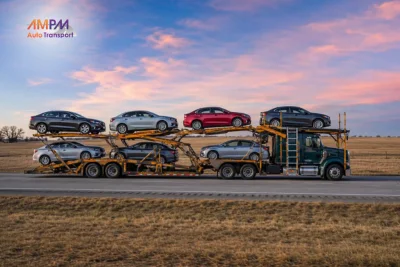
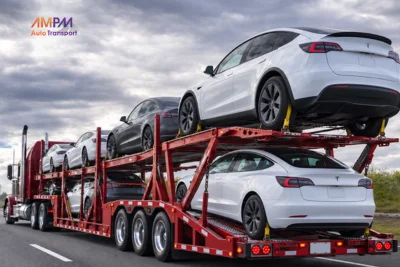
A Tesla is not automatically harder to ship than another vehicle. Drivers can usually drive a running Model 3 or Model Y carefully onto an auto carrier. Once positioned, the crew secures the vehicle by its tires and transports it with its wheels resting on the trailer. Problems are more likely when the vehicle has no power, cannot enter Tow Mode, sits unusually low, has aftermarket bodywork, or when someone unfamiliar with Tesla’s instructions handles it. The biggest rule is straightforward: carriers should not transport a Tesla with its wheels rolling along the road. Tesla states that carriers should move Model 3 and Model Y on a flatbed or comparable transport vehicle with all four wheels off the ground.
Allowing the wheels to spin during towing can create heat and cause serious damage because the electric motors generate power as the wheels rotate. This warning mainly concerns roadside towing and loading procedures. A commercial auto carrier already keeps the vehicle’s wheels off the roadway once the driver loads the car. The driver still needs to move it onto the trailer correctly.
Drivers can drive a Tesla that runs normally into position at low speed. Crews may need to winch an inoperable vehicle using the approved tow eye and the procedure listed in the owner’s manual. The carrier should never pull the vehicle by its suspension, chassis, body, or another convenient-looking component. Tesla specifically warns that using those areas for winching can cause damage. Ground clearance deserves attention too.
Factory Tesla models are low enough that steep ramps, sharp driveway angles, and raised trailer transitions may bring the front bumper or underbody close to the surface. Lowered suspension, aftermarket splitters, larger wheels, or body kits can make the loading angle more difficult. This does not mean every Tesla needs enclosed shipping or a hydraulic liftgate. It means the transport company should know about modifications before assigning equipment. The vehicle’s condition matters just as much. A Tesla may turn on but still be difficult to load. A damaged tire, locked wheel, missing key card, dead low-voltage system, depleted high-voltage battery, or inaccessible touchscreen can change the entire process.
Describe the car accurately when arranging Tesla auto transport:
- Does it power on?
- Can it shift into Drive and Park?
- Does it roll and steer?
- Are the tires inflated?
- Is the touchscreen working?
- Is a key card or phone key available?
- Has the suspension or body been modified?
- Has the vehicle been in a collision?
Collision-damaged EVs require additional caution.
Tesla advises transporters to assume that high-voltage components remain energized after a collision until qualified emergency professionals have evaluated the vehicle. A damaged battery or high-voltage system should not be treated like an ordinary mechanical problem. A carrier also needs to understand the difference between transporting a Tesla and towing one behind another vehicle. Transporters should not flat-tow the car with all four wheels rotating on the road. They should not transport it with only one axle raised and the other wheels rolling, unless they use Tesla’s specified wheel-lift and dolly arrangement within the stated distance and speed limits.
For a normal long-distance shipment, the vehicle belongs fully on the carrier. Once that point is clear, electric vehicle shipping begins to look much more familiar. The remaining work is careful preparation, loading, securement, and documentation.
How to Prepare Your Tesla for Auto Transport
The easiest Tesla shipments usually involve a clean, charged, operable vehicle and a key the driver can use without calling the owner every few minutes. Preparation does not require changing the battery chemistry, disconnecting high-voltage equipment, or adjusting advanced service settings. The goal is simpler: make the car ready to inspect, access, load, and deliver.
Leave Enough Battery for Pickup and Delivery
Do not hand the vehicle over with the battery nearly empty. The carrier may need to move the Tesla during loading, unload it temporarily while arranging other vehicles, and drive it a short distance at delivery. The touchscreen and electronic controls also need to remain available. There is no universal charge percentage required for every shipment. Distance, weather, storage time, trailer capacity, and delivery access can all affect how much energy is useful.
A moderate charge level is generally more practical than either extreme. The car does not need to begin the shipment at 100%. It should have enough usable range for normal loading and delivery without leaving the driver worried that the battery will reach zero. Tesla’s current Model 3 and Model Y instructions also state that Tow Mode requires low-voltage power. When that system has no power, the vehicle may need an external supply before the touchscreen can be used.
Check the battery level the day before pickup rather than when the carrier is already outside. Cold or very hot weather can change energy use while the vehicle is parked. Features that keep the car awake may also consume battery during a longer shipment. It is reasonable to review Sentry Mode, climate settings, and other parked-vehicle features before transport. Do not disable a setting you do not understand simply to save energy, but avoid leaving unnecessary systems running throughout the trip.
Remove Belongings and Charging Accessories
Clear valuables and loose property from the cabin, trunk, and front trunk. Take out laptops, documents, garage remotes, sunglasses, cash, medication, toll devices, fragile objects, and anything that could move during transportation. Personal belongings may not be protected by the carrier’s cargo insurance. Policies concerning items left inside the vehicle also vary between transport companies.
A charging cable should not be left loose in the trunk. When the mobile connector, adapters, or other charging accessories are traveling with the car, place them in a protective case and secure them so they cannot move around. Confirm that the carrier permits them to remain inside. Unplug the vehicle before pickup. Tow Mode is not available while Model 3 or Model Y is connected to a charger. Remove nonessential exterior accessories as well. Bike racks, removable roof equipment, magnetic signs, temporary spoilers, and unsecured license-plate frames may create unnecessary risk. Tell the transport coordinator about permanent accessories such as:
- Aftermarket wheels
- Lowered suspension
- Front splitters
- Rear diffusers
- Custom side skirts
- Roof racks
- Tow hitches
- Wrapped body panels
- Paint-protection film
The driver needs to know what is permanent and what should not be used as a lifting, pulling, or securement point.
Wash and Photograph the Vehicle
A basic wash makes the pickup inspection more useful. Road dust can hide light scratches, chips, wheel damage, and marks on glossy black trim. A freshly detailed finish is not required, but the body should be visible. Take photographs from several angles:
- Front and rear
- Both sides
- Roof and glass
- Each wheel
- Front bumper and lower lip
- Rear bumper
- Door edges
- Existing scratches or dents
Tesla wheels often sit close to curbs and can show marks around their outer edges. Photograph all four clearly. Take a picture of the battery level and odometer too. These images provide a simple record of the vehicle at pickup. The driver should complete another inspection and record visible condition on the Bill of Lading. Walk around the car with the driver instead of waiting indoors. Make sure existing wheel damage, paint marks, glass chips, and body scratches are described accurately before signing. Photos support the Bill of Lading. They do not replace it.
Prepare the Key Card and Vehicle Settings
Do not rely entirely on remote access from your phone. The driver should receive a working physical key card, even when phone-key access normally handles every trip. A phone may lose signal, run out of power, or remain hundreds of miles away when the carrier needs to unlock the Tesla.
Check the key card before pickup. Place it against the card reader, unlock the vehicle, and confirm that it allows the car to be driven. Remove unrelated keys or personal keychains before handing it over. Tell the driver when PIN to Drive is active. A carrier cannot load or unload the vehicle if the touchscreen requests a PIN nobody has provided. Tesla allows owners to clear PIN to Drive through the mobile app when necessary, but resolving that issue at pickup can waste time. The same applies to Valet Mode, parental controls, and other restrictions that affect operation. You do not need to give the driver full access to your Tesla account. You do need to make sure the vehicle can be unlocked, started, shifted, and placed in Tow Mode when required.
Owners sometimes search for Tesla transport mode expecting to find a permanent shipping setting. On current Model 3 and Model Y vehicles, Tesla calls the loading function Tow Mode. It is reached through Controls > Service > Towing on the touchscreen. Tow Mode should not be activated hours before the carrier arrives. The vehicle becomes free-rolling, so it should be used only when the car is secured and ready for loading.
Confirm the Tesla Model and Pickup Access
Accurate model information affects trailer space. A Model Y is taller and shaped differently from a Model 3. A Model S has a longer, lower body, while a Model X needs additional space around its doors and roofline. Tesla Model 3 shipping may be relatively straightforward on a standard open carrier, but a lowered Performance model or one fitted with a front splitter may need a shallower loading angle. Tesla Model Y shipping generally provides more ground clearance, though aftermarket wheels, suspension changes, or body accessories can still affect loading.
Give the transport company the correct:
- Model
- Model year
- Trim or configuration
- Operating condition
- Pickup and delivery addresses
- Modification details
- Approximate available battery level
Do not assume the assigned carrier can reach every residential address. Large auto transport trucks need room to turn, lower their ramps, and load vehicles safely. Narrow streets, low branches, apartment gates, steep driveways, parked cars, and local truck restrictions may require a nearby meeting point. A wide parking lot or accessible commercial street can be easier than trying to load the Tesla directly outside the house. Confirm the plan before pickup day.
Tesla Tow Mode, Loading, and Securement
Tow Mode is one of the most misunderstood parts of shipping a Tesla. It does not prepare the car for hundreds of miles of highway transportation. It temporarily keeps the parking brake disengaged so the vehicle can roll slowly or crews can winch it onto a flatbed or carrier. Tesla limits this function to very short, slow movement. For current Model 3 and Model Y instructions, the tires should rotate at less than 5 mph and for less than 30 feet while Tow Mode is being used. Exceeding those limits can cause overheating or significant damage.
The normal process is:
- Place the vehicle in Park.
- Secure or chock it so it cannot move unexpectedly.
- Press and hold the brake pedal.
- Open Controls > Service > Towing.
- Select Enter Tow Mode.
- Roll or winch the vehicle slowly into position.
The car must detect a key, remain unplugged, and have working low-voltage power. Once the vehicle reaches its position on the trailer, Tow Mode is no longer needed. It can be canceled by selecting Exit Tow Mode or shifting the vehicle into Park. The driver should keep control of the vehicle throughout the process. A Tesla in Tow Mode is free-rolling. It can move unexpectedly when the trailer is angled or when someone removes the wheel chocks. When winching is required, Tesla instructs transporters to use the properly installed tow eye. Tesla stores the tow eye in the front trunk on current Model 3 and Model Y vehicles. It threads into the designated opening behind the tow-eye cover.
The driver then attaches the winch cable to the eye, not to the chassis, suspension, control arms, or body. The tow eye is a pulling point for loading. It is not a tiedown point for the entire trip. After the vehicle is in place, the driver must secure its tires to the trailer. Tesla’s Model 3 and Model Y instructions specify an eight-point tire tiedown method. Metal parts of the straps should not contact painted surfaces or the visible faces of the wheels. Drivers should not route straps through the wheels, over body panels, or attach them to the chassis or suspension.
Federal cargo-securement rules also require carriers to restrain automobiles weighing 10,000 pounds or less at the front and rear against forward, rearward, lateral, and vertical movement. Wheel-based tiedowns must restrain movement in all of those directions. The carrier is responsible for applying compliant securement. The owner does not need to stand beside the trailer directing every strap. It is still reasonable to confirm that the driver knows Tesla’s wheel-securement instructions and is not planning to attach hooks to suspension parts. Loading clearance may require additional equipment. An open carrier with long, low-angle ramps can handle many factory Teslas. Enclosed carriers may offer hydraulic liftgates that raise the vehicle while keeping it more level.
A liftgate may be useful when the Tesla has:
- Lowered suspension
- A long front splitter
- Damaged wheels
- A non-running powertrain
- Limited steering movement
- An unusually steep pickup area
The carrier may also use wood blocks, race ramps, or other approved loading aids to soften the transition angle. Improvised loading should be avoided. Dragging a low vehicle over a steep metal edge can damage the front bumper, battery shielding, rocker panels, or underbody components. The better solution is to assign equipment that fits before the truck arrives. A Tesla with no electrical power requires more preparation. Without low-voltage power, the electronic hood release, touchscreen, doors, windows, and Tow Mode may not work normally.
Tesla notes that transporters may need to connect an external low-voltage supply before opening the hood or using the touchscreen. The frameless windows also lower slightly when the doors open and close. Tesla warns that if the vehicle has no power, transporters should connect low-voltage power before opening a door to avoid damaging the glass. This is why no one should describe an inoperable Tesla simply as ‘not running. ”Tell the transport company whether the vehicle has:
- High-voltage battery power
- Low-voltage power
- Touchscreen access
- Working doors and windows
- An available key card
- Rolling wheels
- Steering control
- Collision or fire damage
A well-prepared EV car transport assignment gives the carrier time to bring skates, dollies, external power equipment, a suitable winch, or a different trailer.
Choosing a Tesla Shipping Company and Reviewing Delivery
A Tesla does not always need a specialized EV-only carrier. It does need a transport provider that understands low-clearance loading, wheel-based securement, Tow Mode, key-card access, and the rule against moving the vehicle with its wheels rolling on the road .Ask practical questions rather than relying on broad claims.
A Tesla shipping company or transport coordinator should be able to explain:
- Whether the vehicle will travel on an open or enclosed carrier
- How the carrier handles low-clearance vehicles
- Whether transporters will drive or winch the Tesla during loading
- What happens if Tow Mode is unavailable
- How the tires will be secured
- Whether the requested locations are accessible
- What insurance documentation is available
- How the pickup and delivery inspections work
A company does not need to claim that it ships only Teslas. It should be comfortable discussing the actual procedure. Open transport works for many Tesla owners. A Model 3, Model Y, Model S, or Model X used for everyday driving already experiences sun, rain, dust, insects, and normal roadway conditions. Open shipping generally offers wider carrier availability and a lower price. The vehicle may arrive dusty. That is expected after traveling on an exposed trailer.
Enclosed Tesla transport service adds a roof and covered sides around the car. Owners may consider it for a new vehicle with a delicate finish, a modified Tesla, a rare configuration, a show car, or when they prefer additional privacy and reduced exposure.
An enclosed trailer may also offer a hydraulic liftgate or more suitable loading angle. Enclosed transportation costs more and may take longer to arrange because fewer carriers operate that equipment. Neither method is automatically correct. Choose open transport when price and availability matter most. Consider enclosed transport when coverage, privacy, or specialized loading equipment carries more value. The inspection process remains important with both. When the Tesla arrives, compare it with the pickup photographs and Bill of Lading before signing the delivery section.
Check:
- Front and rear bumpers
- Lower body panels
- All four wheels
- Glass and roof
- Door edges
- Mirrors
- Charging-port area
- Front trunk and rear trunk
- Battery level
- Odometer
- Touchscreen warnings
Inspect the car in daylight when possible. If delivery happens after dark, use a well-lit parking area and a flashlight. Glossy paint, dark wheels, and lower body panels can hide marks in poor lighting. A dirty car may need a careful rinse before every small paint detail becomes visible. Do not delay documenting an obvious issue, however. Write any new concern on the delivery paperwork before signing. Take photographs from several angles and keep copies of both the pickup and delivery Bill of Lading.
Start the vehicle and make sure the key card has been returned. Check that it shifts normally, the touchscreen is responsive, and no unexpected warning appears. Exit Tow Mode if it remains active. The battery level may be slightly lower than it was at pickup. Someone may have moved the car during loading, trailer organization, or delivery. Parked systems can also use some energy. A large unexplained change deserves a question. A small difference is not automatically evidence that someone drove the vehicle improperly.